
BNPP Advances Border Management Index to Strengthen National Boundaries
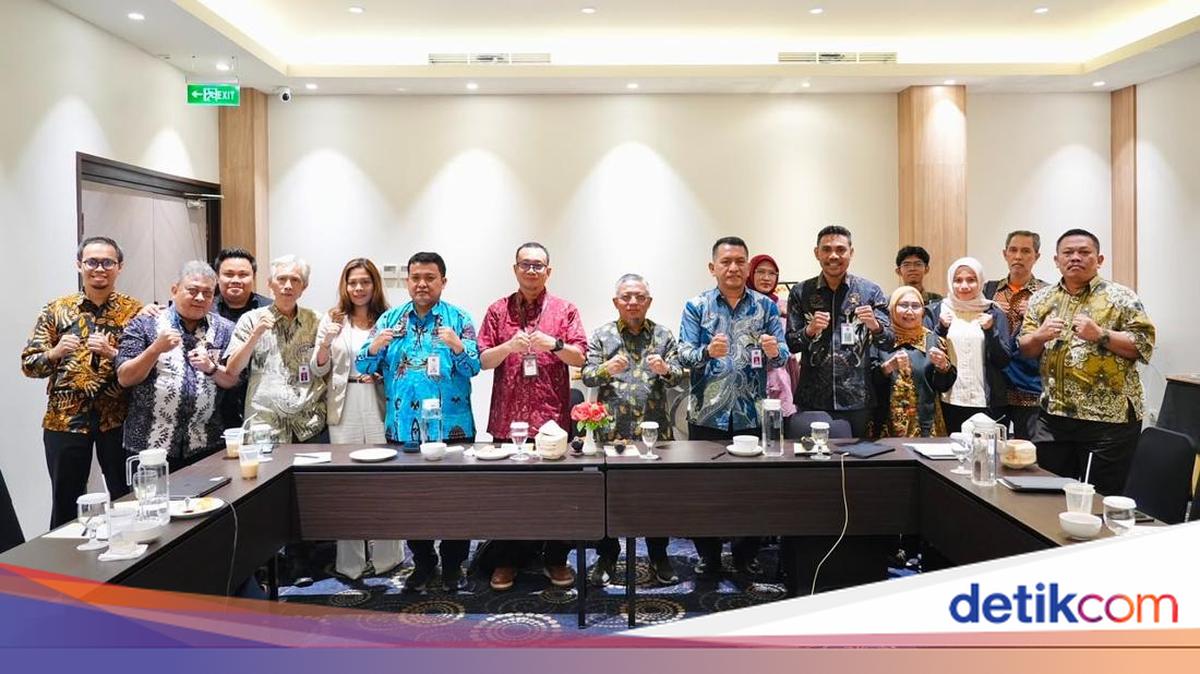
The National Border Management Agency (BNPP) of the Republic of Indonesia, through its Deputy for State Boundary Management, convened a forum on Thursday (2/7) with relevant ministries and agencies to discuss the State Boundary Management Index (IPBWN). The forum represents a strategic move by BNPP to ensure that border management is measurable, integrated, and aligned with the national development direction.
Representing the Deputy for State Boundary Management, Assistant Deputy for Sea and Air State Boundary Management Gutmen Nainggolan emphasised that strengthening border and frontier area management is in line with the 2025-2029 National Medium-Term Development Plan (RPJMN), as stipulated in Presidential Regulation Number 12 of 2025. He stated that the IPBWN is designed as an instrument to ensure cross-sectoral policies do not stop at the conceptual level but drive real and measurable action.
‘Indicators must be able to trigger joint work across ministries and agencies, not just be presentations, but truly provide impetus for decision-making,’ Gutmen said in a statement on Friday (3/7/2026).
In his presentation, Gutmen explained that land border management rests on three main stages: allocation of territory, delimitation, and demarcation. Demarcation is carried out through the establishment of coordinate points agreed upon with neighbouring countries and documented in legal instruments. Therefore, the loss of a physical boundary marker in the field does not automatically mean the loss of the state boundary. ‘If the coordinate points exist, the state boundary remains. Only the marker is lost,’ he stressed.
Meanwhile, for maritime and air boundaries, management focuses on establishing maritime boundaries, securing the territory, and providing supporting facilities and infrastructure, including maritime patrols, radar-based air surveillance, and securing the outermost small islands. Given the imaginary nature of maritime and air boundaries, the state’s presence through security measures is deemed crucial to prevent territorial violations.
In the aspect of cross-border management, the IPBWN also measures the performance of cross-border policy formulation, evaluation of international agreements, and the integration of services for the movement of people and goods. Cross-Border Posts (PLBN) are positioned not merely as physical structures but as integrated service hubs that digitally combine customs, immigration, and quarantine services, while also serving as economic drivers for border areas. ‘PLBNs are not just magnificent buildings; they must provide equitable, integrated services and generate economic impact,’ Gutmen stated.
From a statistical perspective, Deputy for Balance Sheet and Statistical Analysis at BPS-Statistics Indonesia, Moh. Edy Mahmud, expressed BPS’s commitment to assisting BNPP in formulating and calculating the national strategic index. This assistance includes conceptual formulation, variable determination, and methodological oversight to ensure consistent and accountable measurement results. ‘We help define the variables, how to measure them, and oversee the calculation process so that progress can be observed consistently each year,’ Edy said. He stressed that every index must be built upon a statistical concept and methodology framework agreed upon across ministries and agencies, noting that data normalisation is a critical step because data from various institutions have different units and scales. ‘Different data cannot simply be summed. It must be normalised so that the indicators are comparable and coherent,’ he explained.
From an institutional perspective, Assistant Deputy for Politics, Law, and Security and Regional Government at the Ministry of State Apparatus Empowerment and Bureaucratic Reform (PAN-RB), Istyadi Insani, affirmed that the transformation of border area development originates from the principle of building from the village level upwards. This policy direction is reflected in the RPJMN through the strengthening of border areas as the nation’s front porch. ‘The essence is building from the village, from the bottom up, for equitable economic development and poverty alleviation,’ he asserted. According to Istyadi, the IPBWN serves as a strategic instrument to assess border management performance and as an objective basis for the establishment and development of PLBNs. He added that the index must be understood and agreed upon by all parties because it ultimately impacts the quality of services and management at the PLBNs. ‘The index ultimately leads to one point, namely the PLBN. Therefore, its metrics must be commonly understood by all ministries and agencies,’ he said.
Furthermore, Assistant Deputy for Land State Boundary Management at BNPP, Henry Erafat, emphasised that border management is not solely oriented towards PLBNs but encompasses the entire border area. Each deputy has its own locus and portion of work to ensure that border development is not trapped in physical aspects alone. ‘Our work locus is not always in the context of PLBNs, but the border area as a whole,’ he stated. Henry added that although the indicators and variables for the IPBWN are in principle available, the stages and methods of its formulation must still be scientifically tested and comply with statistical principles. The involvement of BPS and the Ministry of PAN-RB is considered crucial to ensure the index is built with the correct methodology from the outset. ‘The indicators may already exist, but we must ensure the stages and methods are scientifically correct and in accordance with SOPs,’ he concluded.
Through this forum, BNPP reaffirmed its commitment to making the IPBWN a shared instrument that unifies various programme interventions by ministries and agencies in border areas. With a valid, mutually agreed upon, and accountable index, BNPP is optimistic that the management of state boundaries and border areas will become more directed, measurable, and impactful for communities on the front porch of the Unitary State of the Republic of Indonesia.