
BNPP Accelerates Spatial Planning for Former OBP Areas in Simantipal and Sebatik Island
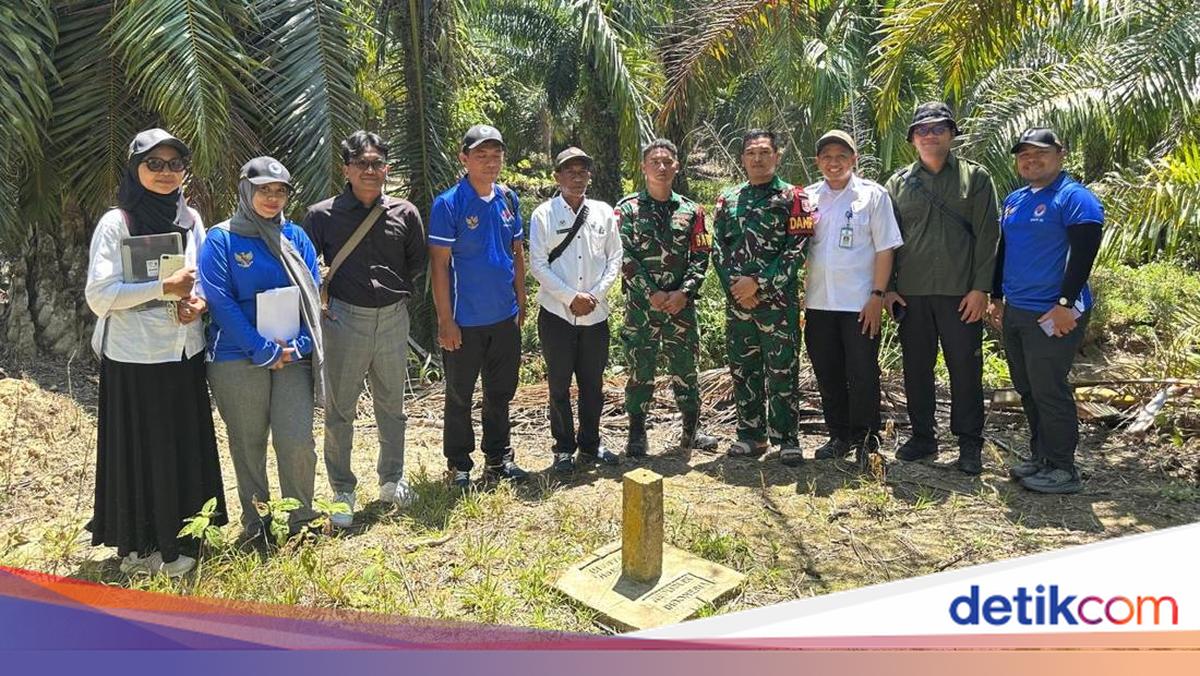
The National Border Management Agency (BNPP) of Indonesia, through the Assistant Deputy for Spatial Planning of Border Areas (PRKP), held a forum on Planning Spatial Planning for State Border Areas in the former Outstanding Boundary Problem (OBP) regions of Simantipal, Sebatik Island, and the Sinapad River segment on Thursday (16/4). This forum serves as a step to accelerate certainty in spatial planning while addressing the social and economic impacts on border communities in Nunukan Regency. Representing the Deputy for Border Area Potential Management of BNPP RI, Police Inspector General Edfrie R. Maith, Assistant Deputy PRKP BNPP RI, Ismawan Harijono, emphasised that the forum provides a space for coordination to align perceptions and consolidate policies. Additionally, the forum aims to gather data-based inputs to support more directed planning for border area spatial arrangements. “This coordination aims to align national spatial plans with border area, provincial, and regency/city spatial plans, particularly in former OBP areas such as Simantipal, Sebatik Island, and the Sinapad River segment,” Ismawan stated in a written release on Saturday (18/4/2026). He explained that Sebatik Island and Simantipal are the main focus of planning due to changes in territorial boundaries that directly impact the extent and utilisation of space. On Sebatik Island, the territorial changes affect 64 land parcels owned by communities and the government, with a total area of approximately 4,971 hectares. Meanwhile, Ismawan noted, company, individual, and royal party lands spanning 127,336 hectares remain under state land status and require clarity in management. “This situation triggers various issues, from land security, palm oil theft, rampant illegal cross-border routes, to unresolved land status determinations submitted by village governments to the regency government,” he clarified. He added that they also directly reviewed the former OBP area on Sebatik Island. From the review, several strategic development proposal points were identified, including a campsite location in Sungai Limau Village, patrol inspection routes along the border, construction of Border Security Posts (Pos Pamtas) and sub-sectors, as well as local market activities in Aji Kuning Village. For the Simantipal area, Ismawan added, this region is planned as a Boundary Small City amid ongoing spatial regulation processes. Regarding this, local communities have proposed compensation schemes for approximately 778 hectares of impacted land through infrastructure development in Lumbis Hulu and Lumbis Pansiangan Sub-districts. BNPP RI continues to push for the acceleration of such compensation realisations and priority basic infrastructure development. Some of these include providing alternative roads that do not cross neighbouring countries’ territories, preparing landfill sites (TPA), and improving inter-settlement connectivity. Furthermore, Ismawan emphasised the importance of strengthening the defence and security functions of border areas through the optimisation of defence zones, construction of border fences or forts, and addition of integrated security posts to suppress illegal land and sea route activities. “The development of strategic Border Crossing Posts, such as in Aji Kuning, needs to be accelerated to enhance supervision while optimising public services for border communities,” he stressed. Meanwhile, the Head of the Nunukan Regency Border Area Management Agency, representing the Regent of Nunukan, Robby Nahak Serang, stated that Nunukan Regency holds a strategic position due to its direct proximity to Tawau, Malaysia. According to him, border area development must be oriented towards community welfare while remaining within each party’s authority corridors. “Border areas are not just about boundary lines, but concern national sovereignty, defence and security, as well as community welfare. Limitations in infrastructure and weak economic sector strengthening can become gaps for various problems, including potential boundary shifts, smuggling, and cross-border crimes,” Robby concluded. For information, the forum was also attended by representatives from related ministries and agencies, TNI elements, provincial and regency local governments, as well as PLBN managers in the Nunukan Regency area.