
BNPB Uses Dry Ice to Disperse Haze from Forest and Land Fires: The Results
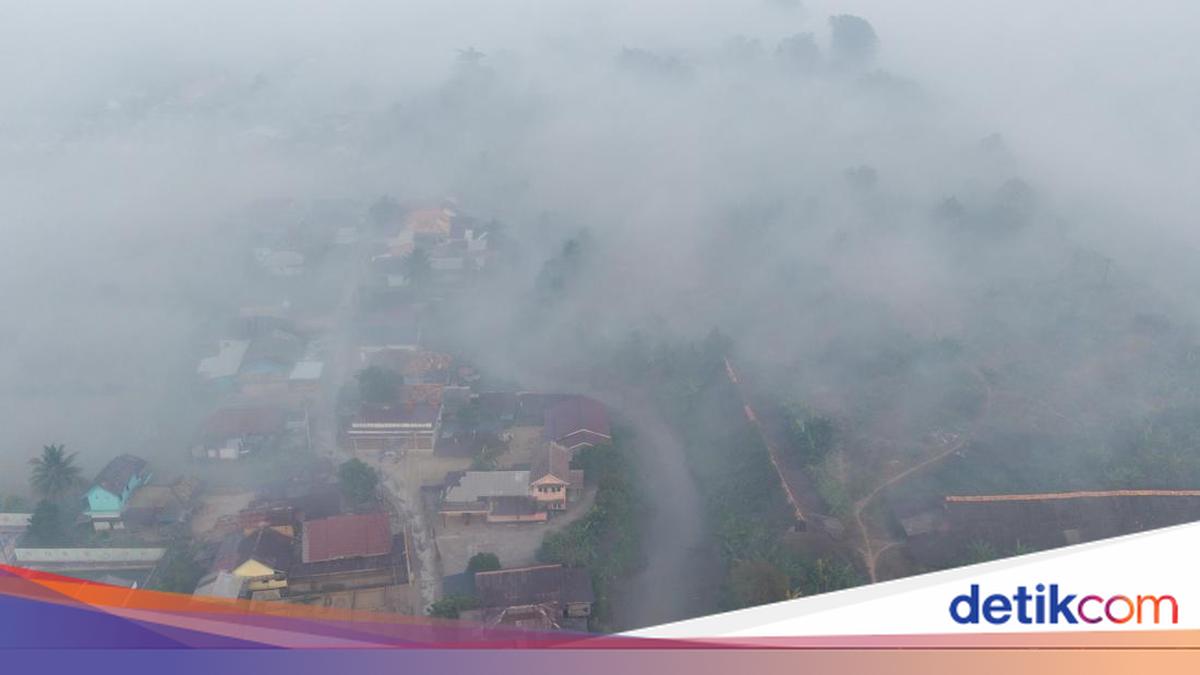
The National Disaster Management Agency (BNPB), together with ministries and agencies, the Indonesian Military (TNI), the National Police (Polri) and regional governments, continues to tackle forest and land fires. BNPB has been dispersing dry ice to break up fire haze and improve visibility.
“As of 19 October 2026, the total area targeted for fire response in six priority provinces is 1,024.33 hectares. Joint teams have extinguished 454.25 hectares, while the remaining 570.08 hectares are still being extinguished and cooled,” said Berton SP Panjaitan, acting head of BNPB’s Disaster Data, Information and Communication Centre, in a statement received on Tuesday (20 October 2026).
Berton said the figures for the six priority provinces were as follows: in Central Kalimantan, 63.10 hectares of a target 452.49 hectares had been extinguished, leaving 389.39 hectares still burning. In South Sumatra, 293.17 hectares of a target 401.67 hectares had been extinguished, with 108.50 hectares remaining.
In Jambi, the target area was 96.50 hectares, of which 32 hectares had been extinguished and 64.50 hectares remained. In South Kalimantan, 50.95 hectares of a target 58.45 hectares had been extinguished, leaving 7.50 hectares.
In West Kalimantan, 11.73 hectares of a target 11.92 hectares had been extinguished, leaving 0.19 hectares. In Riau, the target area was 3.30 hectares and all affected land had been extinguished.
“With the rainy season beginning, which the Meteorology, Climatology and Geophysics Agency (BMKG) predicts will arrive gradually in the priority provinces—Riau from September; Jambi, South Sumatra, Central Kalimantan and West Kalimantan from October to November; and South Kalimantan from November to December—the burden of fire-response operations is expected to ease progressively,” he said.
Fires are also being tackled in several other areas, where the total burned area is estimated at around 572.90 hectares. About 107.77 hectares have been extinguished, leaving approximately 465.13 hectares under intensive response.
In East Kalimantan and the Nusantara Capital City (IKN) area, around 97.77 hectares have burned, of which approximately 95.77 hectares have been extinguished. Around two hectares remain in Pemaluan, in the IKN area.
“In Central Java, particularly Karanganyar Regency, fires have affected around 230 hectares on steep and rugged slopes. Unpredictable strong winds are hampering efforts,” Berton said.
He also detailed the areas burned elsewhere: around 179.13 hectares in North Maluku; 31 hectares in Lampung’s Way Kambas National Park; around 20 hectares in Mamuju Regency, West Sulawesi, of which approximately 10 hectares have been extinguished, leaving around 10 hectares in Buana Sakti village, Tommo district; and in North Sulawesi, around five hectares in North Minahasa Regency and around three hectares at the Sumompo landfill in Manado, of which two hectares have been extinguished and one hectare remains. Around four hectares have burned at the Pasir Bajing landfill in Garut, West Java, and around three hectares in Nabire Regency, Central Papua.
Dry-ice dispersal trial
Berton said the government was using dry-ice-based weather modification technology to disperse accumulated haze and improve visibility during forest and land-fire response operations.
“The weather modification operation uses dry ice, or solid carbon dioxide, at an extremely low temperature of minus 78.5 degrees Celsius. It is dispersed from aircraft into the inversion layer at an altitude of 5,000 to 7,000 feet. Rapid cooling of the atmospheric layer to minus 75 degrees Celsius makes the air less stable, allowing fire smoke that was trapped close to the ground to rise and spread over a wider area,” Berton explained.
He said the dry-ice trial had improved visibility. The dispersal was carried out in Palembang.
“The dry-ice weather modification trial is beginning to show improved visibility. At Sultan Mahmud Badaruddin II Airport in Palembang, dispersing dry-ice particles of around three millimetres on 16 October 2026 increased visibility compared with conditions before dispersal on 15 October 2026,” Berton said.
Berton said the aerial operation using dry-ice technology had been conducted in South Sumatra since 16 October 2026, in collaboration with BNPB, the TNI and BMKG, using a Casa 212 aircraft, registration A-2117. The operation was formally extended to Central Kalimantan from 19 October, using a Casa 212-200, registration A-2107.
“After reports from residents that dry-ice material had fallen in residential areas, BNPB immediately reviewed its operating procedures. Flight teams have now tightened dispersal protocols by installing a special screen on the spreading chute and breaking the dry ice into fine particles before dispersal, so that it evaporates completely in the air,” he said.
Berton added that dry-ice operations complemented the deployment of a total of 49 national aircraft: 32 for water-bombing operations and 17 for patrols or weather modification in various areas. Alongside the aerial operations, fire response in the six priority provinces was being supported by more than 60,000 joint personnel on the ground.
“Through this combination of air and ground operations, the area extinguished in the priority provinces has reached 454.25 hectares. The public is urged to continue wearing masks when outdoors and to avoid activities that could trigger forest fires, for everyone’s safety,” he said.
Source: jawawa.id (https://jawawa.id/newsitem/bnpb-uses-dry-ice-to-disperse-haze-from-forest-and-land-fires-the-results-1792511485)
Originally published by detikcom (https://news.detik.com/berita/d-8716435/bnpb-gunakan-dry-ice-urai-kabut-asap-karhutla-ini-hasilnya), translated from Indonesian