
BNPB urges neighbouring countries not to blame one another over forest fire haze
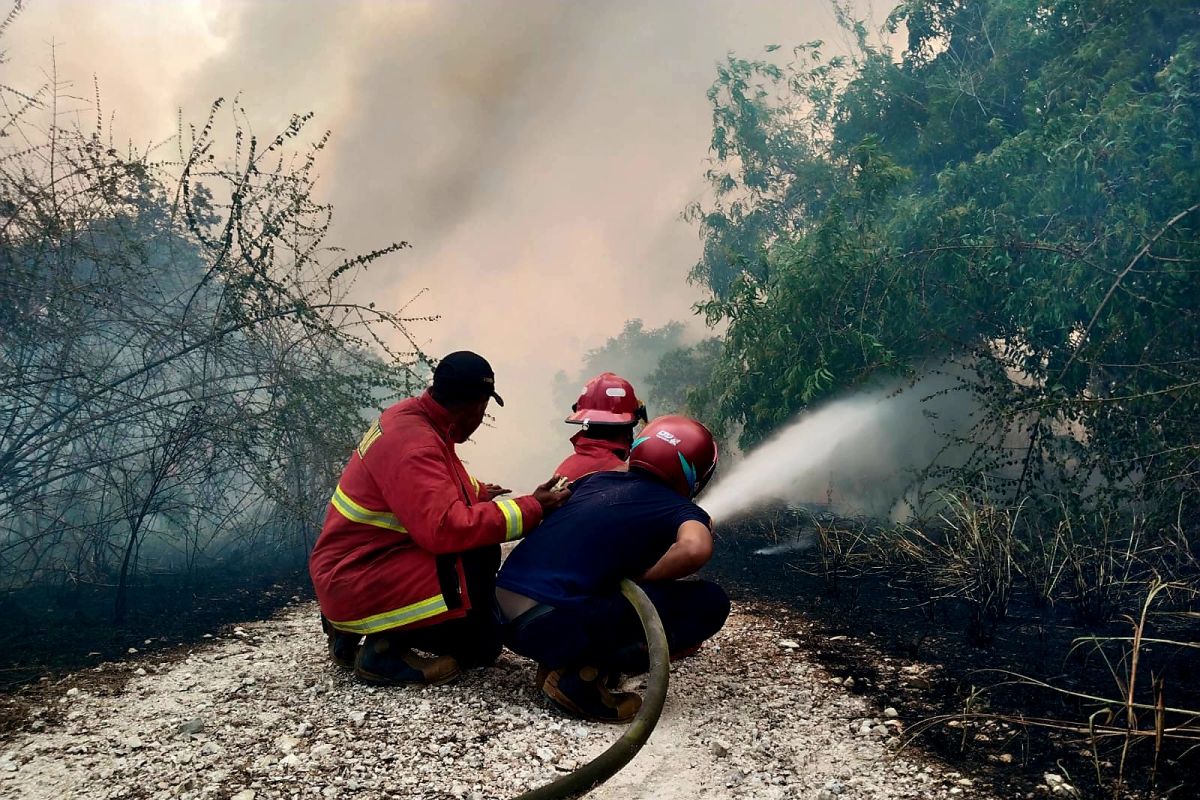
Jakarta (ANTARA) - The National Disaster Mitigation Agency (BNPB) has asked neighbouring countries such as Malaysia and Singapore not to blame one another over the impact of haze from forest and land fires (karhutla) in Kalimantan.
Acting Head of the BNPB Data and Information Centre Berton Pandjaitan said forest and land fires do not recognise administrative or national boundaries. Therefore, handling of forest and land fires needs to be carried out jointly without carelessly debating the source of the smoke.
“So our approach is not to blame one another, but how each country makes maximum efforts in its own territory and together reduces the impact of transboundary haze,” said Berton, quoted from a written statement on Sunday.
Berton said the Indonesian government understands the concerns of neighbouring countries regarding the possible impact of transboundary haze.
“What we need to convey is that Indonesia is currently making optimal efforts and deploying very large resources to control forest and land fires,” he continued.
Handling is carried out through ground firefighting, patrols and aerial firefighting, water bombing, Weather Modification Operations, as well as strengthening TNI-Polri personnel together with regional governments and communities.
In addition, the government is also enforcing the law against perpetrators of forest and land burning.
The government is also increasing the strength of the Indonesian Air Force to bolster forest and land fire handling operations in the Kalimantan region.
“So our current focus is to control the fire as close to the source as possible and as quickly as possible, because if the source of the fire can be controlled, then smoke production and the potential for transboundary impacts can also be reduced,” said Berton.
Berton added that smoke movement also needs to be viewed based on meteorological data. Factors considered include wind direction and speed, atmospheric conditions, as well as results of satellite and field monitoring.