
BNPB: Solo and Bandung Floods Indirectly Caused by Cyclonic Seed 92S
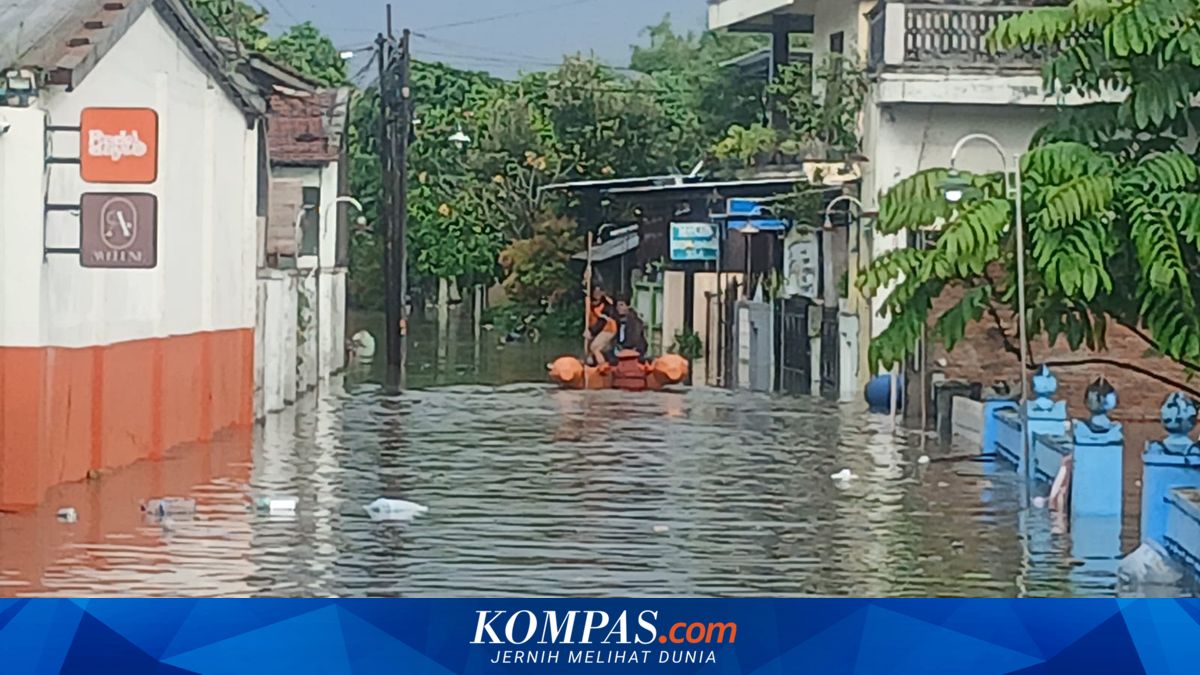
JAKARTA - The National Disaster Management Agency (BNPB) has revealed that the floods affecting Solo City and Bandung Regency were triggered by high-intensity rainfall as an indirect impact of the continued presence of Tropical Cyclonic Seed 92S.
Head of the BNPB Data, Information, and Disaster Communication Centre, Abdul Muhari, stated that although the position of the cyclonic seed southwest of Sumatra is beginning to move away from Indonesia, its effects are still triggering extreme weather in southern Sumatra to Java.
“The public is urged to remain vigilant as there is still a potential for rain with moderate to heavy intensity over the next two to three days,” Abdul said on Thursday (16/4/2026), quoted from Antara.
As of Wednesday evening (15/4/2026), 1,083 households were affected, spread across 12 sub-districts, including Pajang, Kedung Lumbu, and Tipes sub-districts.
In addition to waterlogging, the disaster caused a landslide in Pajang sub-district, leading to reports of residents temporarily evacuating to mosques, schools, and community halls.
Meanwhile, the flooding in Bandung Regency was caused by heavy rain and the breaching of the Cisunggalah River embankment during the same period.
BNPB noted that flooding in the Majalaya area has completely receded, but flooding persists in Bojongsoang with water levels between 10-150 centimetres.
According to Abdul, for handling in Surakarta City, joint teams from the local BPBD have distributed logistical aid in the form of mattresses and basic necessities, as well as establishing a public kitchen.
In Bandung Regency, joint teams along with residents are currently conducting assessments and communal clean-up of mud materials.
The areas remain under a hydrometeorological disaster emergency alert status in accordance with decisions by the local governments.
Referring to reports from the Meteorology, Climatology, and Geophysics Agency (BMKG), BNPB reminds central Sumatra, Lampung, Banten, West Java, Jakarta, and Central Java to enhance preparedness against potential follow-up hydrometeorological disaster risks in the coming days.