
BNPB: Regional Logistics Warehouses to Speed Up Disaster Response Without Waiting for Central Government
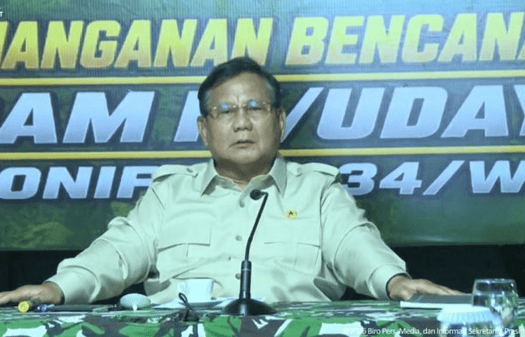
The National Disaster Management Agency (BNPB) has proposed that every district and city in Indonesia have its own logistics warehouse as a buffer stock of emergency aid. The move is intended to allow local governments to provide instant assistance in the first hours after a disaster occurs, without having to wait for deliveries from the central government.
BNPB Chief Lieutenant General TNI Suharyanto said the urgency of strengthening regional logistics was highlighted by the handling of the earthquake in East Nusa Tenggara (NTT). He noted that many Regional Disaster Management Agencies (BPBD) were unable to respond quickly because their logistics warehouses were empty.
“First, when the earthquake occurred yesterday, the region could not do anything. Why? Because the BPBD logistics warehouses were empty,” Suharyanto said while reporting to President Prabowo Subianto on Wednesday (26/8).
Suharyanto explained that although BNPB strives to arrive at disaster sites within 1x24 hours, the process of shipping large quantities of logistics from the centre still takes time. This delay often creates a negative perception among the public that the government is absent, when in fact aid is already on its way.
With stock available in the regions, district and city governments can immediately distribute basic necessities such as food, blankets and tents. BNPB would then enter at the next stage to strengthen distribution and increase logistics volume.
President Prabowo Subianto responded positively to the proposal. The President stressed that the scheme should not only be applied in currently affected areas, but should be calculated nationally to ensure uniform preparedness across all provinces.
“In that case, I think it is a good suggestion. Let us calculate it nationally for every province, so that governors have warehouses and food preparedness,” President Prabowo said.
Suharyanto emphasised that this strengthening is crucial because BNPB does not have a direct command relationship with BPBD. Currently, BNPB’s capacity at the centre is very strong, but instruments at the governor and regent level remain weak in terms of ready-to-distribute physical aid.
Through this buffer stock scheme, local governments are positioned as the first responders in meeting residents’ basic needs, while the central government through BNPB acts as a supporter of large-scale logistics strength.