
BNPB: No Hotspots Remain in Riau; Firefighting Efforts Focus on Central Kalimantan and South Sumatra
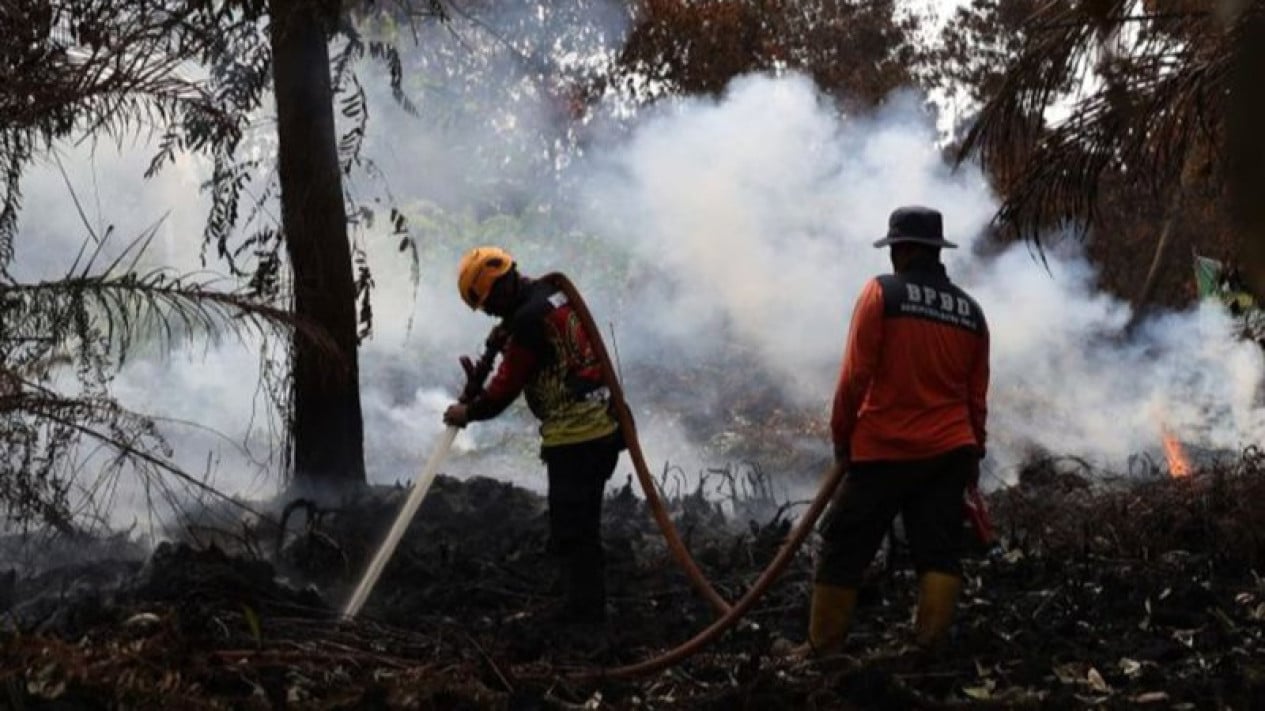
Indonesia’s National Disaster Management Agency (BNPB) has confirmed that there are no longer any fire hotspots in Riau amid forest and land fires (karhutla).
The update was given by Berton Panjaitan, acting head of BNPB’s Disaster Data, Information and Communication Centre, at a press conference on the progress of fire response at the Coordinating Ministry for Political and Security Affairs on Wednesday (14 October 2026).
“There are currently no hotspots in Riau, and no hotspots or burning land have been reported to us,” Berton said.
Previously, about 20,690.20 hectares of land had been recorded as burned in Riau.
Berton said that 663 hectares of peatland had been burned so far. In Central Kalimantan, around 7.8 hectares remain under response.
“Tanjung Puting National Park is also a concern, and the affected area is relatively extensive, at 513 hectares,” Berton said.
In South Sumatra, nearly 50 hectares of peatland have burned, while the figure in Jambi is 74.5 hectares.
In South Kalimantan, around 10.20 hectares of burned peatland remain under response.
“Central Kalimantan and South Sumatra are the two provinces that are now our main focus and priority. We are also paying attention to South Kalimantan and Jambi,” Berton stressed.
Berton said that, as of 13 October 2026, four other provinces were relatively safe and conditions had improved, with fires easier to extinguish.
The agency is prioritising ground-based firefighting, which it considers more effective. Aerial operations can extinguish fires quickly, but do not reach deep into peatland.
“Ground operations are indeed more effective. We also conduct weather-modification operations, which depend greatly on cloud formation. When clouds develop—for example, in West Kalimantan—we make the most of them to maintain consistent rainfall. That is how we sustain the momentum,” Berton said.
BNPB said national fire-response operations had been carried out as fully as possible, with the involvement of the Indonesian Military and National Police, ministries and agencies, local governments, businesses, NGOs and members of the public.