
BNPB Drafts Inclusive Disaster Management Policy
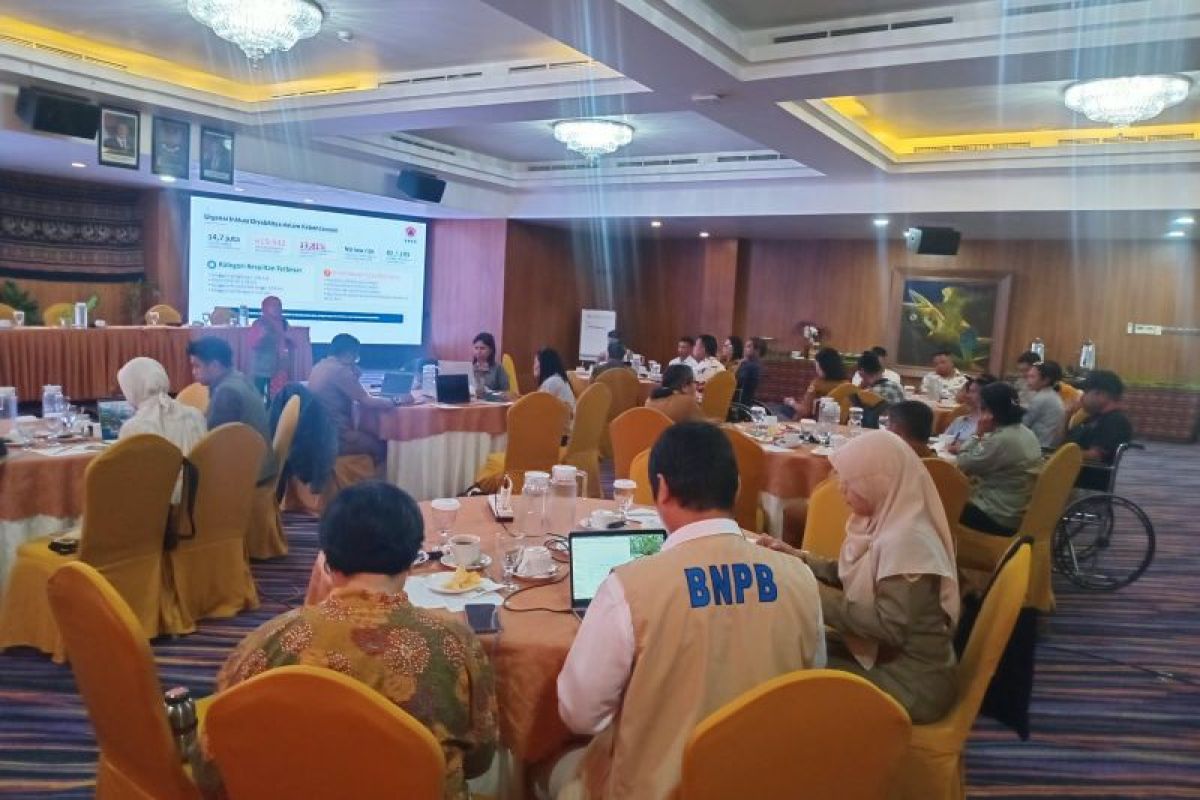
The National Disaster Management Agency (BNPB) has said that East Nusa Tenggara’s (NTT) experience in building disaster response services for persons with disabilities is an important resource for the government in strengthening a more inclusive and sustainable national policy.
Iis Yulianti, a disaster analyst and head of the Pentahelix Resource Empowerment Team at BNPB’s Preparedness Directorate, said in Kupang on Thursday that the experiences of regions and disability organisations were needed to enrich the draft BNPB regulation on disability that is currently being prepared.
“The aim is to enrich the substance of the draft BNPB regulation on disability that is currently being finalised,” she said during a workshop and field data collection on the Disability Service Units for Disaster Management (ULD-PB) in Kupang City.
According to her, the study does not only examine the implementation of policy under BNPB Head Regulation Number 14 of 2014, but also explores good practices and local problems, particularly regarding the sustainability of ULD-PB.
Iis said the greatest challenge identified was how to ensure that ULD-PB continues to operate once support from the SIAP SIAGA Programme ends.
For this reason, the sustainability of ULD-PB cannot rely solely on programme support, but requires stronger institutional arrangements, budgets, manager capacity and cross-sector partnerships.
“The main challenge is the issue of sustainability once the SIAP SIAGA Programme no longer intervenes,” she said.
The study was conducted in four provinces: East Java, Bali, NTT and West Nusa Tenggara. It compares ULD-PB established with SIAP SIAGA support and those formed through other parties, including Caritas.
An initial review of 15 decrees establishing ULD-PB identified four institutional models: units led by the regional disaster management agency (BPBD), multisector platforms, executive or community organisation alliance models, and independent multisector networks.
Pangarso Suryotomo, Director of Preparedness at BNPB, stressed in his remarks that the disaster management paradigm must position persons with disabilities not merely as a group in need of protection.
“Persons with disabilities are not only parties who need protection, but also have capacity, experience, knowledge and important contributions in building community preparedness,” Pangarso said.
He added that partnerships between government and disability organisations should be built on an equal footing, including in decision-making and the implementation of disaster management.
In practice, inclusivity needs cover access to early warning information, evacuation routes and transport, evacuation shelters, health services, logistics, assistive devices, and complaint mechanisms suited to the needs of persons with disabilities.