
BNPB Chief Secretary Discusses Book on 1926 Earthquake History for Modern Disaster Preparedness
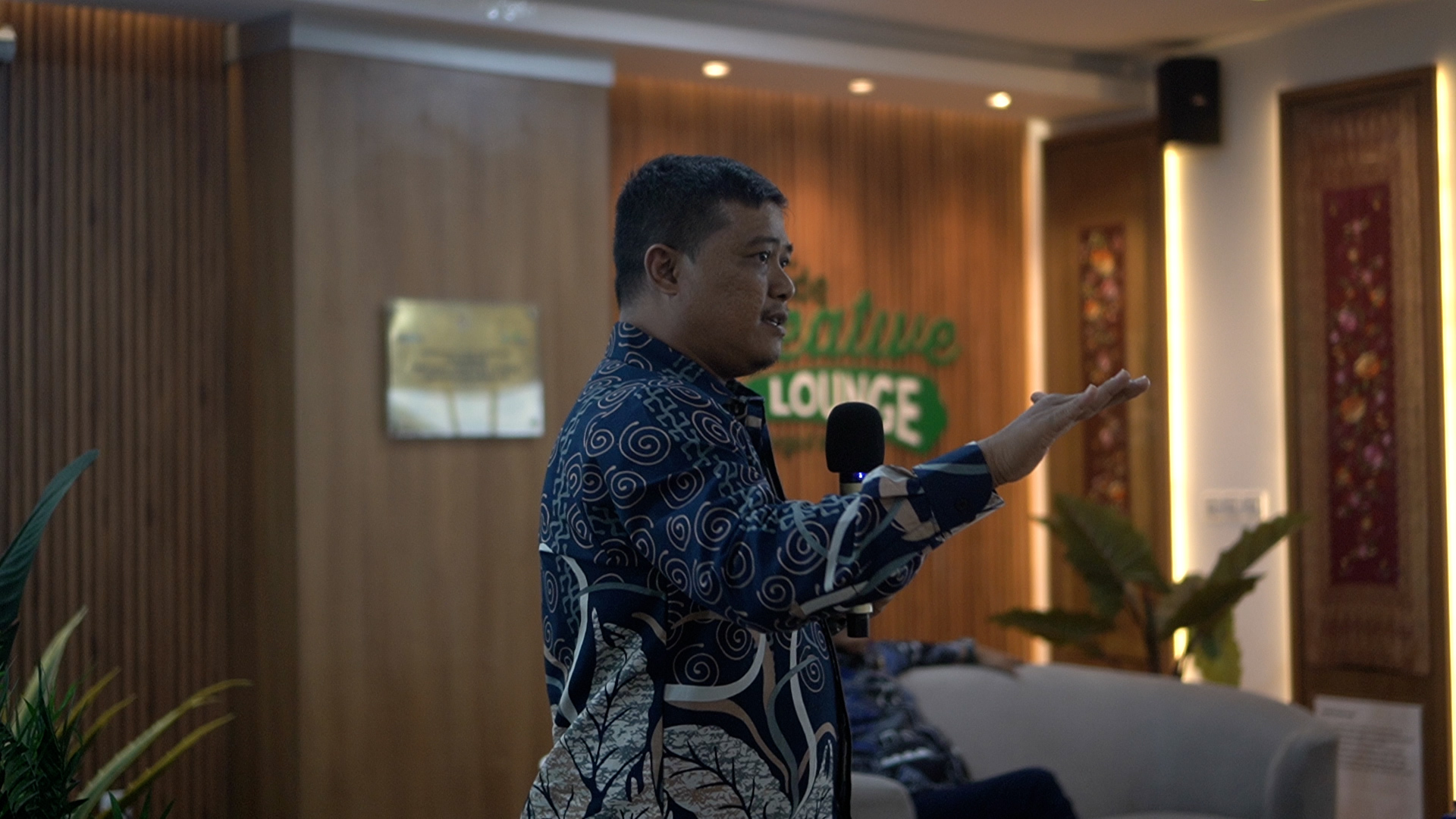
The Chief Secretary of the National Disaster Management Agency (BNPB), Rustian, attended and reviewed the book ‘Gempa Tujuh Hari: Sejarah Gempa 1926 di Dataran Tinggi Padang, Mengingat untuk Bertahan’ (Seven-Day Earthquake: History of the 1926 Earthquake in the Padang Highlands, Remembering to Survive) by Media Indonesia journalist Yose Hendra. The event was part of the Lecture and Learning Session Series #46, themed ‘A Century of the Padang Panjang Earthquake: Strengthening Contemporary Preparedness’, organised by the Postgraduate School of Andalas University through its Master of Disaster Management programme on Wednesday (22/7).
The activity was held under the auspices of the Chairperson of the Postgraduate School of Andalas University, Henny Lucida. The Head of the Master of Disaster Management programme, Prof. Yenny Narny, led the discussion. The hybrid event took place at The Gade Creative Lounge, Andalas University Library, Padang, and was attended by various organisations, activists, practitioners, and academics. Besides Rustian, BNPB Chief of Staff Expert Dody Ruswandi and the book’s author, Yose Hendra, were also present.
On the occasion, Rustian assessed that the study of disaster history plays a crucial role in strengthening community preparedness for current earthquake threats. He noted that West Sumatra is one of the regions with the highest seismic activity in Indonesia. Historical records show that from 1797 to 2022, at least nine major earthquakes occurred, ranging from the 1797 Megathrust Mentawai earthquake and tsunami to the 2022 West Pasaman earthquake. ‘This series of disasters shows that communities, especially low-income groups, still have a high level of vulnerability to earthquake threats. Therefore, disaster risk reduction must be integrated into medium and long-term development planning,’ Rustian said.
He also stressed the importance of reviving local wisdom as part of mitigation strategies. One example is the traditional Minangkabau rumah gadang, whose adaptive construction characteristics are resistant to earthquakes. ‘The design of the house pillars, which are not planted directly into the ground, allows the building to follow the direction of the earthquake’s shaking. This principle is similar to the base isolator concept in modern building technology,’ he stated.
Meanwhile, BNPB Chief of Staff Expert Dody Ruswandi shared experiences from the post-earthquake handling of the 2009 Padang disaster, which damaged approximately 249,433 houses. He stated that the rehabilitation and reconstruction process generated many lessons, including innovations in construction technology, improvements to earthquake-resistant building standards, better building permit governance, and increased capacity of construction workers. ‘The next challenge is maintaining that awareness so it does not decline over time,’ he said.
During the book review session, author Yose Hendra explained that the book was compiled to revive the collective memory of one of West Sumatra’s largest disasters and to use history as a source of mitigation learning. He noted that the community lives alongside two earthquake threat sources: the Mentawai Subduction Zone and the still-active Sumatra Fault. ‘History shows that major earthquakes on the Sumatra Fault segment repeat, such as in 1822, 1926, and 2007. This region even recognises the phenomenon of doublet earthquakes, where two main earthquakes occur sequentially in a short time on different fault segments,’ explained Yose.
He revealed that the 28 June 1926 earthquake made Padang Panjang the worst-affected area, leading to the event being known as the Padang Panjang Earthquake. At least 2,383 houses collapsed or were heavily damaged, with 247 fatalities. Total losses were estimated at around 10 million gulden. Yose explained that the term ‘Gampo Tujuh Hari’ (Seven-Day Earthquake) emerged because hundreds of aftershocks continued to shake the region for days after the main quake, with tremors still recorded until August 1926. ‘The term became the collective memory of the Minangkabau community regarding one of the greatest disasters of the 20th century,’ he said.
Henny Lucida stated that the Lecture and Learning Session Series serves as an academic space to bring together research results, practical experiences, and historical learning to build a culture of disaster awareness. Yenny Narny added that the centenary of the Padang Panjang earthquake is an important momentum to strengthen disaster literacy among students, researchers, practitioners, the government, and the community. ‘One century has passed since the Padang Panjang earthquake became a historic event that provided valuable lessons on the importance of disaster preparedness. This momentum serves as a reminder that building a resilient community begins with knowledge, collaboration, and real action,’ she said.