
BNN: Recovery does not end when drug addicts complete rehabilitation
Jakarta (ANTARA) - The National Narcotics Board (BNN) of the Republic of Indonesia has asserted that the recovery process does not conclude simply when a drug addict completes a rehabilitation programme.
“After leaving rehabilitation facilities, they face new challenges in maintaining recovery, being reaccepted by their families and environment, and building a productive life,” said the Head of BNN RI, Inspector General Pol. Suyudi, in a statement confirmed in Jakarta on Wednesday.
According to him, recovery must not stop merely at the exit gates of rehabilitation centres but must be conducted sustainably.
“Therefore, the unification of steps between ministries and agencies in the recovery of narcotics abusers becomes essential,” he said.
He noted that this unified approach has already begun through the signing of a Memorandum of Understanding (MoU) regarding the Synergy of Implementation for Rehabilitation and Post-Rehabilitation for Addicts, Abusers, and Victims of Narcotics Abuse. The agreement was signed by BNN, the Ministry of Social Affairs, the Ministry of Health, and the Ministry of Manpower in Lido, West Java, on Tuesday (11/8).
He stated that narcotics abuse is not merely a legal issue, but also a health, social, and economic crisis that requires comprehensive and integrated handling.
Consequently, Suyudi emphasised that the state’s presence should not be limited to law enforcement but must also be realised through sustainable recovery efforts, ranging from rehabilitation and social reintegration to the strengthening of economic independence.
He assessed the agreement between the ministries and agencies as a historic momentum and a legacy, as it marks the first time four institutions with overlapping duties and responsibilities in the recovery of narcotics abusers have unified their vision and mission within a single collaborative framework.
“This is something that has actually had overlapping tasks and responsibilities all along, particularly regarding the recovery of victims of narcotics abuse,” he revealed.
This statement aligns with the view of the Minister of Health, Budi Gunadi Sadikin, who places the issue of narcotics abuse within a health and humanitarian perspective. He argued that the millions of narcotics abusers in Indonesia, as per the BNN survey conducted with BRIN and BPS for the 2023-2025 period, should not be viewed merely as statistics, but as members of society in need of assistance to return to a normal life.
“Regardless, the 4.15 million residents who are narcotics abusers are our brothers and sisters who happen to be ill. They should not be stigmatised as criminals or anything else, but rather, we should improve their lives so they can live normally just like the rest of us,” said Budi.
Meanwhile, the Minister of Social Affairs, Saifullah Yusuf, emphasised that the recovery efforts for addicts, abusers, and victims of narcotics abuse must be built through measurable collaboration based on shared data. According to him, this step aligns with the directives of President Prabowo Subianto, who requested that ministries and agencies consolidate data as a foundation for implementing programmes and interventions.
“I am very pleased with this collaboration based on the same data. If we do this together, I am confident the impact will be more tangible within society,” said the man affectionately known as Gus Ipul.
He added that data consistency is a vital foundation to ensure that every ministry and agency does not work in isolation when handling narcotics abuse issues. With a shared understanding of the community’s conditions and needs, he believes recovery steps can be designed more precisely, measurably, and complementarily.
On the other hand, the Minister of Manpower, Yassierli, extended the recovery process to a further goal: independence. For him, successful recovery must reopen opportunities for survivors or clients to build a future through skills and employment.
“Imagine one, two, or three years from now, survivors who initially felt they had no future can return to the workplace, contribute, and live independently. This is the inclusive role of the state in providing opportunities to everyone,” said Yassierli.
This series of commitments underscores that the recovery of addicts, abusers, and victims of narcotics abuse requires sustained collective action, ranging from healthcare services and social strengthening to access to the labour market.
The agreement between the four institutions serves as a stepping stone to translate data-based collaboration into real action, ensuring that those who have recovered do not just return to society, but are also able to live productively and independently.
Thus, the state’s presence does not end with efforts to save individuals from drug abuse, but ensures that every person who has recovered obtains the opportunity to restructure and build their future, be reaccepted by their families, and avoid returning to narcotics-related problems.
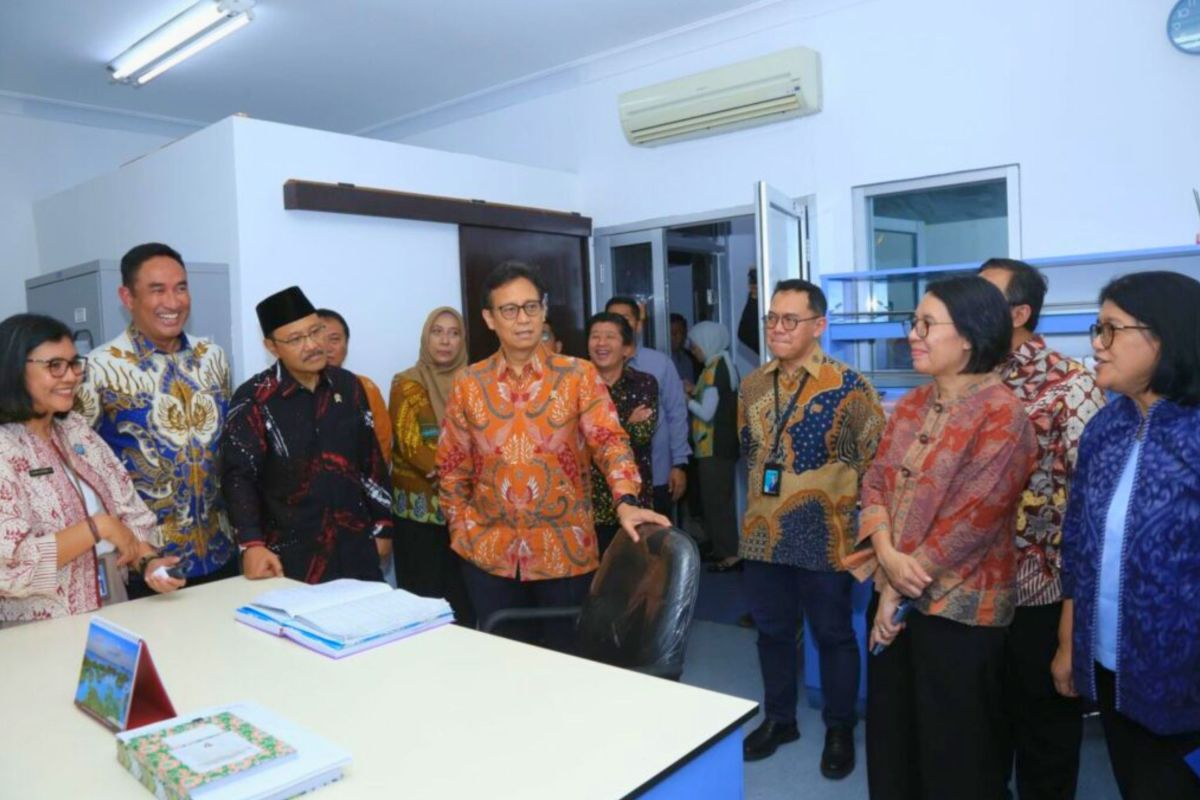
Following the signing of the MoU, the Head of BNN RI invited the Ministers of Social Affairs and Health to personally inspect the BNN Large Rehabilitation Centre in the Lido area. The visit was part of an effort to strengthen cross-ministerial synergy to ensure that the implementation of rehabilitation and post-rehabilitation is integrated.
The three officials observed firsthand the various facilities and services provided by BNN to addicts, abusers, and victims of narcotics abuse during the recovery process. The inspection also provided insight into the need for comprehensive handling, covering medical, psychological, social, and community reintegration aspects.