
BNN Initiates 'Ananda Bersinar' Programme in War on Drugs
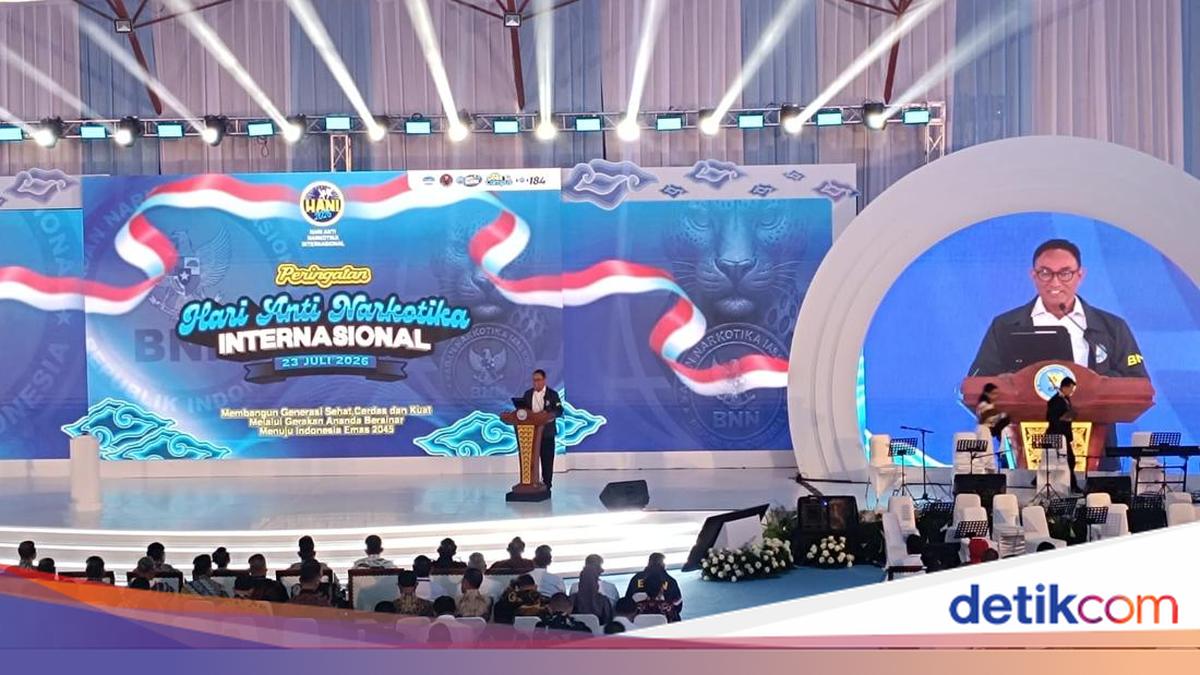
The National Narcotics Agency of the Republic of Indonesia (BNN RI) has initiated the Aksi Nasional Antinarkotika Dimulai dari Anak Bersih Narkoba (Ananda Bersinar) programme as part of efforts to Prevent, Eradicate, and Combat the Abuse and Illicit Trafficking of Narcotics (P4GN). The programme was initiated to prevent the nation’s future generation from falling into drug abuse. This was conveyed by the Head of BNN RI, Suyudi Ario Seto, during the commemoration of International Anti-Narcotics Day (HANI) in Lido, Bogor, West Java, on Thursday (23/7/2026). The Head of BNN stated that the war on narcotics must begin before there are victims. “In the field of prevention, we depart from the belief that the war against narcotics should not only begin when someone has become a victim. The war must start much earlier: from the family, from school, from the environment where children grow up, and from the ability of every child to say ‘no’ to narcotics, say no to drugs,” said Suyudi. In an effort to refine the P4GN strategy, BNN continues to pursue an increasingly comprehensive and balanced approach, while remaining firm against drug kingpins and networks. On the other hand, BNN continues to prioritise humanism in rehabilitating abusers and victims of narcotics to build community resilience, as well as being more preventive in protecting Indonesian children from an early age. “This is the spirit we interpret in the ‘War on Drugs for Humanity’, which is a war against narcotics crime, but while upholding human rights and being humane towards victims of abuse in order to save people,” he added. It is on this basis that BNN initiated the ‘Ananda Bersinar’ programme. This programme is a transformation of BNN’s prevention strategy that places children as the main subject of protection by building character, self-resilience, life skills, and literacy on the dangers of narcotics, as well as strengthening the role of family, school, and the social environment. “We designed Ananda Bersinar to align with the national human development agenda led by the President. Because a child who is physically healthy, well-nourished, and receives a good education, but lacks the ability to resist narcotics, is still at risk of losing their future,” he explained. Suyudi added that to strengthen the prevention ecosystem, BNN together with the Ministry of Primary and Secondary Education has pushed for the integration of an anti-narcotics curriculum into the learning process through existing subjects. BNN has also initiated the strengthening of the scouting movement through the Anti-Narcotics Saka. BNN also continues to expand community-based education and provides the BNN Call Centre 184, which operates 24 hours a day as a channel for information and public complaints while maintaining the confidentiality of the reporter’s identity in accordance with statutory regulations. Furthermore, Suyudi outlined BNN’s efforts in the P4GN programme in the field of community empowerment. BNN continues to work to sever the social and economic roots that keep some communities in the cycle of narcotics vulnerability. “In areas prone to cannabis cultivation such as Gayo Lues, Aceh, we are implementing the Grand Design Alternative Development (GDAD),” he said. Suyudi stressed that the approach does not stop at eradicating cannabis plants, but continues with community empowerment and the development of legal and productive alternative commodities. Through the GDAD programme, BNN has succeeded in changing the mindset of the community from cannabis farmers to coffee farmers, whose produce has economic value and can contribute to the locally-generated revenue of the local government. “For us, sustainable eradication must be able to break the chain of crime while providing dignified livelihood options. Therefore, the success of P4GN cannot only be measured by how many hectares of illegal crops are destroyed, but also by how strongly the community can stand independently without returning to dependence on the illegal narcotics economy,” he concluded.