
BNN Builds Community Resilience Against Narcotics Threat Beyond Law Enforcement
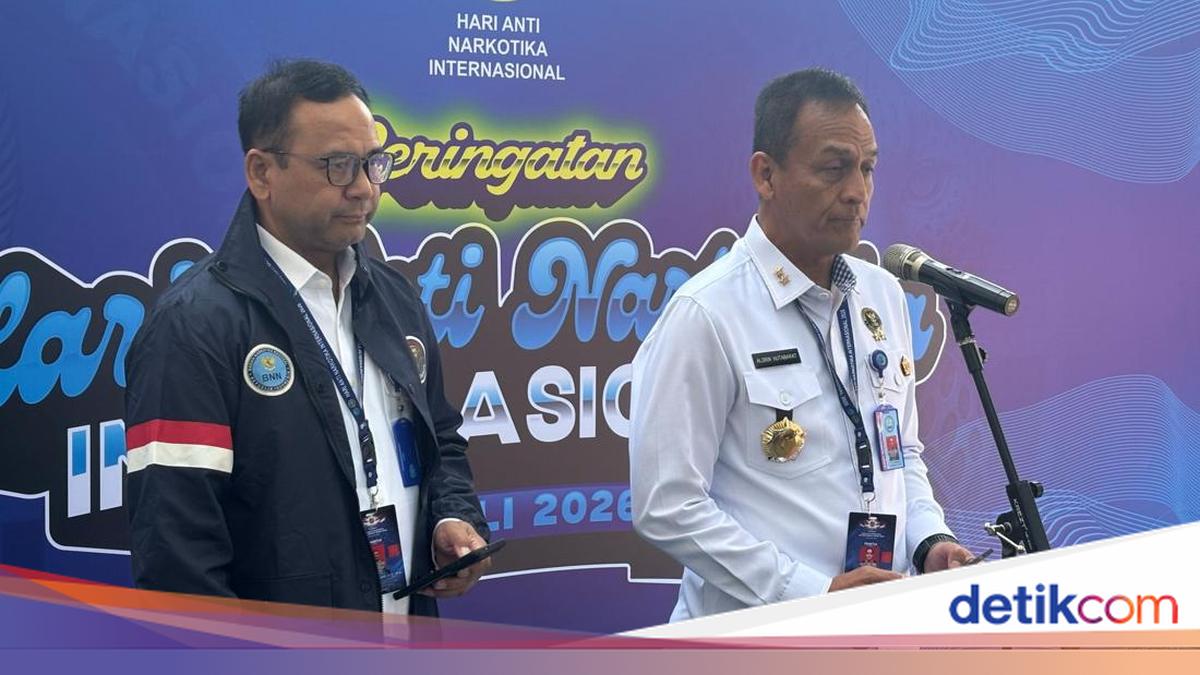
The National Narcotics Agency of the Republic of Indonesia (BNN RI) continues to strengthen its narcotics prevention and eradication strategy through a community-involved approach. Not solely relying on legal enforcement, BNN is also promoting enhanced education from an early age and community empowerment in narcotics-prone areas. This initiative is part of the 2026 International Anti-Narcotics Day (HANI) commemoration, aligned with National Children’s Day through the Ananda Bersinar programme (National Anti-Narcotics Action Starting from Drug-Free Children).
Deputy for Community Empowerment at BNN RI, Aldrin Hutabarat, stated that various activities are being carried out by BNN and its regional offices to increase public awareness of the dangers of narcotics abuse. “The activities carried out by the National Narcotics Agency, including at the Provincial BNN and Regency/City BNN levels, include social services, counselling, education, and literacy activities for the community,” Aldrin said recently. He made the statement during the peak of the 2026 HANI commemoration at the BNN Lido Rehabilitation Centre in Bogor, West Java, on Thursday (23/7).
According to him, this education is a crucial part of building public understanding so that they can play a role in narcotics eradication efforts. “This is necessary so that the community gains enlightenment, education, and literacy related to narcotics eradication efforts, from upstream to downstream, and it all starts with children,” he said.
Beyond building early awareness, BNN is also implementing a community empowerment approach through various alternative programmes, one of which is the Grand Design Alternative Development (GDAD). The GDAD programme is BNN’s strategy to break the community’s dependence on the illegal economy, particularly in areas previously linked to cannabis cultivation. Through this programme, communities are encouraged to switch to productive commodities with economic value.
One of the GDAD implementation areas is in Aceh. The programme was initiated in 2016 in three pilot project areas: Aceh Besar, Bireuen, and Gayo Lues. Previously, Aceh was one of the regions with the largest cannabis field discoveries in Indonesia. According to BNN data, during the 2007-2016 period, the total area of cannabis fields destroyed reached 2,119.19 hectares. The peak of eradication occurred in 2016, with 487 hectares destroyed. In the same year, BNN began strengthening GDAD as an effort to provide alternative solutions for the community through the development of commodities such as maize and coffee.
In its implementation, GDAD does not only focus on crop substitution but also builds a community economic ecosystem through skills training, mentoring, institutional strengthening, and opening market access. In Gayo Lues, for instance, coffee commodity development is being reinforced through the establishment of cooperatives, construction of coffee processing facilities, development of demonstration plots, and purchase agreements for community produce. This approach is part of BNN’s effort to ensure that narcotics eradication does not stop at case disclosures and evidence destruction, but also addresses the social and economic roots that can make communities vulnerable to entering the narcotics cycle.
Aldrin emphasised that the success of these efforts requires support from various parties. Therefore, collaboration between the government, educational institutions, the business sector, the media, and the community is key to strengthening prevention and empowerment programmes. “Relevant ministries and agencies have also been present, with the hope and goal of future synergy, cooperation, coordination, and collaboration in the context of narcotics eradication,” Aldrin said.