
BNI Strengthens Stunting Prevention Programme on National Children's Day
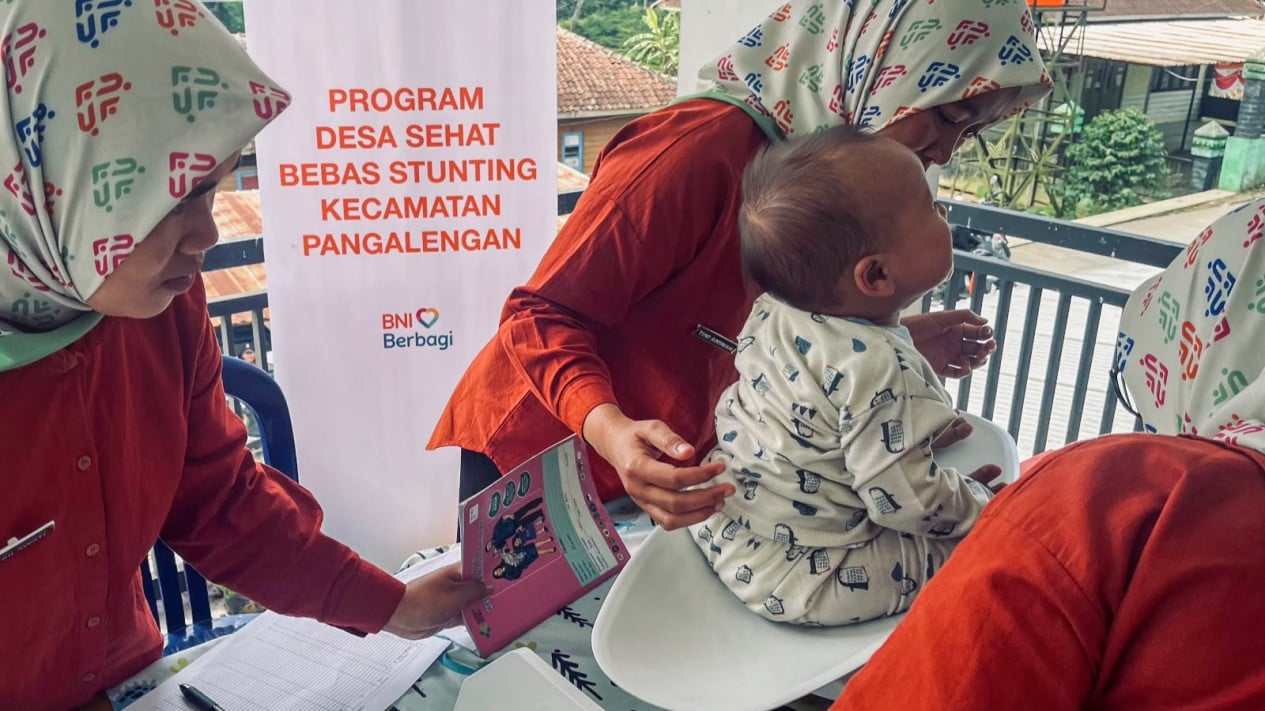
State-owned bank PT Bank Negara Indonesia (Persero) Tbk, or BNI, is strengthening its stunting prevention programme through a series of social initiatives throughout 2026. The move is part of the company’s contribution to improving children’s health quality and supporting the realisation of the Golden Indonesia 2045 generation. The programme is run under the umbrella of BNI’s social and environmental responsibility initiative, BNI Berbagi. Its implementation has been carried out in stages since the beginning of 2026 and will continue until the end of the year, targeting nutritional fulfilment, family education, sanitation, and the strengthening of public health services.
BNI Corporate Secretary Okki Rushartomo stated that stunting prevention is a key focus of the company’s social programmes because child growth and development during the first 1,000 days of life is a crucial foundation for the quality of human resources. “BNI believes that every Indonesian child has the right to a healthy start in life in order to grow and develop optimally,” Okki said in a written statement coinciding with the momentum of National Children’s Day 2026. He added that fulfilling children’s rights to adequate health, nutrition, and care requires collaboration between the government, businesses, health workers, and the community.
“Through BNI Berbagi, we continue to strengthen collaboration with various stakeholders to support the acceleration of stunting reduction as our contribution to realising the Golden Indonesia 2045 Generation,” he said. One of the programmes being implemented is the Foster Parents Movement to Prevent Stunting (GENTING) in Riau Province, carried out in collaboration with the Ministry of Population and Family Development/National Population and Family Planning Board. BNI is also implementing the Healthy Village Free of Stunting programme in four villages in Pangalengan District, Bandung Regency. This programme combines nutritional interventions with family education, sanitation improvements, the adoption of clean and healthy living behaviours, and improvements to the residential environment. This approach is directed so that stunting management does not only focus on providing food aid but also addresses environmental factors, parenting patterns, and community access to health services. “In line with the spirit of National Children’s Day, we hope that more Indonesian children will have the opportunity to grow up healthy, develop optimally, and become an excellent generation,” Okki said.