
BNI Prepares Financing and Advisory Support to Accelerate the Green Industrial Transition
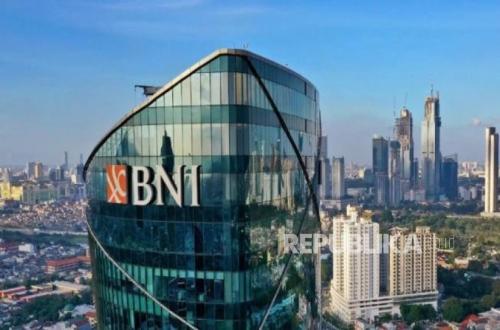
ANTALYA – PT Bank Negara Indonesia (Persero) Tbk (BNI) is strengthening its support for industry’s transition to a low-carbon economy through advisory services and sustainable financing. The initiative is intended to help companies turn emissions-reduction commitments into concrete action.
BNI Deputy President Director Alexandra Askandar said the banking sector had an important role in accelerating industrial decarbonisation. This role was not limited to providing capital, but also included helping companies develop transition strategies and road maps.
“Everyone agrees that industrial decarbonisation requires investment and operations across the industry to be aligned. This calls for strong collaboration between the government, financial institutions and technology providers,” Alexandra said at the Indonesia Pavilion at the 31st UN Climate Change Conference (COP31) in Antalya, Türkiye, on Tuesday (10 November 2026).
She said the world now needed to move beyond simply announcing climate commitments and towards putting them into practice. BNI was therefore seeking to help clients turn sustainability ambitions into actionable programmes through advisory services and financing solutions tailored to companies’ needs.
Alexandra said BNI had begun its sustainable banking journey in 2015 and was one of the pioneers of sustainable banking in Indonesia.
She said the commitment was reflected in the company’s environmental, social and governance (ESG) performance. In early November 2026, BNI’s ESG rating from FSI rose from A to AA. The bank also received a medium sustainability risk rating and was included in the IDX ESG Index.
As of the third quarter of 2026, BNI’s total assets stood at US$82.9 billion. The bank serves more than 150,000 business clients, supported by a network of 17 regional areas, around 17,000 branches in Indonesia and nine international branches.
Alexandra said businesses were facing increasingly complex pressures as they pursued the transition. The three main challenges were global trade barriers such as the Carbon Border Adjustment Mechanism (CBAM), rising capital costs and knock-on pressures across supply chains.
These pressures could restrict companies’ access to markets, financing and global supply chains. Industrial transition also faces several structural obstacles.
BNI has identified three key gaps: substantial upfront capital requirements combined with long investment payback periods; a lack of financing viability for innovative projects; and the limitations of conventional financing schemes, which cannot yet provide flexible, long-term capital.
“This is where BNI steps in to bridge those gaps and translate transition road maps into financeable projects,” she said.
To fulfil this role, BNI has developed a sustainability framework built on three pillars: sustainable finance, corporate sustainability, and inclusion and resilience. The two pillars directly related to clients are intended to support transition financing while ensuring businesses are involved in sustainability strategies.
BNI is also expanding its ESG advisory support for clients. Alexandra said BNI was the first bank in Indonesia to introduce an industry-based ESG Advisory Playbook.
After publishing guidance for the palm oil industry in 2025, BNI has expanded its advisory services to five other priority sectors: mining, construction, telecommunications, electricity and transport.
Source: jawawa.id (https://jawawa.id/newsitem/bni-prepares-financing-and-advisory-support-to-accelerate-the-green-industrial-transition-1794361906)
Originally published by Republika (https://esgnow.republika.co.id/berita/tobc5n490/bni-siapkan-pembiayaan-dan-pendampingan-untuk-percepat-transisi-industri-hijau), translated from Indonesian