
BNI Empowers 430 Women in NTT Through Palm Leaf Weaving Programme
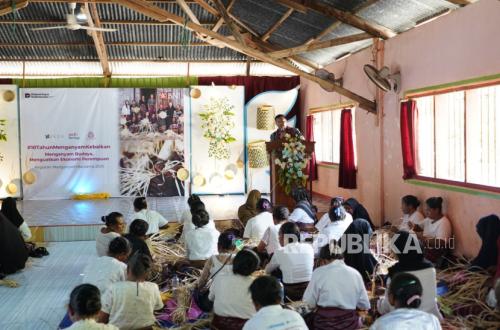
PT Bank Negara Indonesia (Persero) Tbk (BNI) is strengthening its commitment to women’s empowerment through the ‘Weaving Goodness for Indonesia’ programme on Solor Island, East Flores, Nusa Tenggara Timur (NTT). To date, the programme has reached more than 430 women weavers of palm leaves across 13 locations, while also promoting improvements in product quality and local community welfare. BNI Corporate Secretary Okki Rushartomo stated that the initiative, which has been running since September 2024, is designed as a sustainable empowerment programme, encompassing production training, strengthening of economic institutions, and health education. ‘Through the Weaving Goodness for Indonesia programme, BNI aims to deliver sustainable empowerment for women, particularly in 3T regions. We believe that when women are empowered, their families and surrounding communities will also grow,’ Okki said in an official statement on Tuesday (21/4/2026). Solor Island has long been known for its limited productive land but holds economic potential in traditional palm leaf weaving crafts passed down through generations. The majority of artisans are housewives who serve as the backbone of family economies, though they face challenges in market access, product quality standards, and financial literacy. Through collaboration with the Du Anyam Foundation, BNI has built an integrated empowerment ecosystem. As a result, 79% of woven products now fall into the high-quality category, indicating significant improvements in production and quality standards. In addition to enhancing business capacity, BNI has constructed supporting infrastructure, including the Weaving House in Bubu Atagamu Village, South Solor Subdistrict, as a centre for training and production. The company has also provided access to clean water through the construction of a piped water system with 30 tap points benefiting 263 family heads. On the social side, BNI has contributed to stunting prevention through the Supplementary Feeding Programme (PMT) for 98 toddlers over 14 days, which successfully reduced severe malnutrition rates by 10.20%. To ensure programme sustainability, BNI has facilitated the establishment of the Ina Senaren Multi-Purpose Cooperative (KSU). ‘Through this cooperative, the women not only act as artisans but also as business actors capable of managing businesses, expanding market access, and utilising formal financial services,’ Okki added. This programme reflects BNI’s comprehensive approach to community empowerment, integrating economic, social, and cultural aspects. The effort also strengthens women’s role as drivers of the local economy in underdeveloped areas. Through this initiative, BNI affirms that women’s empowerment not only impacts income increases but also creates independence and social resilience for communities. The women weavers in NTT now not only preserve traditions but also become economic actors capable of improving family and community welfare.