
BMKG Warns of Potential Tsunami Threat in Balikpapan Bay
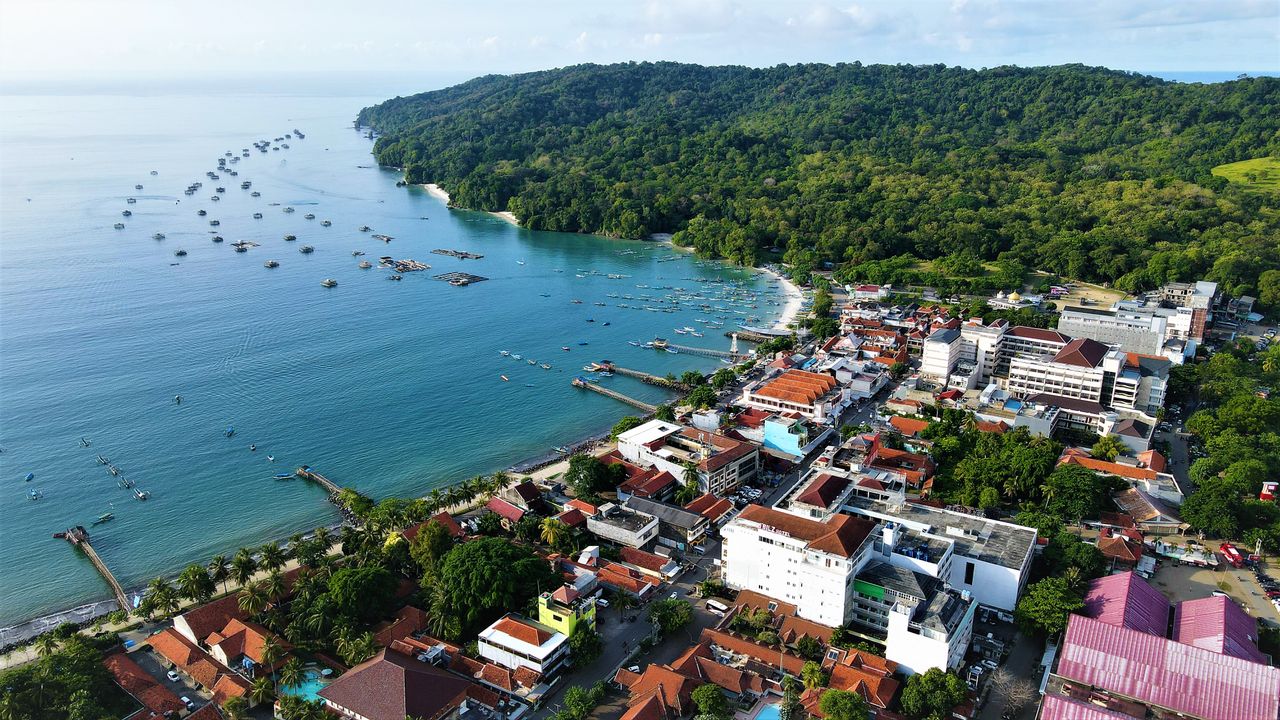
The Meteorology, Climatology and Geophysics Agency (BMKG) has stated that a potential tsunami threat exists for the East Coast of Kalimantan and Balikpapan Bay, East Kalimantan. Although the Kalimantan region has long been considered relatively safe from major earthquake activity compared to other parts of Indonesia, experts warn that the tsunami threat must still be anticipated, especially in coastal areas with bay characteristics like Balikpapan.
This was conveyed by the Head of the BMKG Balikpapan Geophysics Station, Rasmid. He explained that the East Kalimantan coastal region, which includes North Kalimantan, East Kalimantan, and South Kalimantan, could be impacted by tsunamis originating from seismic sources outside the Kalimantan area.
According to him, the threat could stem from tectonic activity in the North Sulawesi subduction zone, the Maluku double subduction zone, and the Philippine subduction zone. When a large earthquake triggers a tsunami in these areas, the waves can propagate and reach the eastern coast of Kalimantan Island.
Specifically for East Kalimantan areas such as Balikpapan, Samarinda, and Bontang, BMKG also highlighted the potential for tsunamis triggered by submarine landslides due to earthquakes along the Sulawesi fault line. "This phenomenon has occurred in several major earthquake events in Indonesia, causing large-scale displacement of seabed material and generating tsunami waves," he stated.
Rasmid explained that the seabed contours in the Sulawesi Sea and Makassar Strait feature steep slopes. When an earthquake shakes the region, submarine cliffs can collapse and trigger massive landslides that significantly displace seawater.
The resulting waves are estimated not to be very high when they reach the Kalimantan coast. However, conditions can change when the waves enter a narrow bay like Balikpapan Bay. Inside the bay, waves can be reflected and amplified due to the superposition effect. This phenomenon can increase wave amplitude, making the impact greater than in the open sea. "The characteristics of Balikpapan Bay are one of the factors that need attention in tsunami risk studies for East Kalimantan," Rasmid explained.
Beyond the potential natural threat, BMKG also highlighted the need to strengthen disaster mitigation systems. To date, Balikpapan and most of Kalimantan lack an integrated Early Warning System (EWS) for tsunamis. Currently, warning information from BMKG is relayed through coordination with the Regional Disaster Management Agency (BPBD) and local governments before being disseminated to the public. This mechanism is considered to require strengthening so that emergency information can reach coastal residents more quickly and effectively.
BMKG assesses that the provision of supporting facilities, from early warning devices to emergency communication systems, is crucial to improving community preparedness for potential tsunamis in the future. "With the increasing development activities and growth of coastal areas in East Kalimantan, disaster education and strengthening mitigation systems are strategic steps to minimise risk should a disaster occur at any time," he concluded.