
BMKG Warns: Dry Season in West Java to Arrive Earlier, Last Longer, and Be Drier
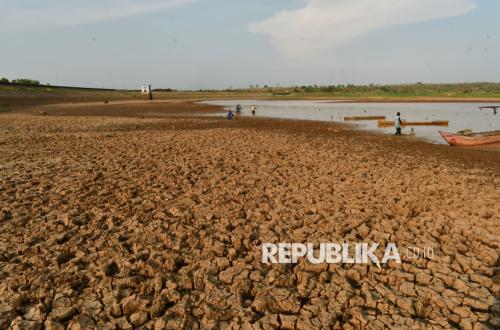
The West Java Climatology Station of the Indonesian Meteorological, Climatological, and Geophysical Agency (BMKG) has revealed that the West Java region has already entered the dry season. They state that the dry season has arrived earlier and will last longer.
Forecaster at the West Java Climatology Station, Vivi Indhira, said the dry season has been ongoing since March in parts of the region such as Bekasi City and northern Karawang Regency. Meanwhile, other areas entered the dry season in April in central Karawang, central Subang, and parts of Indramayu.
“As many as 56 percent of West Java’s regions are predicted to enter the dry season in May,” she said during an online press conference on Tuesday (14/4/2026).
She continued that parts of the region entering the dry season in June include most of Bogor Regency, northern Sukabumi, central Cianjur, eastern West Bandung Regency, Bandung City, western Bandung Regency, southeastern Garut, southern Tasikmalaya, and western Pangandaran.
Meanwhile, two percent of the region falls into seasonal type 1 zone, located in Bogor City, central Bogor, and a small part of northern Sukabumi.
“Compared to normal conditions, most of West Java, namely 66 percent, is predicted to enter the dry season earlier or ahead of the norm,” she said.
Meanwhile, 25 percent of the region is predicted to enter the dry season on schedule with normal conditions, and 7 percent is predicted to enter the dry season later or delayed compared to normal conditions. Two percent of the region falls into type 1 season.
Vivi continued that in the 2026 dry season, most of West Java will experience a dry dry season across 93 percent of the region. The remaining seven percent will experience a normal dry season.
“Most of West Java is predicted to experience the peak of the dry season in August, namely 90 percent. Other regions, 8 percent, are predicted to peak in July, while 2 percent of other regions are predicted to peak in September,” she said.
“The regions in West Java are predicted to experience a longer dry season duration or longer than usual,” she said.
They urge the government and the public to optimise the operation of reservoirs and dams, accelerate the construction or rehabilitation of small reservoirs and water storage to anticipate clean water crises and to conserve water.
For the agricultural sector, she advises farmers to adjust the planting calendar by avoiding the dry season peak. In addition, use drought-resistant and short-duration varieties.
“For the disaster sector, preparedness is requested for the potential of drought and forest and local fire incidents,” she said.