
BMKG Urges Energy Ministry and PLN to Anticipate Electricity Surge During El Niño
The Meteorology, Climatology and Geophysics Agency (BMKG) has urged the managers of hydroelectric power plants (PLTA) across Indonesia to plan measured water usage to anticipate a surge in electricity load during the El Niño phenomenon.
BMKG Deputy for Climatology Ardhasena Sopaheluwakan stated that a spike in national energy consumption often coincides with declining dam water reserves during hot weather and drought. “Information regarding rainfall is crucial for determining water usage plans at hydropower plants,” Ardhasena said.
He explained that a significant rise in air temperature during the dry season will drive a massive increase in electricity load due to the widespread use of air conditioning by the public. Simultaneously, the production capacity of clean energy from hydropower facilities is threatened as dam and lake water levels recede without careful conservation planning.
Therefore, BMKG is urging the Ministry of Energy and Mineral Resources (ESDM), state electricity company PLN, and dam operators to use updated climate data as a reference for regulating water turbine operations. “Precise water allocation management is the key to ensuring the stability of the electricity supply from hydropower plants throughout the peak of the dry season,” he added.
Through early anticipatory measures and operational water efficiency, the agency believes the reliability of the national electricity supply can be maintained despite the pressure of the El Niño heatwave.
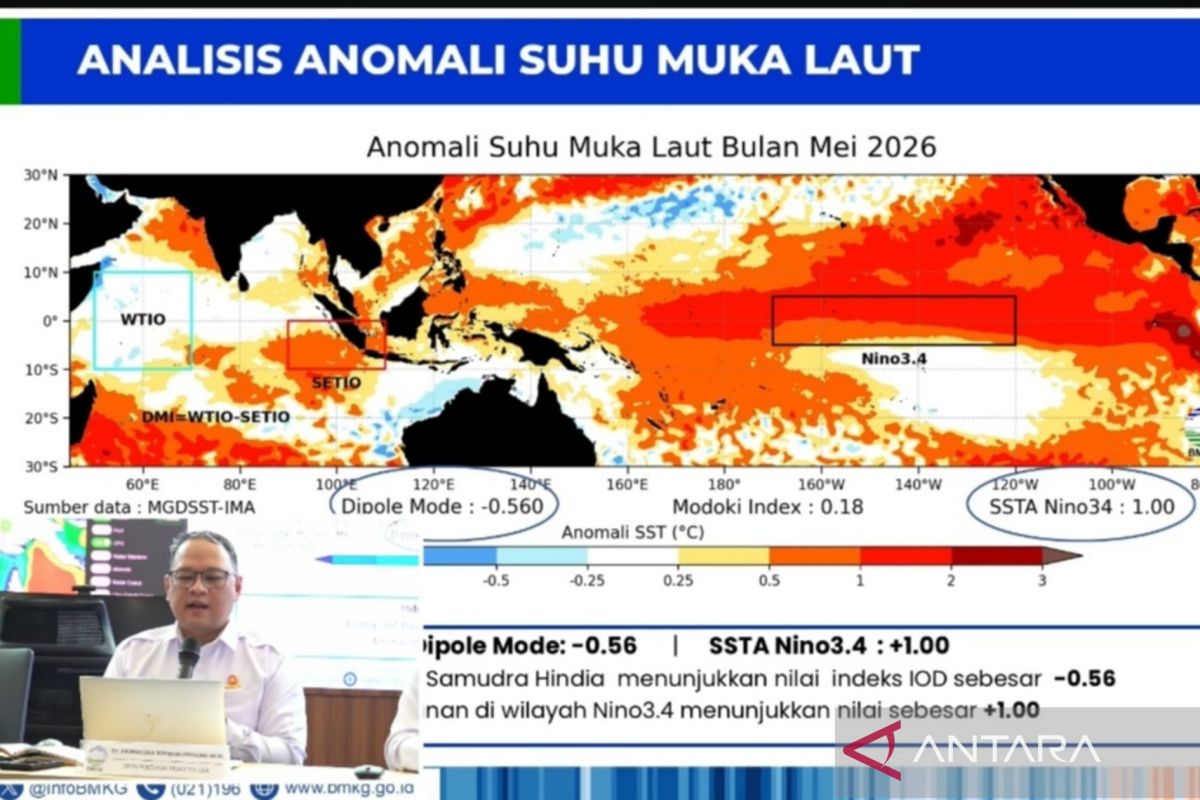
BMKG’s Directorate of Climatology reported that the El Niño phenomenon is expected to persist, with its peak predicted to occur between December 2026 and January 2027. The latest predictions also indicate a significant chance that this year’s El Niño will develop beyond a strong category, requiring continuous anticipation of its potential impact on Indonesia’s climate.
This condition is reflected in the latest climate monitoring, which shows the dry season strengthening. As of the last ten-day period of July 2026, BMKG recorded that 509 Seasonal Zones (ZOM), or approximately 54.5 percent of Indonesia’s territory, have entered the dry season, while only 77 ZOMs remain in the rainy season. Spatially, the dry season now dominates regions south of the equator, including Java, Bali, Nusa Tenggara, parts of East Kalimantan, most of Sulawesi, Maluku, and parts of Papua.
Source: jawawa.id (https://jawawa.id/newsitem/bmkg-urges-energy-ministry-and-pln-to-anticipate-electricity-surge-during-el-nino-1785405402)
Originally published by Antara (Indonesian) (https://www.antaranews.com/berita/5672645/bmkg-ingatkan-esdm-hingga-pln-antisipasi-lonjakan-listrik-saat-el-nino), translated from Indonesian