
BMKG strengthens tsunami education and evacuation drills in Cilacap
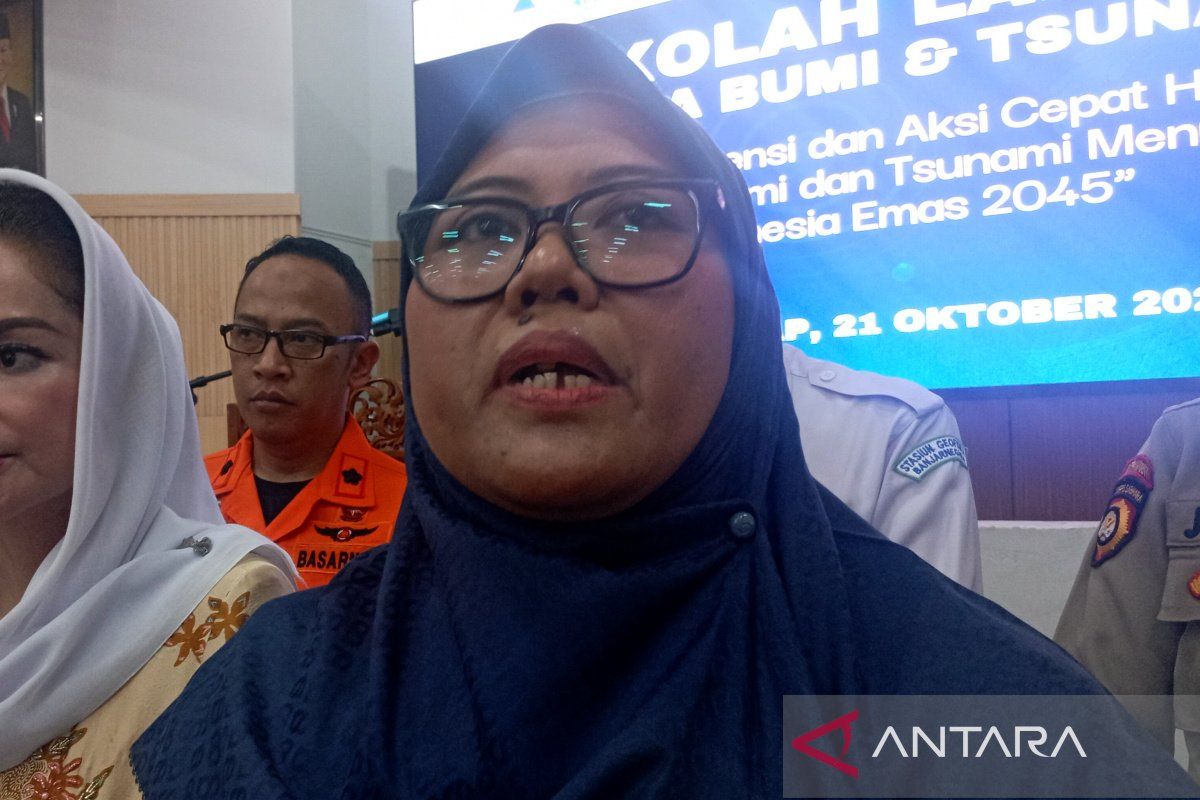
Cilacap (ANTARA) – Indonesia’s Meteorology, Climatology and Geophysics Agency (BMKG) is strengthening tsunami education and evacuation exercises in Cilacap regency, Central Java, following modelling that indicates the potential for waves of up to 15 metres.
Ana Oktavia Setiowati, acting head of BMKG’s Region II Meteorology, Climatology and Geophysics Centre, said in Cilacap on Wednesday that a tsunami could reach the coast about 43–45 minutes after an earthquake.
“This information is a reminder that preparedness must be built from an early stage,” she said at the opening of an Earthquake and Tsunami Field School organised by the BMKG Geophysics Station in Banjarnegara.
According to BMKG observations from 2009 to March 2026, about 1,801 earthquakes were recorded in the Cilacap area, 11 of which were felt by residents, she said.
“Based on worst-case scenario modelling, an earthquake of up to magnitude 9.1 on the Java southern megathrust segment is an important scenario in assessing tsunami potential along the southern coast,” she said.
However, she stressed that the modelling did not mean an earthquake and tsunami were certain to occur. Rather, it provided a basis for improving preparedness among the public and local government.
“Mitigation efforts should include identifying potential hazards, mapping evacuation routes, preparing temporary evacuation sites and holding regular evacuation drills,” she said.
To support earthquake and tsunami monitoring in Cilacap, BMKG has installed operational equipment including seismometers, accelerometers and intensity meters, as well as systems to disseminate earthquake information and tsunami early warnings.
She said the equipment was expected to improve monitoring and the delivery of disaster information, while supporting preparedness among local authorities and residents.
Speaking after the event, Ana said people needed sufficient knowledge and understanding of how to protect themselves, their families and relatives during a disaster.
At the field school, participants attended presentations and discussions, took part in an indoor earthquake simulation and practised evacuating from the beach to a safe location.
She also urged local authorities to work with the Regional Disaster Management Agency (BPBD) and BMKG to install and complete evacuation-route signs along roads used by residents to reach safety.
She said mitigation should also cover vital sites and public-service infrastructure, including energy facilities and clean-water supplies, to reduce potential disaster losses.
“Disaster risks do not affect only people or buildings, but also vital facilities. Losses are not limited to casualties; there can also be material damage,” Ana said.
Source: jawawa.id (https://jawawa.id/newsitem/bmkg-strengthens-tsunami-education-and-evacuation-drills-in-cilacap-1792561945)
Originally published by Antara (Indonesian) (https://www.antaranews.com/berita/5801265/bmkg-perkuat-edukasi-dan-simulasi-evakuasi-tsunami-di-cilacap), translated from Indonesian