
BMKG states cloud growth poses challenge to Weather Modification Operations
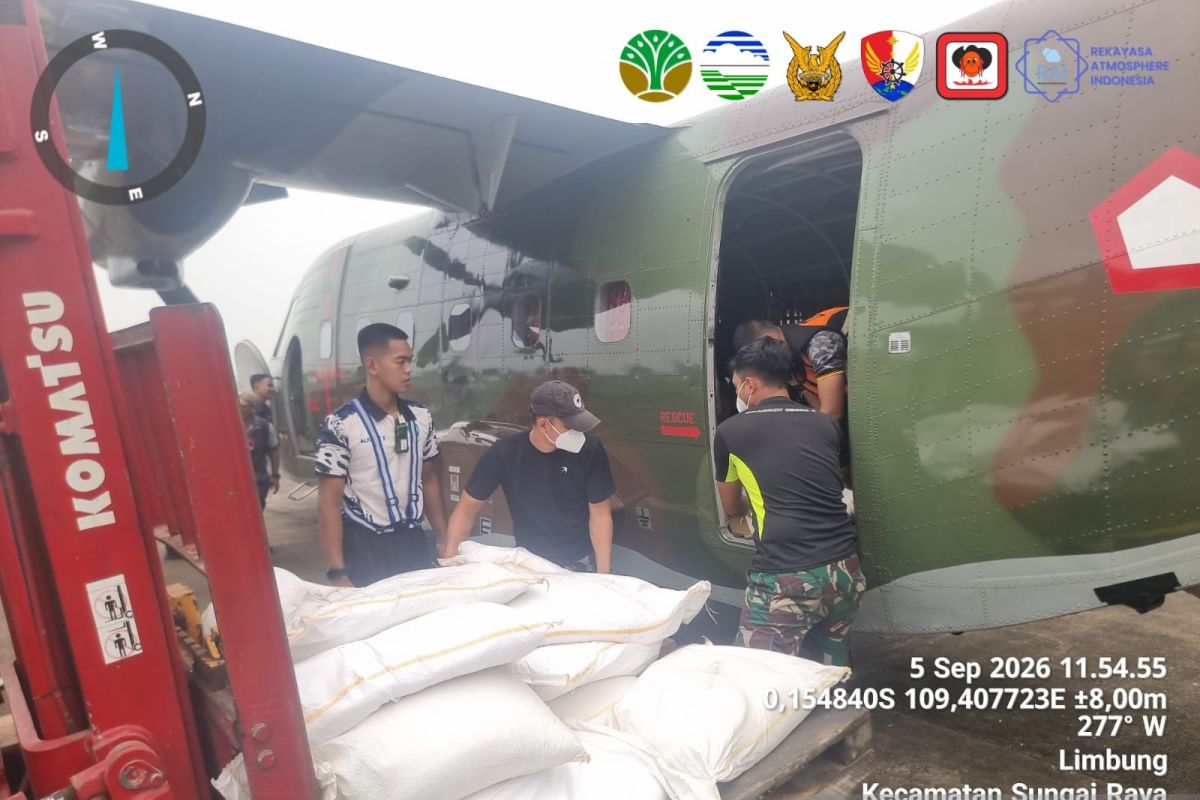
Jakarta (ANTARA) - The Agency for Meteorology, Climatology and Geophysics (BMKG) has stated that the minimal potential for rain cloud growth in regions south of the equator poses a technical challenge to the implementation of Weather Modification Operations (OMC) intended to support the management of forest and land fires (karhutla).
BMKG Director of Applied Climate Services, Marjuki, stated that the success of cloud seeding depends heavily on atmospheric conditions and the availability of potential clouds in the target operational areas.
“If there is potential for cloud growth, rainfall occurs when intervention is applied. However, in general, the region south of the equator still has minimal potential for cloud growth,” Marjuki said during a press conference held by the Forest Fire Management Coordination Desk at the Coordinating Ministry for Politics and Security in Jakarta on Thursday.
This condition, he noted, was evident in the implementation of OMC in parts of Riau and Kalimantan, which produced rainfall in recent days.
Marjuki added that in addition to monitoring weather conditions to support fire management, BMKG, alongside the Ministry of Environment, is also intensifying the monitoring of air quality based on PM2.5 particulate concentrations.
According to recent analytical data, air quality in West Kalimantan and Pekanbaru, Riau, has begun to show significant improvement alongside the arrival of rain.
However, a different situation persists in several regions affected by the spread of forest fire smoke. The city of Palangka Raya, Central Kalimantan, still records air quality in the hazardous category, or at the black indicator level.
Similar conditions are occurring in Jambi and Palembang, where air quality remains in the unhealthy to hazardous category due to high concentrations of particulates from residual forest fires.
Marjuki emphasised that the scope of OMC implementation is not massive and is very limited; therefore, its effectiveness is highly dependent on atmospheric conditions and the availability of potential clouds.
Consequently, BMKG hopes that natural rainfall, which is predicted to become more widespread with increasing intensity in November, will help clear air pollution and extinguish embers still residing beneath the surface of peatlands.