
BMKG Speaks Out on the Chances of Anak Krakatau Volcanic Ash Reaching DIY and Central Java
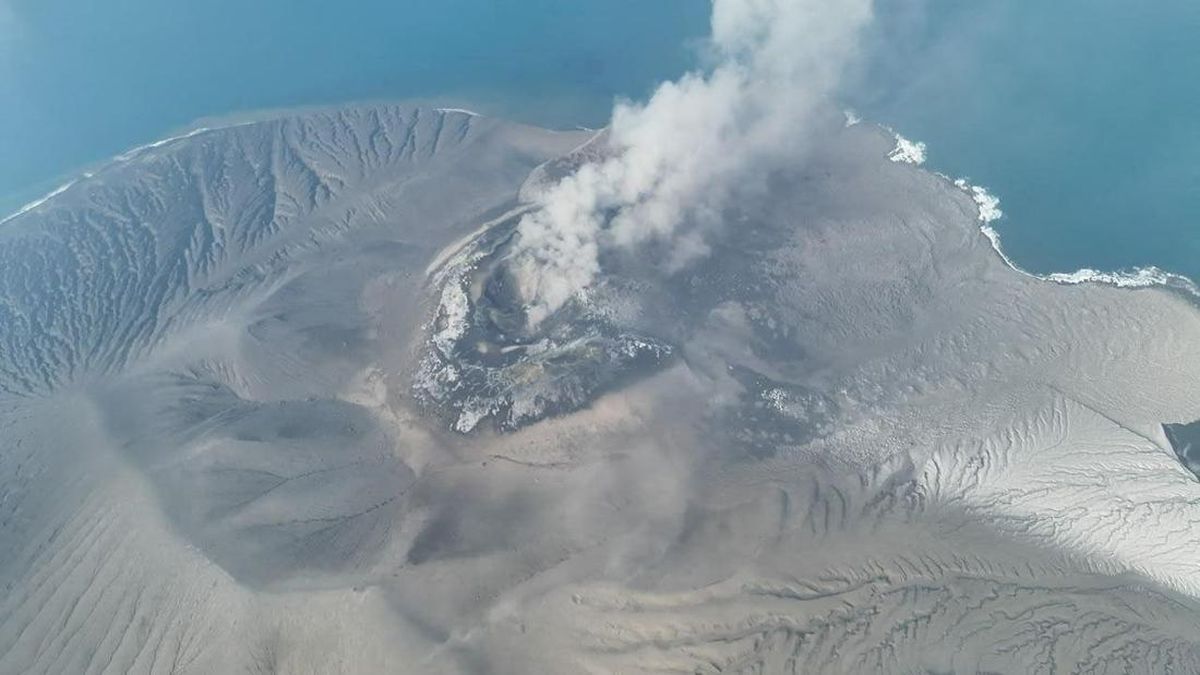
The potential spread of volcanic ash from Mount Anak Krakatau to the Special Region of Yogyakarta (DIY) and Central Java is estimated to be very minimal.
Based on satellite imagery monitored by the Meteorology, Climatology and Geophysics Agency (BMKG), the spread of volcanic dust is currently tending to shift westwards.
Forecaster at the Yogyakarta Meteorological Station, Bhakti Wira Kusumah, said that based on satellite imagery monitored at 13:00 Western Indonesian Time, the spread of volcanic dust from Mount Anak Krakatau was still detected over parts of Banten and south-western West Java. Meanwhile, Jakarta is no longer within the spread of volcanic dust.
“Indeed, the spread of volcanic dust from Mount Anak Krakatau has continued to shift westwards,” said Bhakti when contacted on Monday (7/9).
According to Bhakti, the spread of volcanic ash also remains possible in western Lampung. However, a different situation is seen in Central Java through to DIY based on the satellite imagery monitoring.
“For the Central Java region, even up to DIY, so far there has been no detected influence from volcanic dust, or the potential is extremely small,” he said.
“Very minimal. Yes, very minimal. So far, based on satellite imagery monitoring,” he added.
Although Jakarta and a number of other areas are no longer detected within the spread of volcanic dust, residual particles still need to be watched out for. The public is urged to obtain information on developments regarding the spread of volcanic ash from official sources.
On the other hand, Bhakti continued, volcanic ash can theoretically also influence weather conditions, although its impact is not particularly strong. One such effect is a drop in temperature due to volcanic ash blocking solar radiation from reaching the surface.
“So the surface usually feels colder because sunlight cannot get through,” he said.
In addition, volcanic ash particles can act as condensation nuclei that assist in cloud formation. However, this effect depends on the availability of water vapour in the atmosphere.
“So if there is indeed sufficient water vapour, moisture content that is, clouds or even rain could form. But if not, then it really does not have a significant influence on weather conditions,” Bhakti explained.
With the spread moving westwards and no detected influence of volcanic ash in Central Java through to DIY, residents in these provinces are asked to continue following official developments from BMKG and the Centre for Volcanology and Geological Hazard Mitigation (PVMBG).
Source: jawawa.id (https://jawawa.id/newsitem/bmkg-speaks-out-on-the-chances-of-anak-krakatau-volcanic-ash-reaching-diy-and-central-java-1788799911)
Originally published by CNN Indonesia (https://www.cnnindonesia.com/nasional/20260907144301-20-1401016/bmkg-buka-suara-soal-peluang-abu-vulkanik-anak-krakatau-ke-diy-jateng), translated from Indonesian