
BMKG: Seven Central Java Regencies Remain on High Alert for Drought on 11–20 October
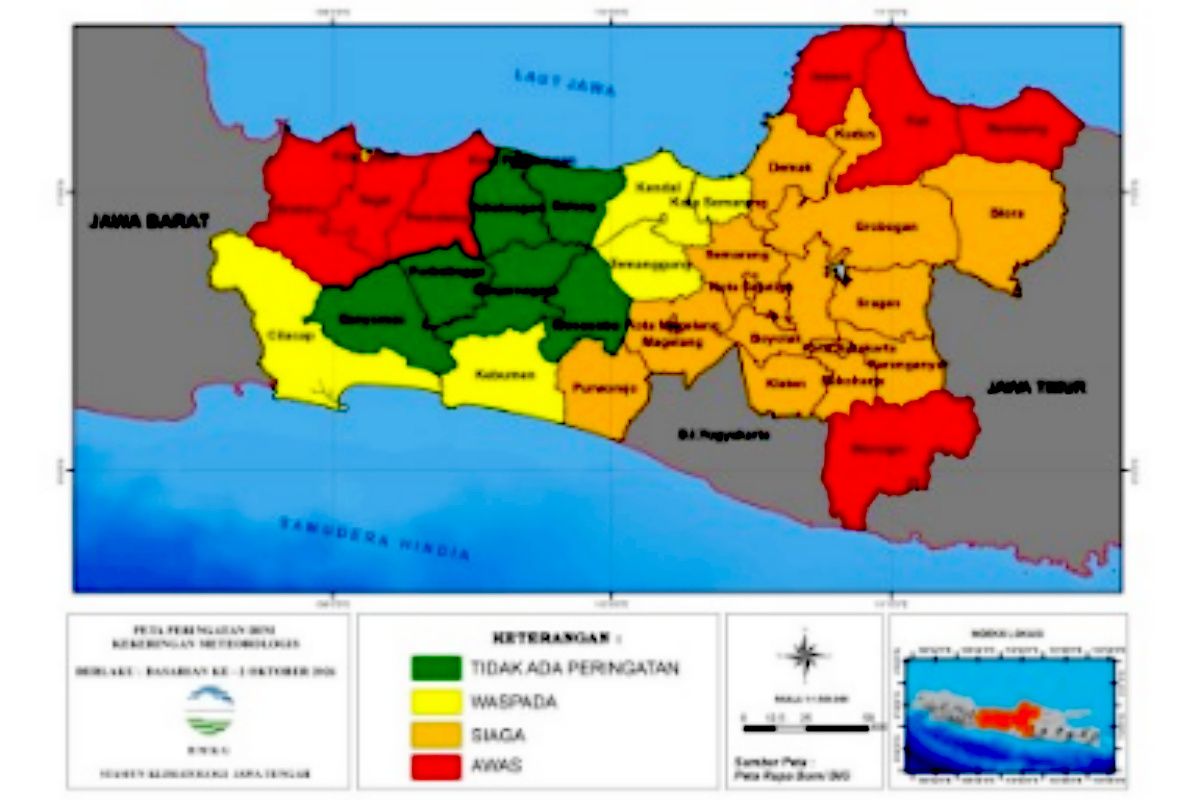
The high-alert status is the highest level in BMKG’s early-warning system for meteorological drought.
Purwokerto (ANTARA) – Indonesia’s Meteorology, Climatology and Geophysics Agency (BMKG) has placed seven regencies in Central Java on high alert for meteorological drought during the second ten-day period of October 2026, from 11 to 20 October, as the region moves from the dry season towards the rainy season.
Goeroeh Tjiptanto, head of BMKG’s Central Java Climatology Station, said in a phone interview from Purwokerto, Banyumas Regency, on Monday that the seasonal transition would take place gradually. Residents should therefore remain alert to ongoing drought in some areas, even though rain is becoming possible.
According to BMKG’s early-warning map for 11–20 October 2026, the seven regencies on high alert are Brebes, Tegal, Pemalang, Jepara, Pati, Rembang and Wonogiri.
“High alert is the highest warning level in the meteorological drought early-warning system,” he said.
Other parts of Central Java are on alert, including Tegal, Magelang, Salatiga and Surakarta cities, as well as Purworejo, Magelang, Semarang, Boyolali, Klaten, Sukoharjo, Karanganyar, Sragen, Grobogan, Blora, Demak and Kudus regencies.
Several other areas in Central Java are not included in the meteorological drought early-warning categories because they are expected to enter the transition from the dry season to the rainy season during the second ten-day period of October 2026.
BMKG previously forecast that the start of the 2026/2027 rainy season in Central Java would vary by location, mainly occurring between November and December 2026.
Goeroeh said differences in local climate conditions mean rainfall is not expected to increase across all areas at the same time.
Some areas are forecast to enter the rainy season in the first ten-day period of November, or early November 2026. These include most of Wonosobo Regency, eastern Banjarnegara, and small parts of Temanggung, Kebumen, Banyumas, Brebes, Pemalang, Purbalingga and Tegal.
Goeroeh said BMKG also expects the rainy season to begin later than usual across all seasonal zones in Central Java, compared with the 1991–2020 climatological period.
He said the seasonal transition required vigilance, as occasional rainfall did not necessarily mean the rainy season had begun.
“Residents and local governments are expected to continue preparing for the effects of drought, particularly on clean-water supplies and agricultural water needs, while also increasing vigilance against potential extreme weather during the transition,” Goeroeh said.