
BMKG: Rossby Waves Bring Rainfall Break to West Java's Dry Season
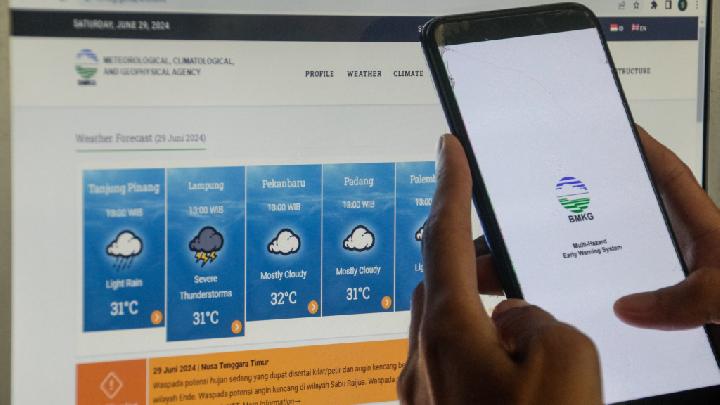
BMKG: Rossby Waves Bring Rainfall Break to West Java’s Dry Season
Reporter
October 8, 2026 | 12:33 am
TEMPO.CO, Jakarta - Rain has started falling in parts of West Java since late September and early October, although the showers have been unevenly distributed.
The Meteorology, Climatology, and Geophysics Agency (BMKG) said atmospheric Rossby waves carrying large amounts of moisture have contributed to the recent rain.
“We should be in the dry season, but the dry season is taking a break,” BMKG West Java Climatology Station forecaster Aditya Kusuma Al Arif told Tempo.
Rain Expected to Last Up to Two Weeks
Cloudy and rainy conditions have been reported in areas around Bogor, northern Sukabumi and Cianjur, as well as Greater Bandung, including Bandung City and Regency, West Bandung, and Cimahi.
Aditya said the rain is not expected to last long, with the current spell forecast to continue for a maximum of about two weeks from last weekend. BMKG therefore has not yet classified the recent rain as the start of the rainy season.
Under BMKG criteria, the rainy season begins when rainfall reaches at least 50 millimeters in one 10-day period, or dasarian, and is followed by two consecutive periods meeting the same threshold. This means total rainfall must reach at least 150 millimeters over 30 days.
Rainy Season Expected to Begin in November
Aditya said the rainy season in West Java is forecast to begin in November across 49 percent of the province. El Niño is expected to delay the start of the rainy season in 95 percent of the region.
The rainy season is expected to peak in February 2026 across 71 percent of West Java. “The rainy season in West Java is forecast to last for 13 to 18 dasarian, or four to six months, across 66 percent of the region,” he said.
The rainy season is expected to begin in October in only 24 percent of West Java, including Bogor, central Cianjur, parts of Bandung Regency, northern Garut, Ciamis, and Banjar.
The largest share, 49 percent of the province, is forecast to enter the rainy season in November. These areas include Sukabumi, Cianjur, Purwakarta, West Bandung Regency, Cimahi, Bandung City, Bandung Regency, Subang, Sumedang, southern Tasikmalaya, and Pangandaran.
The northern coastal areas of West Java are expected to enter the rainy season later, in December. These areas account for about 25 percent of the province and include Subang, Indramayu, Majalengka, Cirebon City and Regency, and northwestern Kuningan.
By February next year, most of West Java is expected to have more abundant rainfall than in other months.
El Niño Expected to Persist Into 2027
BMKG Climate Change Information Director Fachri Radjab said an analysis of atmospheric and oceanic conditions through the second 10-day period of September showed that El Niño remained active at very strong intensity and was expected to persist into early 2027.
Meanwhile, the dry season is expected to gradually end from mid-October through December 2026.
“The rainy season this year will be delayed compared with normal conditions,” Fachri said. He added that the delayed start means the onset and peak of the rainy season will occur relatively close together, raising the risk of high rainfall intensity over a three-month period.
Read: BMKG: M5.2 Earthquake Strikes West Lombok, No Tsunami Threat
Click here to get the latest news updates from Tempo on Google News
Source: jawawa.id (https://jawawa.id/newsitem/bmkg-rossby-waves-bring-rainfall-break-to-west-javas-dry-season-1791399022)
Originally published by Tempo (English) (https://en.tempo.co/read/2121122/bmkg-rossby-waves-bring-rainfall-break-to-west-javas-dry-season)