
BMKG Reveals Start and Peak of Rainy Season in Indonesia
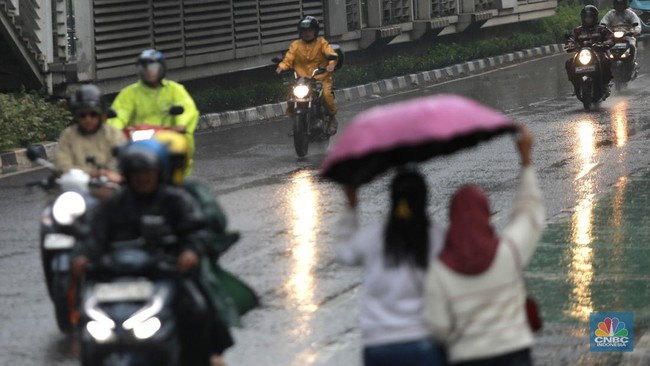
Indonesians must continue to wait for the arrival of the 2026/2027 rainy season. The Meteorology, Climatology, and Geophysics Agency (BMKG) predicts that the rainy season will arrive gradually, with most regions expected to experience it later than normal.
This situation is a point of concern as the dry season is still ongoing in several parts of Indonesia. The shift in the timing of rainfall could also affect community activities, particularly in sectors that depend on water availability.
“The start of the 2026/2027 rainy season will occur gradually. Most of Indonesia is predicted to enter the rainy season in November 2026, covering 185 seasonal zones or 24.66% of Indonesia’s land area,” said the Head of BMKG, Teuku Faisal Fathani, during a press conference on Tuesday (22/09/26).
By December 2026, the areas receiving rain are expected to expand further. However, the arrival of the rainy season does not mean that wet conditions will immediately occur uniformly across Indonesia.
“The rainy season will enter the period of December 2026, covering 266 seasonal zones or 17.31% of Indonesia’s land area,” said Faisal.
On the other hand, compared to normal conditions over the last 30 years (the 1991-2020 period), the start of the 2026/2027 rainy season is predicted to be delayed in most parts of Indonesia. This condition means the dry season in several regions could potentially last longer than usual.
“The start of the rainy season in most parts of Indonesia is predicted to arrive later or be delayed, affecting 529 seasonal zones or 6lag 61.08% of Indonesia’s land area,” stated Faisal.
This prediction serves as vital information for the public and various sectors in determining steps to face the seasonal transition. BMKG also included a comparison with climatological conditions as part of the overview for the upcoming rainy season.
“The information provided includes current climate dynamics predictions, the 2026/2027 rainy season prediction, the start of the rainy season prediction, and a comparison between the 2026/2027 predictions and the 30-year average (1991 to 2020),” said Faisal.
**Peak of the Rainy Season in Indonesia: Be Alert!
**
The 2026/2027 rainy season is predicted to have varying patterns across different regions of Indonesia. Although most areas are expected to experience rainfall in the normal category, the peak of the rainy season will occur during different periods.
This situation requires the public to monitor seasonal developments in their respective regions. Information regarding the peak of the rainy season is also crucial for sectors related to water management, agriculture, and preparedness for potential hydrometeorological disasters.
“Rainfall accumulation during the rainy season in most of Indonesia, covering 510 seasonal zones or 69.76% of the land area, is predicted to be in the normal category or close to its climatological average,” said Faisal.
Even though general rainfall accumulation is predicted to be normal, the period of highest rainfall will not occur simultaneously across Indonesia. The peak of the rainy season will be spread over several months, from late 2026 to early 2027.
“Most of Indonesia is predicted to experience the peak of the rainy season in December 2026, covering 155 seasonal zones or 36.94% of the land area. The peak will continue in January 2027 across 162 seasonal zones or 25.68% of the land area, and later in February 2027 across 190 seasonal zones or 16.79% of the land area,” Faisal explained.
The difference in the timing of the rainfall peak means that regional preparedness must be adjusted to the seasonal characteristics. This period also serves as an important momentum for managing additional water supplies after several regions have endured a long dry season.
“It should be emphasised that the rainy season also presents various opportunities that can be optimised, such as supporting the expansion of planting areas and the opportunity to refill the capacity of reservoirs and dams, which have depleted due to the long dry season,” said Faisal.
However, increased rainfall also brings risks that must be accounted for. The peak of the rainy season is a period that requires higher preparedness because the risk of ‘wet’ hydrometeorological disasters also increases.
“Nevertheless, with the arrival of the rainy season, the risk of wet hydrometeorological disasters also rises,” said Faisal.
Therefore, information regarding the nature and peak of the rainy season serves not only as a weather overview but also as a basis for determining anticipatory measures. The government, businesses, and the public can adjust their preparations according to the timing and characteristics of the season in their respective areas.
“We hope this information can be translated into concrete adaptation strategies and anticipatory steps, so that the community and stakeholders are not only better prepared for risks but also able to utilise the opportunities that arise alongside the occurring climate dynamics,” concluded Faisal.
Source: jawawa.id (https://jawawa.id/newsitem/bmkg-reveals-start-and-peak-of-rainy-season-in-indonesia-1790427204)
Originally published by CNBC Indonesia (https://www.cnbcindonesia.com/tech/20260925201019-37-771072/bmkg-ungkap-awal-dan-puncak-musim-hujan-di-ri), translated from Indonesian