
BMKG Reveals September 2026 as Critical Phase for Forest and Land Fires, El Niño Hampers Extinguishing Efforts
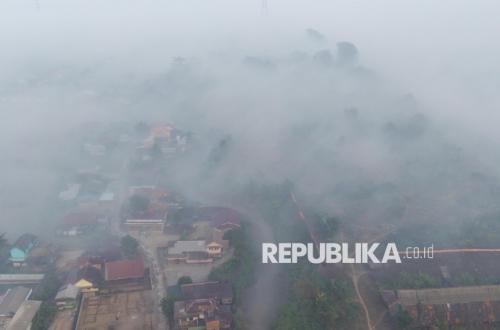
JAKARTA – The Meteorology, Climatology, and Geophysics Agency (BMKG) has revealed that September 2026 remains the critical phase for forest and land fires (karhutla) in Indonesia. This is due to dry weather conditions influenced by El Niño, as well as the high number of hotspots that are hampering extinguishing efforts.
According to BMKG monitoring, there are three main factors that require collective attention: the still-dominant dry conditions, the high potential for forest and land fires particularly in Sumatra and Kalimantan, and the worsening situation with smoke beginning to be detected in a number of regions.
“Because of this, the month of September remains a critical phase that requires joint preparedness,” said BMKG Head Teuku Faisal Fathani in a statement on Tuesday (8/9/2026).
BMKG predicts that El Niño will persist until early 2027. Its impact is evident in the increasingly long number of days without rain in various areas. As of early September, most of Indonesia remains in the dry season, whilst the rain that does occur is generally localised and has not yet been able to improve drought conditions evenly.
Based on BMKG analysis, the potential for rain cloud formation during the period 6–13 September remains relatively low across most of Indonesia, particularly in Java, Bali, Nusa Tenggara, southern Sumatra, and parts of Sulawesi and South Papua.
“These conditions indicate that opportunities for natural rainfall to assist in extinguishing forest and land fires remain limited,” said Faisal.
BMKG stated that the regions still requiring primary attention include South Sumatra, Riau, Jambi, West Kalimantan, Central Kalimantan, South Kalimantan, and East Kalimantan.
In addition to the increase in hotspots, BMKG has detected smoke spreading across a number of regions in Sumatra and Kalimantan, with the potential to affect air quality. Monitoring of fine particulate concentrations (PM2.5) shows an increase in several locations affected by forest and land fire activity.
The Sentinel-5P satellite has also detected increased carbon monoxide emissions in Sumatra and Kalimantan, even monitored as far as the Malaysian state of Sarawak.
“This situation requires attention because it is directly related to air quality and public health. Therefore, controlling fire sources must be carried out as early as possible,” said Faisal.
One of the measures being undertaken by BMKG to support the handling of forest and land fires is through Weather Modification Operations (OMC) together with BNPB, ministries and agencies, regional governments, and state-owned enterprises. OMC is used not only for forest and land fire mitigation, but also to support water resource management and national food security.
“Operations are carried out adaptively based on atmospheric conditions and the needs of each region,” said Faisal.
Source: jawawa.id (https://jawawa.id/newsitem/bmkg-reveals-september-2026-as-critical-phase-for-forest-and-land-fires-el-nino-hampers-extinguishing-efforts-1788846767)
Originally published by Republika (https://news.republika.co.id/berita/tl13mr409/bmkg-ungkap-september-2026-fase-kritis-karhutla-el-nino-sulitkan-pemadaman), translated from Indonesian