
BMKG Reveals Cause of Forest and Land Fires in Kalimantan: Dry Climate from El Niño
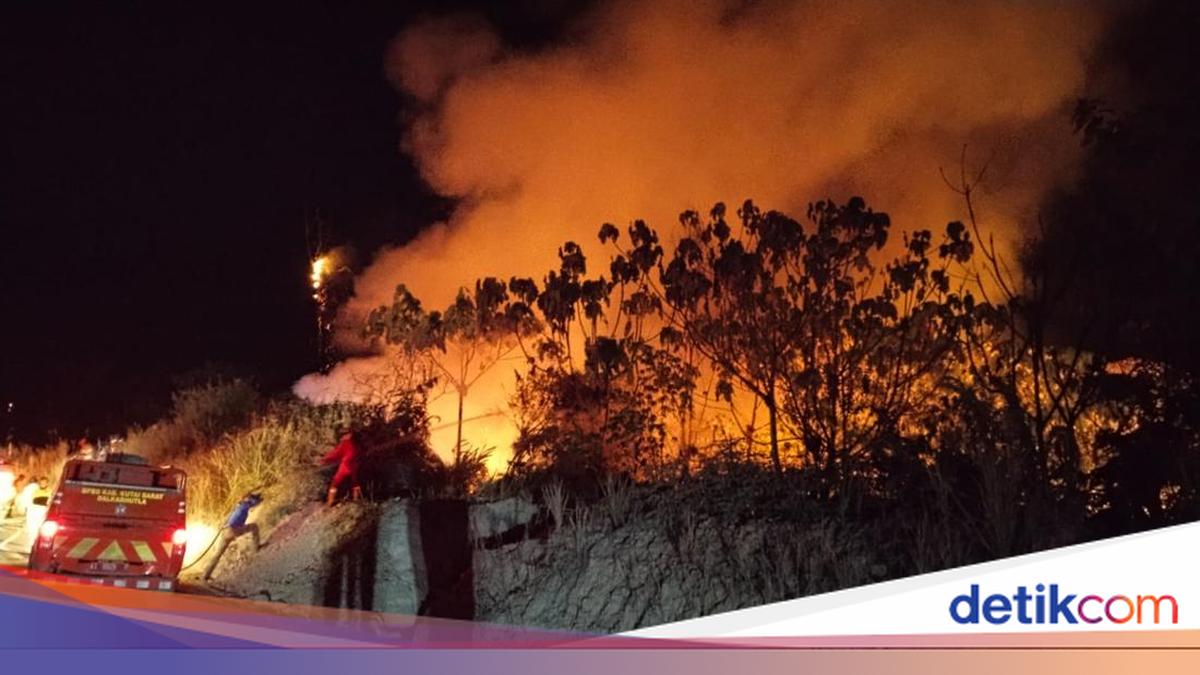
Forest and land fires (karhutla) in several parts of Kalimantan have caused thick smoke haze. The Meteorology, Climatology, and Geophysics Agency (BMKG) has revealed the cause of the emergence of these fire spots.
The fire spots occurred partly because of extremely dry climate conditions resulting from El Niño. These dry conditions have made land easy to burn and produced large amounts of smoke.
“Dry climate conditions are the setting that allows land to be burned and creates a lot of smoke,” said BMKG Deputy for Climatology Ardhasena Sopaheluwakan to detikcom on Friday (21/8/2026).
Ardhasena also explained the monitoring results for August 2026. The monitoring shows El Niño at a very strong intensity.
“Monitoring results for the first ten-day period of August 2026 show a ten-day IOD index (monthly index) of +0.457 (July: +0.242). Meanwhile, the SSTA value in the Nino3.4 region on a ten-day basis (monthly ENSO) is +2.77 (July: +2.20), indicating El Niño with very strong intensity,” he explained.
He further explained that 76.5% of Indonesia’s territory (535 ZOM) is experiencing the dry season, with varying levels of status.
Kalimantan is at alert and standby status. West Kalimantan, South Kalimantan and East Kalimantan are on alert status, while Central Kalimantan and South Kalimantan are on standby status.
He said forest and land fire mitigation must continue, as there are still several fire spots that need to be addressed. “There are still many fire spots that need to be mitigated,” he said.
Previously, the Ministry of Forestry (Kemenhut) recorded an increase in hotspots due to forest fires in Kalimantan. Hotspots increased fourfold in a single day.
“Based on the update of the Forest and Land Fire Monitoring System (SIPONGI) of the Ministry of Forestry, monitoring by the NASA-MODIS/Terra-Aqua satellite with high confidence shows dynamic hotspot development during 17–19 August 2026,” according to the official Kemenhut website on Friday (21/8/2026).
On 17 August 2026 at 07.00 WIB, according to Kemenhut data, there were 93 high-confidence hotspots in West Kalimantan, 28 hotspots in Central Kalimantan, and two hotspots in South Kalimantan. The total across the three provinces reached 123 points.
On 18 August 2026 at 07.00 WIB, hotspots in West Kalimantan fell to 15 points. Meanwhile, Central Kalimantan increased to 73 points and South Kalimantan to 21 points. The total number of high-confidence hotspots that day reached 109 points.
A significant increase in hotspots was detected on 19 August 2026 at 07.00 WIB. Kemenhut recorded 259 high-confidence hotspots in West Kalimantan, 242 hotspots in Central Kalimantan, and 17 hotspots in South Kalimantan.
“The total across the three provinces reached 518 points, or more than four times the previous day,” according to Kemenhut.
Cumulatively during 17–19 August 2026, 367 high-confidence hotspots were detected in West Kalimantan, 343 hotspots in Central Kalimantan, and 40 hotspots in South Kalimantan. Kemenhut said the total high-confidence hotspots in the three provinces during that period reached 750 points.
Source: jawawa.id (https://jawawa.id/newsitem/bmkg-reveals-cause-of-forest-and-land-fires-in-kalimantan-dry-climate-from-el-nino-1787295229)
Originally published by detikcom (https://news.detik.com/berita/d-8628464/bmkg-ungkap-penyebab-karhutla-di-kalimantan-iklim-kering-efek-el-nino), translated from Indonesian