
BMKG Records 7,578 Hotspots Up to August
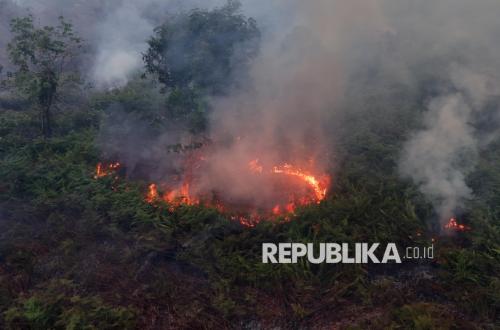
The Meteorology, Climatology and Geophysics Agency (BMKG) has recorded 7,578 hotspots up to early August 2026. The figure could continue to rise given the many remaining days in the year.
“The number of high-confidence hotspots from January to 9 August 2026 totals 7,578 hotspots,” said Novianti Ruliana of the Weather and Lightning Satellite Analysis and Management Working Team to Republika on Monday (10/8/2026).
Based on the number of high-confidence hotspots from January to 9 August 2026, seven provinces recorded the highest figures. West Kalimantan led with 2,743 hotspots, followed by South Papua (662 hotspots), Central Kalimantan (577 hotspots), Riau (573 hotspots), East Kalimantan (406 hotspots), South Sumatra (277 hotspots) and South Sulawesi (257 hotspots).
BMKG explained that forest and land fires are influenced by three main factors: human activity, geographical conditions and weather conditions. Human activity is the primary trigger, for example land clearing by burning. Geographical conditions, such as the characteristics of peatland, affect how easily an area catches fire and the level of difficulty in extinguishing it.
“Weather conditions, including low rainfall, high temperatures, low humidity and strong winds, play a role in increasing the potential for and accelerating the spread of fires that have already occurred,” said Novianti.
Under normal conditions, Novianti said weather acts as a supporting factor rather than the main trigger. However, during severe drought conditions in the dry season, especially when accompanied by the El Niño phenomenon, the role of weather in supporting the spread of forest and land fires can increase significantly.
“El Niño causes a significant reduction in rainfall as well as a longer and drier dry season than normal, making land and vegetation more susceptible to burning, and fires that occur have the potential to spread more quickly,” said Novianti.
Therefore, Novianti stressed that weather is generally not the sole cause of forest and land fires, as the initial trigger remains dominated by human activity.
“However, during periods influenced by El Niño, the contribution of weather factors to the extent and intensity of forest and land fires needs greater attention,” said Novianti.
BMKG predicts that the 2026 dry season will arrive earlier, be drier and last longer than normal. The peak is expected to be dominant in August (around 48.84 percent of land area) and September (25.41 percent), with the El Niño phenomenon predicted to persist until early 2027 (moderate probability 98 percent, strong probability 62 percent).