
BMKG Records 118 Earthquakes in Bandung Regency, Forming a Linear Pattern
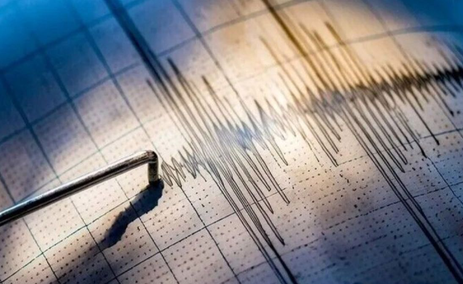
The Indonesian Agency for Meteorology, Climatology, and Geophysics (BMKG) has reported an increase in seismic activity in the Bandung Regency and its surrounding areas. Based on the latest data as of Thursday (17/09) at 08:00 WIB, 118 earthquake activities were recorded within the last month, specifically since 11 August 2026.
BMKG Director of Earthquakes and Tsunamis, Wijayanto, revealed that the series of earthquakes varied in magnitude but remained within the small to medium scale. Of the total recorded activities, 13 earthquakes were significantly felt by the public.
BMKG’s analysis indicates that this series of earthquakes consists of shallow-focus earthquakes. Technically, the epicentres form a linear pattern towards the southwest-northeast. The location is situated approximately 5-8 kilometres west of the Garsela Fault (Kendang Segment) and north of the Garsela Fault (Kencana Segment).
However, Wijayanto disclosed a significant finding regarding the source of these tremors. The distribution of the earthquakes does not lie within previously known fault zones, such as the Garsela Fault (Kendang and Kencana Segments) or the Cicalengka Fault, which are listed in the 2024 Indonesian Earthquake Source and Hazard Map (PuSGen).
“The distribution of the occurring earthquakes is in an unmapped area. Therefore, a more in-depth study regarding the earthquake source is required,” Wijayanto stated in an official briefing on Thursday (17/09).
To monitor this micro-activity, BMKG relies on a network of 35 seismic sensors distributed across West Java. This technology enables the detection of small-magnitude earthquakes with a high level of precision.
Small-scale earthquake activity in this region is generally closely related to the movement of active land faults. Given the existence of an unmapped source, BMKG is committed to continuing intensive monitoring of the situation.
The public is advised to remain calm and not be easily provoked by unfounded rumours. BMKG emphasises that residents should always refer to verified official communication channels to obtain accurate information regarding tectonic activity in the West Java region.