
BMKG: Preparedness Must Be Built to Reduce Earthquake Risks
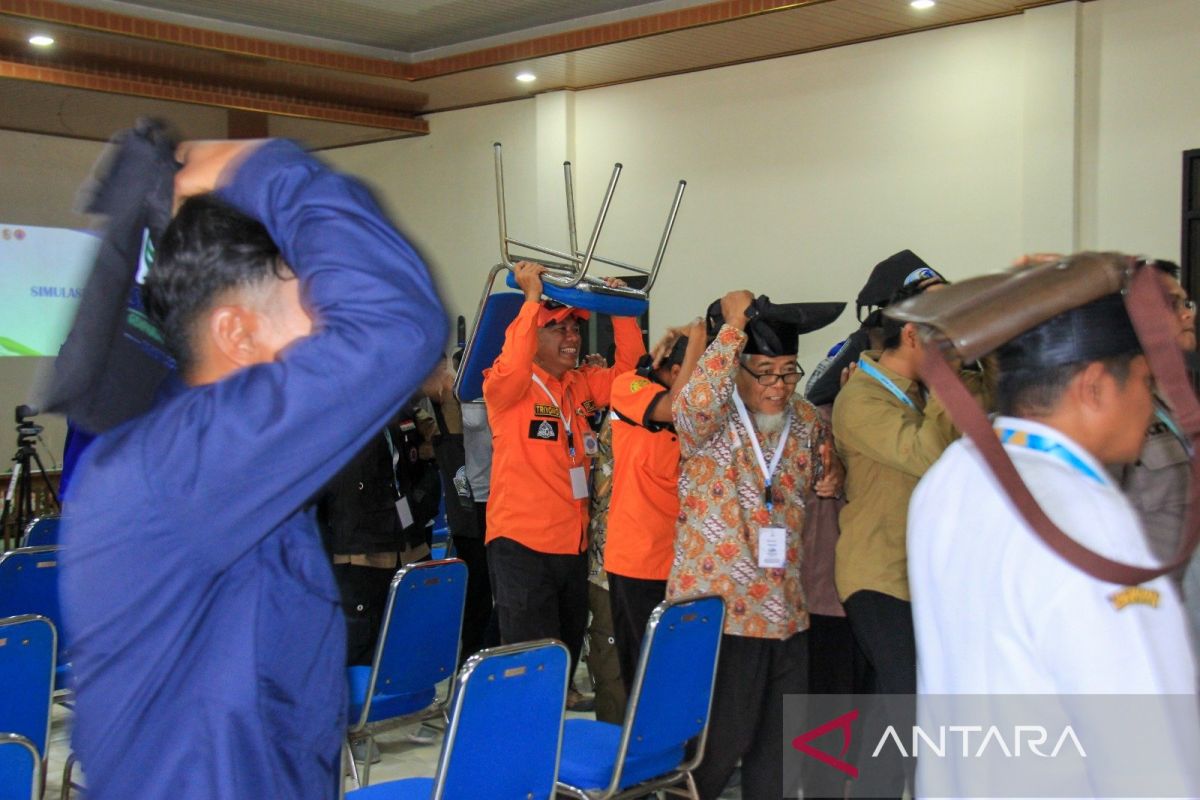
The Indonesian Agency for Meteorology, Climatology, and Geophysics (BMKG) has emphasised that the preparedness capacity of the public and local governments must be developed through a series of training programmes to reduce the risks of potential earthquakes, which currently cannot be predicted with certainty in terms of time and location.
BMKG Head Teuku Faisal Fathani stated in Jakarta on Monday that this latest preparedness training, known as the Earthquake Field School (SLG), was organised for the residents of Jatiyoso District, Karanganyar Regency, Central Java. The geography of Karanganyar, which is situated near active terrestrial faults and the southern Java subduction zone, necessitates trained safety reflexes and responses from all local villagers.
In addition to local residents, the training involved 53 other participants, including officers from the Regional Disaster Management Agency (BPBD), relevant government departments, educational institutions, volunteers, and members of the media in Karaganyar.
“Participants were equipped with knowledge regarding the Earthquake Early Warning System (EEWS), tremor simulations, and decision-making exercises, such as table-top exercises,” he said.
He explained that instructors from the Class I Sleman Geophysical Station utilised the training to transform disaster information into practical mitigation steps in the field. The fact that no technology in the world can yet precisely predict when and where an earthquake will occur demands that all elements within high-risk zones receive early training.
Currently, the Indonesian government possesses technology including hundreds of seismic sensor units from BMKG, as well as other tools such as buoys and tide gauges—undersea fibre optic cables belonging to various ministries and agencies—specifically designed to detect earthquake aftershocks, such as tsunamis.
“Therefore, this SLG programme is aligned with the global initiatives of Early Warning, Early Action, and Early Warning for All,” he added, expressing hope that participants would share their disaster mitigation skills and knowledge with their families and surrounding communities to avoid the dangers of earthquakes.