
BMKG Predicts El Niño Impact to Ease by Mid-October 2026
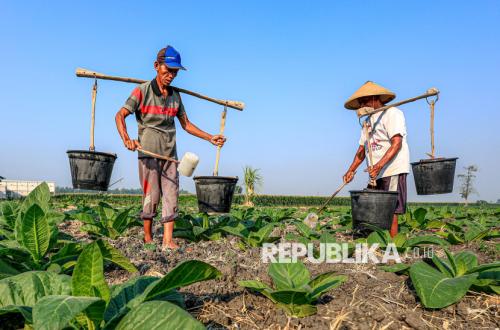
REPUBLIKA.CO.ID, JAKARTA – The Meteorology, Climatology and Geophysics Agency (BMKG) predicts that El Nino’s impact on Indonesia will begin to ease from mid-October 2026 as the rainy season arrives across most of the country. Although the El Nino phenomenon is expected to persist until around May 2027, its influence on national weather conditions is expected to be far less significant than during the dry season.
BMKG head Teuku Faisal Fathani explained that the public needs to understand that El Nino and the dry season are two distinct phenomena. According to him, the dry season is an annual cycle that naturally alternates with the rainy season. El Nino, by contrast, is a climate anomaly that becomes a threat when it coincides with the dry season, as it makes conditions drier, reduces rainfall and prolongs the duration of drought in various regions.
“Once the rainy season begins, expected in the third week of October, El Nino will no longer affect Indonesia so significantly, even though it remains active until around May 2027,” Faisal said at a press conference following a coordination meeting on El Nino preparedness at the Ministry of National Development Planning/Bappenas office in Jakarta on Tuesday (4/8/2026).
He said BMKG had issued a forecast as early as March 2026 that Indonesia would face a dry season coinciding with a moderate-strength El Nino. Subsequent developments showed the phenomenon’s intensity continuing to increase. On 2 June 2026, the World Meteorological Organization (WMO) declared that El Nino had become active. Monitoring from May through July showed the phenomenon has now entered a strong phase.
According to Faisal, a strong phase does not mean all regions of Indonesia will experience the same impact. Indonesia has highly diverse climatic characteristics, being an archipelagic nation with mountainous terrain, valleys and coastal areas. BMKG divides Indonesia into 699 seasonal zones so that El Nino impacts and mitigation measures can be mapped more specifically.
He continued that areas south of the equator are expected to bear the greatest impact, including East Nusa Tenggara, West Nusa Tenggara, Bali, most of Java — particularly coastal areas — southern Sumatra and South Papua. Conversely, a number of regions west of the Bukit Barisan mountain range, in the northern belt of Kalimantan, parts of Papua and Maluku have different climatic characteristics, so El Nino’s impact is not always uniform.
Faisal added that every El Nino event has its own characteristics and cannot be compared directly with those of 2015, 2019 or 2023. Although the 2015 El Nino was classified as very strong, the scale of the impact felt by Indonesia still depended on atmospheric dynamics and sea surface temperatures around the country’s waters. Warmer sea surface temperatures, for instance, can still trigger the formation of rain clouds, reducing drought impacts in some areas.
For this reason, BMKG continually updates its weather analyses and forecasts as the basis for mitigation by ministries, regional governments and the public. According to Faisal, this information is needed so that various sectors — particularly agriculture, water resources and forest and land fire prevention — can adjust their anticipatory measures before El Nino’s impact reaches its peak.
Source: jawawa.id (https://jawawa.id/newsitem/bmkg-predicts-el-nino-impact-to-ease-by-mid-october-2026-1785829943)
Originally published by Republika (https://esgnow.republika.co.id/berita/tj8gd5423/bmkg-prediksi-dampak-el-nino-mulai-berkurang-pada-pertengahan-oktober-2026), translated from Indonesian