
BMKG: One district in Bima experiencing extreme drought, 105 days without rain
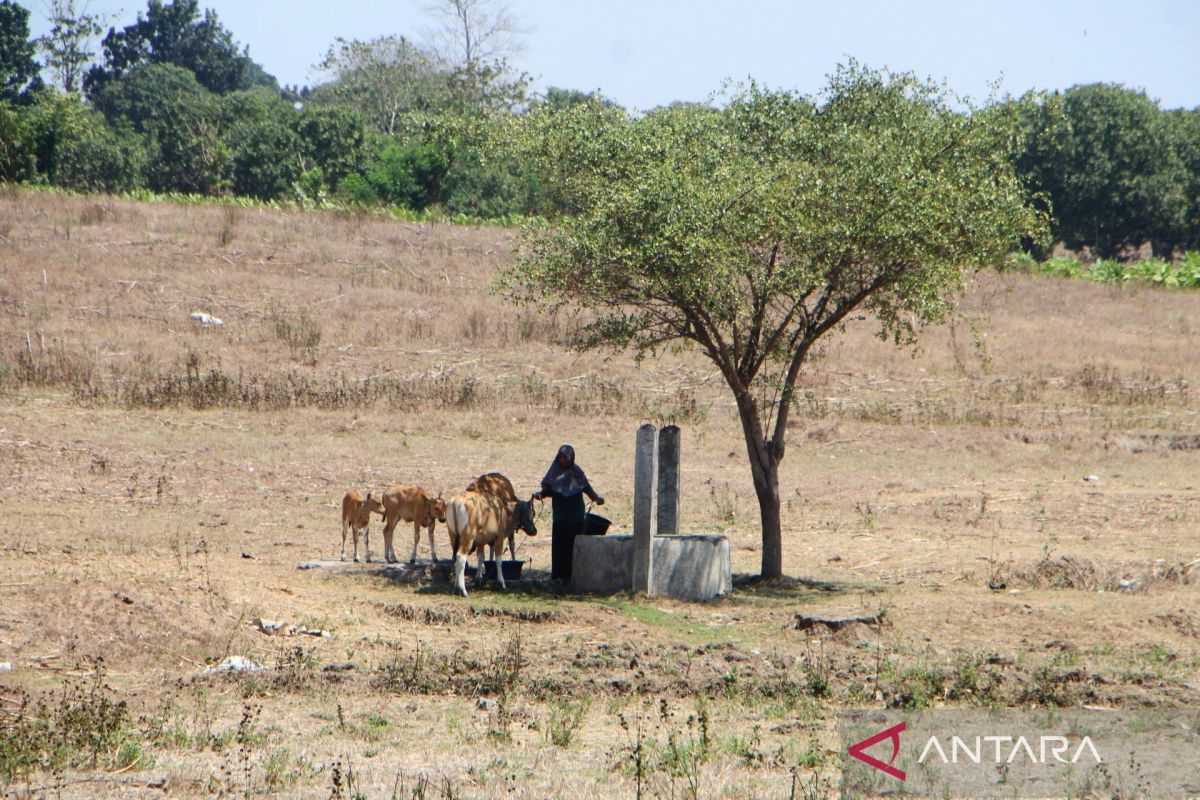
Bima (ANTARA) - The Agency for Meteorology, Climatology, and Geophysics (BMKG) has recorded that the number of Days Without Rain (HTH) in Bolo District, Bima Regency, West Nusa Tenggara, has reached 105 days, categorised as extreme drought due to the dry season influenced by the El Niño phenomenon.
The Head of the Sultan Muhammad Salahuddin Bima Meteorological Station, Moch Syaiful Annas, stated that based on monitoring of atmospheric and marine dynamics up to the third ten-day period of August 2026, the dry season is still ongoing in several areas of Bima Regency, Dompu Regency, and Bima City.
“The longest period without rain in Bima Regency was recorded in Bolo District for 105 days, falling into the extreme drought category,” he told ANTARA on Friday.
In addition to Bolo, he noted that several other areas in Bima Regency are under varying levels of drought alert.
“The alert status is in effect for Sanggar and Monta Districts, while the warning status is recorded in Bolo, Donggo, Lambitu, Soromandi, and Wera Districts,” he said.
“The strong El Niño condition is predicted to persist until early 2027, which has the potential to extend the dry period in Indonesia, including the West Nusa Tenggara region,” said Syaiful.
He stated that rainfall during the third ten-day period of August 2026 in the West Nusa Tenggara region generally ranged between 0-10 millimetres per ten-day period, falling into the below-normal category.
The probability of rainfall during the first ten-day period of September 2026 in the Bima, Dompu, and surrounding areas also remains low, at less than 10 per cent.
“For September, monthly rainfall in Bima Regency, Bima City, and Dompu is predicted to remain low, generally less than 20 millimetres to 21-50 millimetres per month,” he added.
An increase in rainfall is only predicted to begin in November 2026, although most areas will still remain in the low category, ranging from 51-100 millimetres per month.
BMKG has urged the public to conserve water usage and adjust water utilisation for both household and agricultural needs according to current availability.
The public, particularly farmers, are also requested to adjust planting schedules and select crop varieties that are more resistant to drought conditions.
“Furthermore, we urge the community to increase vigilance regarding the potential for fires, as dry conditions can heighten the risk of fire outbreaks,” he said.
BMKG also requested that the public continue to monitor weather early warnings and climate developments through official BMKG channels as a measure to anticipate the impacts of the dry season.