
BMKG monitors cloud growth potential to support forest and land fire management
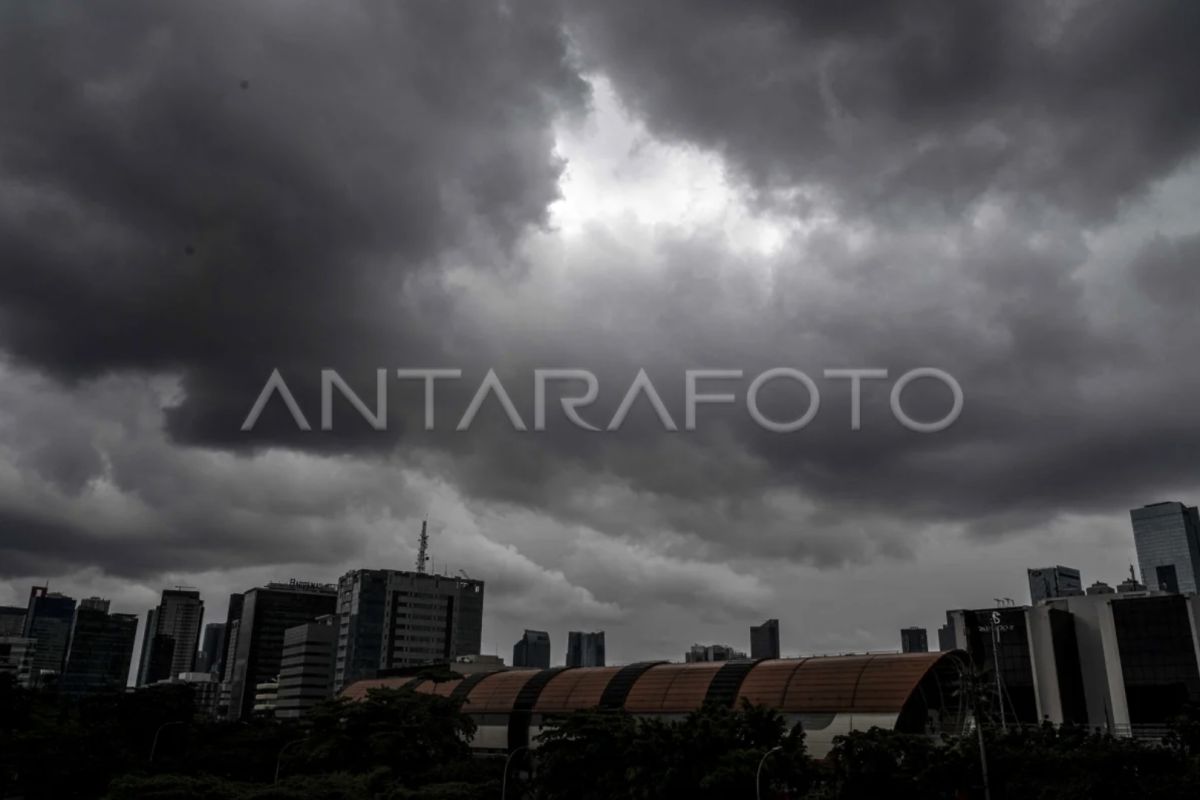
The Indonesian Agency for Meteorology, Climatology, and Geophysics (BMKG) continues to monitor the likelihood of rain and cloud growth in several regions prone to forest and land fires (karhutla) to support the determination of field management strategies.
BMKG Director of Applied Climate Services, Marjuki, stated that monitoring climate conditions is essential to support both ground-based firefighting operations and weather intervention through Weather Modification Technology (TMC), particularly in areas that still possess fire risks.
“For the Riau Province region, as Mr Berton also mentioned, there has already been rain; meanwhile, for the Jambi region, we predict the start of the rainy season will be at the earliest in the second ten-day period of October,” Marjuki said during a press conference at the Coordination Desk for Forest Fire Management at the Coordinating Ministry for Politics and Security in Jakarta on Thursday.
He explained that northern Riau, which follows an equatorial climate pattern, has experienced rainfall since the second ten-day period of September (11–20 September).
Marjuki noted that similar conditions are being monitored in Kalimantan. West, Central, and East Kalimantan are forecasted to begin receiving rainfall at the earliest during the second ten-day period of October.
However, the rainy season in East Kalimantan is generally predicted to become widespread only in the second ten-day period of November. South Kalimantan will follow at the earliest in the first ten-day period of November, while the rainy season in that region will generally become widespread in December.
Nationally, BMKG has mapped 63 Seasonal Zones (ZOM) that are set to enter the early rainy season in October.
BMKG, he added, is conducting continuous monitoring of potential cloud growth to ensure that the implementation of TMC can be carried out precisely.
This monitoring is crucial because the southern equatorial region currently has minimal potential for the growth of rain clouds that can be intervened through Weather Modification Operations (OMC).
Consequently, the development of rainfall potential and cloud growth remains a key factor being closely observed to support fire management operations in priority areas.