
BMKG Launches Weather Modification Operation to Tackle Forest and Land Fires in East Kalimantan
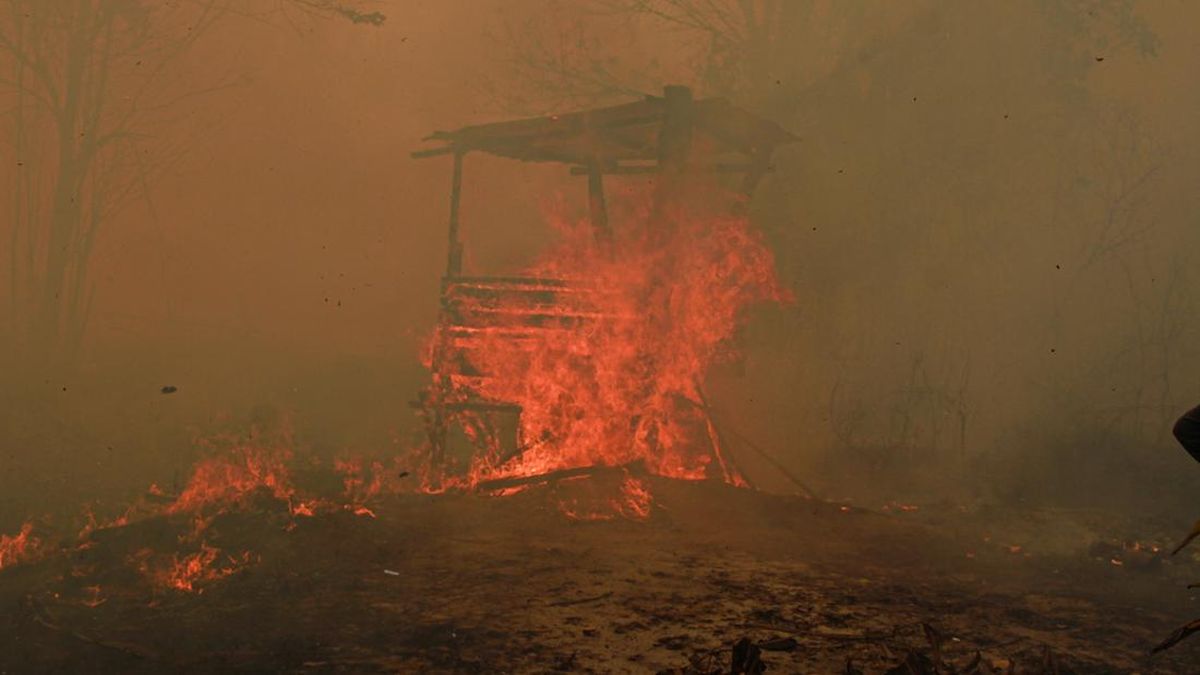
The Meteorology, Climatology and Geophysics Agency (BMKG) is carrying out a weather modification operation (OMC) to address the water deficit at Sepaku Reservoir and forest and land fires (karhutla) in East Kalimantan. The operation is being conducted together with the Nusantara Capital City Authority (OIKN), the Indonesian National Armed Forces - Air Force (TNI-AU), the National Disaster Management Agency (BNPB) and the East Kalimantan Provincial Government.
“Weather modification is not about making rain, but optimising the potential of available clouds. If cloud conditions are supportive, cloud seeding is carried out to accelerate the process of rainfall and expand its coverage area,” said BMKG Director of Weather Modification Operations, Budi Harsoyo, at the East Kalimantan Governor’s office on Monday (24/8).
Budi revealed that the distribution of smoke from forest and land fires generally moves towards the northwest to the northeast, crossing administrative boundaries into North Kalimantan and Sabah, Malaysia.
Meanwhile, data as of 20 August 2026 shows that East Kalimantan generally experienced days without rain (HTH) in the Very Short to Long categories, with the longest duration recorded in West Kutai Regency and Paser Regency, which each recorded 28 consecutive days without rain.
BMKG stated that water reserves at Sepaku Reservoir, which serves as the raw water source for the Nusantara Capital City (IKN) area, have been declining since July due to the impact of El Niño. At the same time, based on BMKG monitoring, the number of hotspots in East Kalimantan from 1-23 August 2026 reached 13,273 points.
Budi said the potential for cloud growth in East Kalimantan from 23-31 August was in the high to moderate category, especially in the northern part of East Kalimantan. However, there was a decline in cloud growth potential from 28-31 August, resulting in relatively dry weather across most of East Kalimantan.
Furthermore, there is potential for light to moderate intensity rainfall in the western, northwestern and northern parts of East Kalimantan on 24-26 August. Subsequently, from 27 August to 1 September, the potential intensity and distribution of rainfall is expected to decrease significantly across most of East Kalimantan.
In implementing the OMC, Budi said, BMKG considers not only the number of detected fire hotspots, but also the potential for rainfall in the target areas.
The OMC was implemented in IKN from 22-27 August to address the declining water levels at Sepaku Reservoir. The results were reportedly visible with rainfall occurring in the area and its surroundings over the past two days.
“Then, the OMC in Berau Regency began on 24-28 August to address hotspots based on a request from the Berau Regent to BNPB and BMKG,” said Budi.
Currently, the status of forest and land fire handling in East Kalimantan remains at the Disaster Alert level, and has not yet been raised to Emergency Alert. However, the East Kalimantan government has reminded each region to be vigilant about vulnerability and disaster conditions in their areas so that they can immediately submit requests for assistance to BNPB if an emergency arises.