
BMKG Kotim: Haze Difficult to Dissipate Due to Walker Circulation
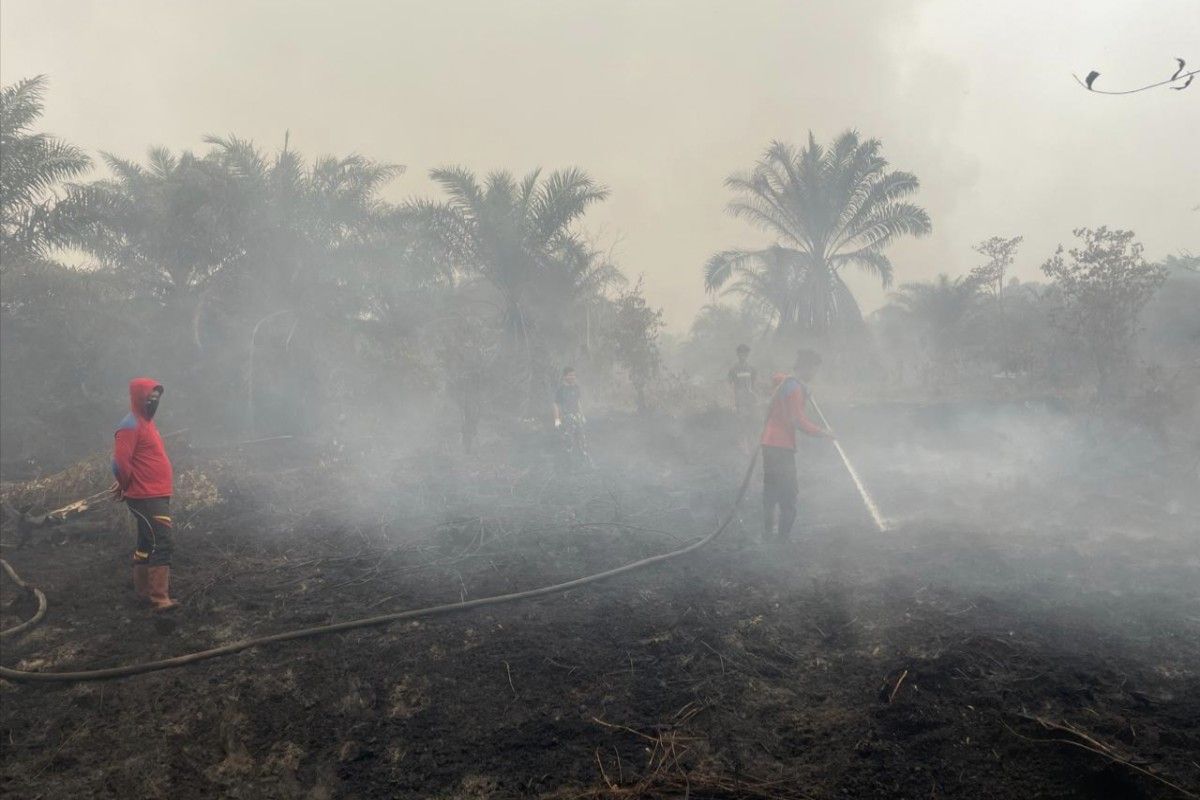
The Meteorology, Climatology, and Geophysics Agency (BMKG) has stated that atmospheric dynamics influenced by the Walker Circulation are one of the factors causing haze from forest and land fires (karhutla) in East Kotawastingin (Kotim), Central Kalimantan, to remain difficult to disperse.
“When updrafts occur, typically in unstable weather conditions, condensation rises to form clouds. However, the current condition tends towards atmospheric downward pressure. As a result, smoke remains trapped at the surface,” said the Head of BMKG Kotim via the Haji Asan Meteorological Station, Mulyono Leo Nardo, in Sampit on Thursday.
He explained that the current atmospheric conditions are preventing the optimal lifting of water vapour to the upper layers. This is related to the Walker Circulation, which is an atmospheric circulation pattern in tropical regions.
Changes in sea surface temperatures in the Pacific region can affect this circulation pattern, causing Indonesia, under certain conditions, to experience more downward air movement. This situation is also linked to low atmospheric instability, which inhibits cloud growth and the potential for rainfall.
Downward air movement, or downdraft, causes the formation of rain clouds to become less significant. Under normal conditions, condensing water vapour is pushed upwards, forming clouds that subsequently have the potential to produce rain.
“Currently, condensation cannot rise because there is insufficient water vapour and atmospheric instability is low. The more dominant air movement from top to bottom actually suppresses cloud formation,” said Mulyono.
These atmospheric conditions cause smoke from forest and land fires to persist longer at the surface. The situation becomes even more difficult when wind speeds are relatively low, as the smoke is not immediately carried out of the affected area.
In addition to causing smoke to persist longer, these conditions can impact visibility for the public. The reduction in visibility is difficult to predict because the sources of smoke affecting an area do not always originate from the local location.
Based on historical observations by BMKG Kotim, the density of haze tends to increase from morning to dawn. Conditions usually begin to improve around 08:00 WIB until approaching midday.
However, after approximately 12:00 WIB, the density of smoke has the potential to increase again until the afternoon. This pattern is related to daily atmospheric dynamics and the condition of smoke sources around the affected area.
“Looking at our historical data, the tendency is for haze to be thicker in the morning or at dawn. It begins to improve around 08:00 WIB until about 12:00 WIB. After that, it becomes thick again until the afternoon,” he said.
Mulyono warned that this pattern does not always occur. Under certain conditions, the density of haze can remain relatively constant from morning to evening, meaning visibility could potentially remain limited for longer periods.
Source: jawawa.id (https://jawawa.id/newsitem/bmkg-kotim-haze-difficult-to-dissipate-due-to-walker-circulation-1790845420)
Originally published by Antara (Indonesian) (https://www.antaranews.com/berita/5766364/bmkg-kotim-kabut-asap-sulit-terurai-dipengaruhi-siklus-walker), translated from Indonesian