
BMKG: July 2026 Becomes Driest July Since 1991
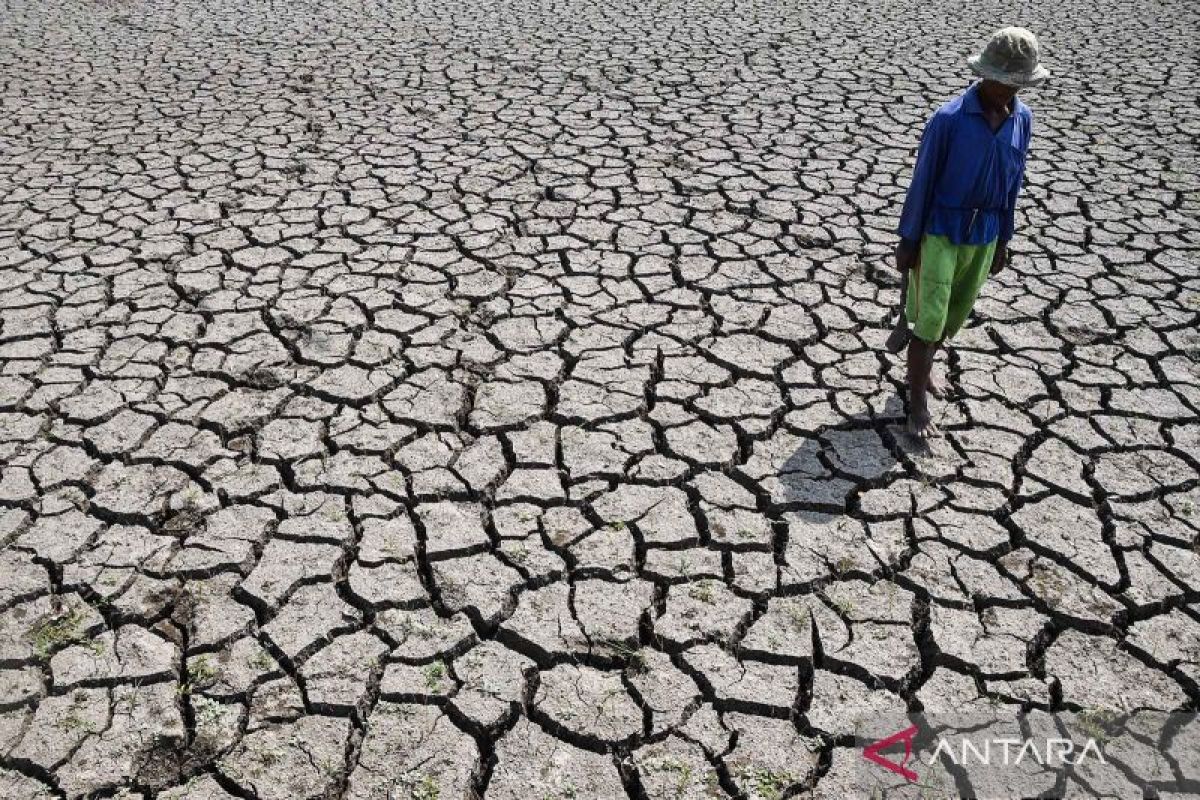
Jakarta (ANTARA) - The Meteorology, Climatology and Geophysics Agency (BMKG) has stated that July 2026 was the driest July in Indonesia since 1991 based on the national average rainfall, as El Nino and a positive Indian Ocean Dipole (IOD) strengthen.
Speaking at a National Dialogue organised by the Ministry of National Development Planning/Bappenas in Jakarta on Tuesday, BMKG’s Acting Deputy for Climatology, Fachri Radjab, said that based on the agency’s analysis, the national average rainfall in July 2026 ranked first as the driest July since records began in 1991.
“In June, the average rainfall across Indonesia ranked eighth driest since 1991. However, in July, it turned out that July 2026 became the driest July on record, ranking first since 1991,” said Fachri.
He explained that the condition was influenced by the strengthening of El Nino, which has reached the strong category, and the development of a positive IOD phenomenon in the Indian Ocean, both of which contributed to reducing rainfall in Indonesia.
According to him, El Nino currently has the potential to intensify into the very strong category, with a probability of around 75 per cent between August and October 2026.
Meanwhile, the positive IOD is also expected to continue developing, further reinforcing the reduction in rainfall during the dry season.
“This is perhaps what we need to anticipate when these two phenomena are active, both on the eastern and western sides of Indonesia, and both have the potential to reduce rainfall during this dry season period,” he said.
Fachri said BMKG’s analysis showed that almost the whole of Java, Bali, West Nusa Tenggara (NTB), and East Nusa Tenggara (NTT) have experienced low to very low rainfall during July 2026.
Similar conditions have also occurred in southern Sumatra, southern Kalimantan, parts of Sulawesi, Maluku, and Papua, except for Central Papua and Highland Papua.
In addition, BMKG monitoring shows that drought is beginning to spread across various regions.
As of early August 2026, BMKG recorded 306 monitoring stations experiencing extreme consecutive dry days (HTH), meaning more than 60 consecutive days without rain.
Of that number, the longest record was set in Bantul Regency, Special Region of Yogyakarta, which experienced 90 consecutive days without rain.
Overall, BMKG recorded 1,657 monitoring stations experiencing very long dry spells, or 31-60 consecutive days without rain, while a further 322 stations experienced long dry spells, or 21-30 consecutive days without rain.
Fachri said the decline in rainfall caused by El Nino and the positive IOD has not occurred evenly across all of Indonesia.
According to him, Aceh, North Sumatra, parts of Riau, parts of West Sumatra, and North Kalimantan are still expected to experience moderate to high rainfall in August because they have different seasonal pattern characteristics.
Source: jawawa.id (https://jawawa.id/newsitem/bmkg-july-2026-becomes-driest-july-since-1991-1785826446)
Originally published by Antara (Indonesian) (https://www.antaranews.com/berita/5678936/bmkg-juli-2026-menjadi-juli-terkering-sejak-1991), translated from Indonesian