
BMKG Estimates Flores Back Arc Thrust Will Remain Active for Up to 3 Weeks
The Meteorology, Climatology, and Geophysics Agency (BMKG) estimates that aftershock activity from the Flores Back Arc Thrust will continue for the next two to three weeks before undergoing natural decay.
BMKG recorded 235 aftershocks as of Saturday (15/8) at 14.00 WIB after the M7.7 main earthquake shook the north of Flores Island, East Nusa Tenggara (NTT), in the morning.
The aftershocks are distributed to the north of Flores Island with magnitudes ranging from M2.5 to M6.2.
BMKG monitoring graphs show that the current aftershock trend has not yet experienced significant decay.
“BMKG estimates that the natural decay process will take between 2 and 3 weeks, following the pattern recorded from the destructive earthquake in North Maluku previously,” said BMKG Head Teuku Faisal Fathani in his statement on Saturday (15/8).
Faisal said his agency will continue to monitor the movement of this fault in real-time.
Based on the history and characteristics of the region, he said, the fault stabilisation process requires a certain amount of time before seismic activity returns to normal.
Faisal said the M7.7 main earthquake, centred at a depth of 15 kilometres, was a shallow earthquake triggered by activity on the Flores Back Arc Thrust.
Historically, this structure has a long record of destructive earthquakes.
One of them was the M7.8 earthquake at a depth of 28 kilometres that shook the region in 1992.
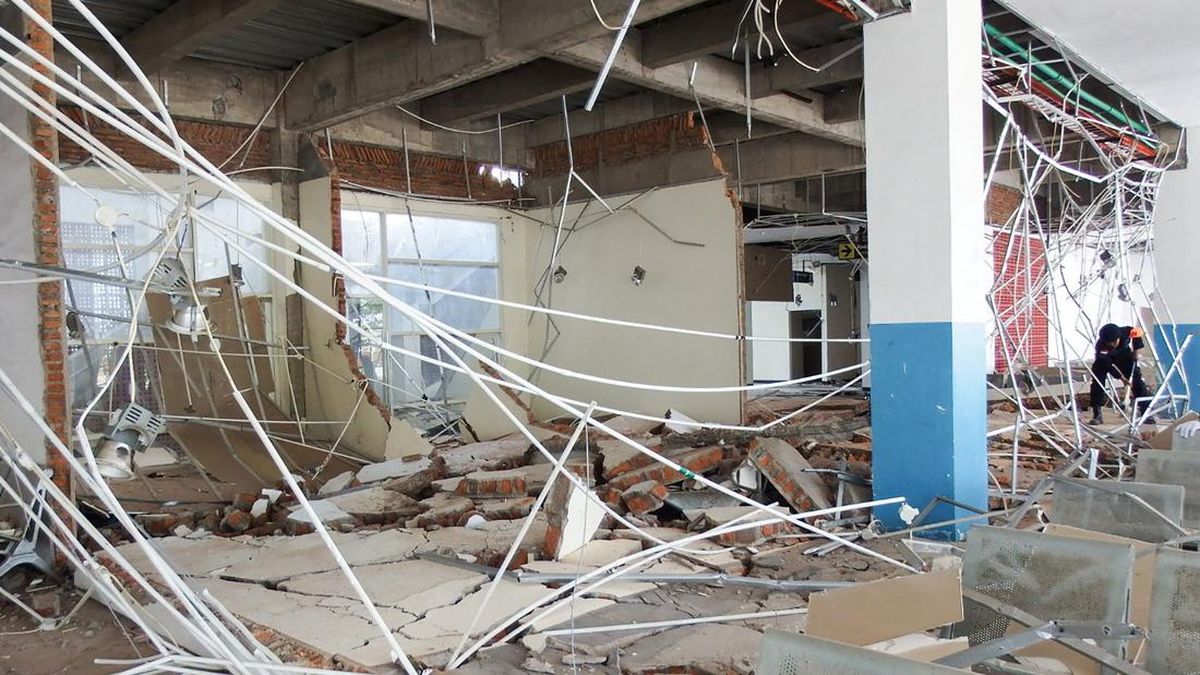
This latest earthquake had a shallower epicentre, at 15 kilometres, causing relatively heavy physical damage to buildings and infrastructure.
The earthquake also triggered a tsunami that was observed as far as the coasts of South Sulawesi and Southeast Sulawesi.
Sea level monitoring networks, or tide gauges, recorded the tsunami arriving in Reo Manggarai and East Manggarai with peak heights of up to 1.61 metres.
In Maurole, Ende, waves were recorded at 0.94 metres. Meanwhile in Bulukumba and Sape, Bima, the height exceeded 0.5 metres.
BMKG ended all tsunami early warnings at 07.30 WIB after monitoring showed that sea level conditions had returned to safe levels.