
BMKG Develops System That Can Predict Forest Fire Danger Up to Seven Days Ahead
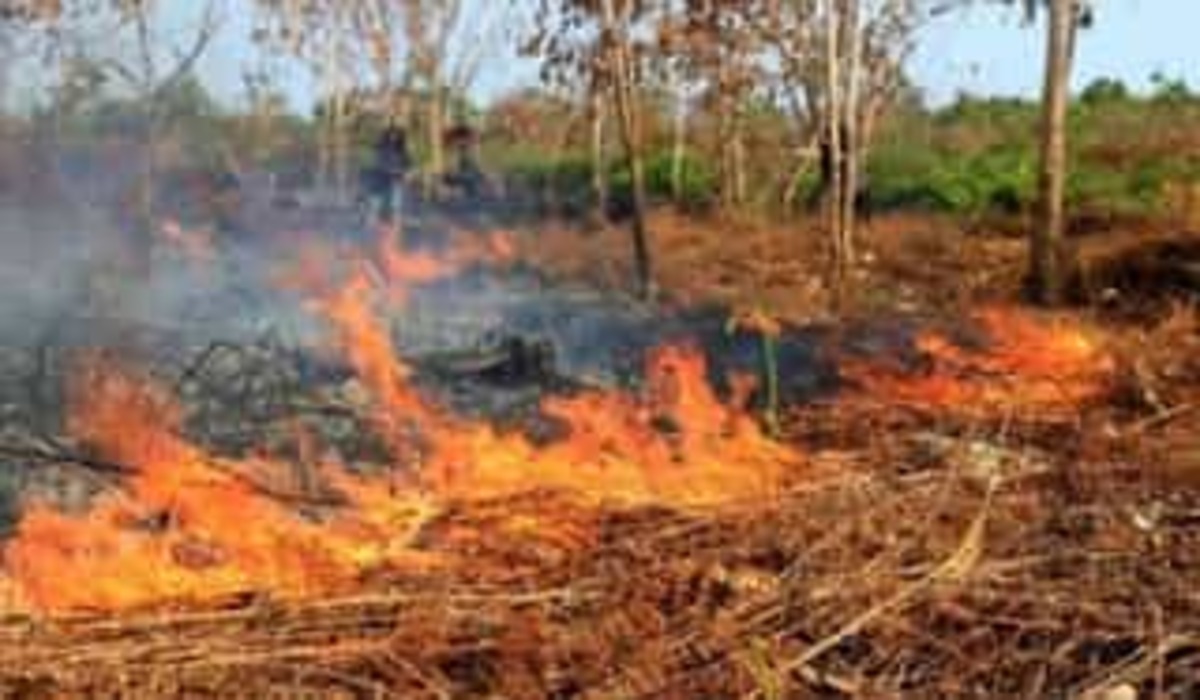
The Meteorology, Climatology and Geophysics Agency (BMKG) has introduced a Forest and Land Fire Warning System (Spartan) capable of predicting the danger level of forest and land fires (karhutla) up to seven days ahead. The system is expected to become an important instrument in strengthening prevention and mitigation efforts, especially ahead of the peak of the dry season.
Alpon Sepriando, Head of the BMKG’s Satellite Imagery and Lightning Detection Analysis and Management Team, said Spartan is an early warning system based on weather parameters designed to assess the danger level of karhutla and the potential for fire spread should a fire occur. “Spartan is an early warning system for forest and land fires based on weather parameters used to assess the level of fire danger. Predictions are available up to seven days in advance,” Alpon said during a Spartan socialisation event on Tuesday (23/6).
According to him, the system works automatically by processing weather data including wind speed, humidity, rainfall, and air temperature. The processed data is then translated into six indices describing fuel conditions, potential fire spread, and fire intensity levels. The six indices are the Fine Fuel Moisture Code (FFMC), Duff Moisture Code (DMC), Drought Code (DC), Initial Spread Index (ISI), Build Up Index (BUI), and Fire Weather Index (FWI).
Alpon explained that FFMC is used to measure the dryness level of light surface fuels such as dry grass, litter, and leaves. DMC describes the condition of organic layers at medium depth, while DC indicates the dryness level of deeper soil layers and is often used to monitor the vulnerability of peatlands to fire. Meanwhile, ISI shows the ease of fire spread, which is heavily influenced by wind speed. BUI represents the availability of dry fuel, and FWI serves as the main indicator of the overall fire danger level. “Fire Weather Index shows the intensity of a fire if it occurs. The higher the value, the more difficult the fire is to control,” he stated.
Alpon emphasised that the information displayed by Spartan does not indicate fire locations, but rather the potential and risk levels based on weather conditions. Therefore, data interpretation must still consider the presence of vegetation as fuel and ignition factors. He said the seven-day predictive information can be utilised by local governments, Regional Disaster Management Agencies (BPBD), Manggala Agni fire brigades, and other stakeholders to enhance preparedness before fires occur. “This information can be used to support more effective prevention, preparedness, and mitigation of forest and land fires, as well as to support operational decision-making in the field,” he said.
BMKG provides the Spartan service through the spartan.bmkg.go.id portal in two versions: interactive and static. Users can monitor conditions across Indonesia and the ASEAN region, as well as select specific indices for analysis according to their needs. With its week-long predictive capability, Spartan is expected to become a primary tool for detecting increased karhutla risk early, enabling anticipatory measures before fires spread.