
BMKG Detects 64 Hotspots in North Sumatra
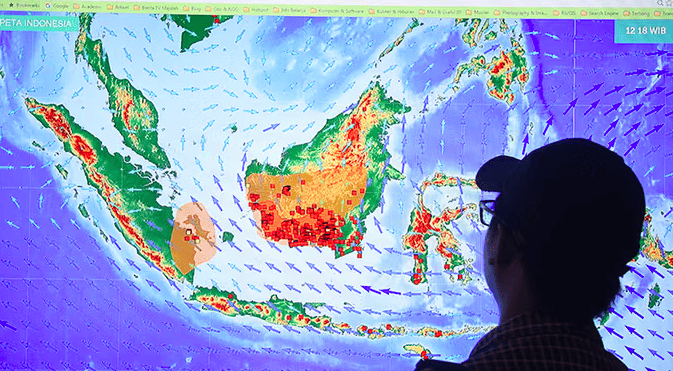
The Meteorology, Climatology, and Geophysics Agency (BMKG) has reported at least 64 hotspots across several regions of North Sumatra as of Sunday (23/8).
“The hotspots were detected based on monitoring by medical sensors, namely the Tera, Aqua, SNPP, and NOAA20 satellites,” said Budi Prasetyo, a forecaster at the BMKG Regional Office I in Medan, on Monday.
The 64 hotspots were recorded as follows: one in Asahan, six in Dairi, six in Humbang Hasundutan, 14 in Karo, seven in Labuhanbatu, three in South Labuhanbatu, eight in North Labuhanbatu, one in Langkat, seven in North Padang Lawas, one in Pakpak Bharat, two in South Tapanuli, and two in North Tapanuli.
Given the increasingly unpredictable weather, he urged the public not to burn vegetation when clearing land in order to prevent land fires.
Regarding the weather forecast for North Sumatra on Tuesday (25/8), light rain is expected in the morning across most of the province, with moderate rain forecast for Batubara, Labuhanbatu, and surrounding areas.
From midday to late afternoon, light to moderate rain remains likely across most of North Sumatra. Moderate-intensity rain is expected in North Labuhanbatu, Mandailing Natal, Labuhanbatu, and surrounding areas.
In the evening, Budi continued, light to moderate rain is also likely across most of North Sumatra, with moderate rain forecast for North Labuhanbatu and South Labuhanbatu.
In the early hours, light to moderate rain is expected in Labuhanbatu, North Labuhanbatu, and surrounding areas. BMKG recorded air temperatures in North Sumatra ranging from 15 to 35 degrees Celsius with humidity levels of 72 to 98 percent. Winds are blowing from the south to northeast at speeds of 5 to 18 kilometres per hour.
“The public is urged to remain alert to the potential for moderate rain, particularly in the western slopes, west coast, eastern slopes, and mountainous areas of North Sumatra,” said Budi Prasetyo.