
BMKG: Bolo District in Bima Has Had No Rain Since May 2026
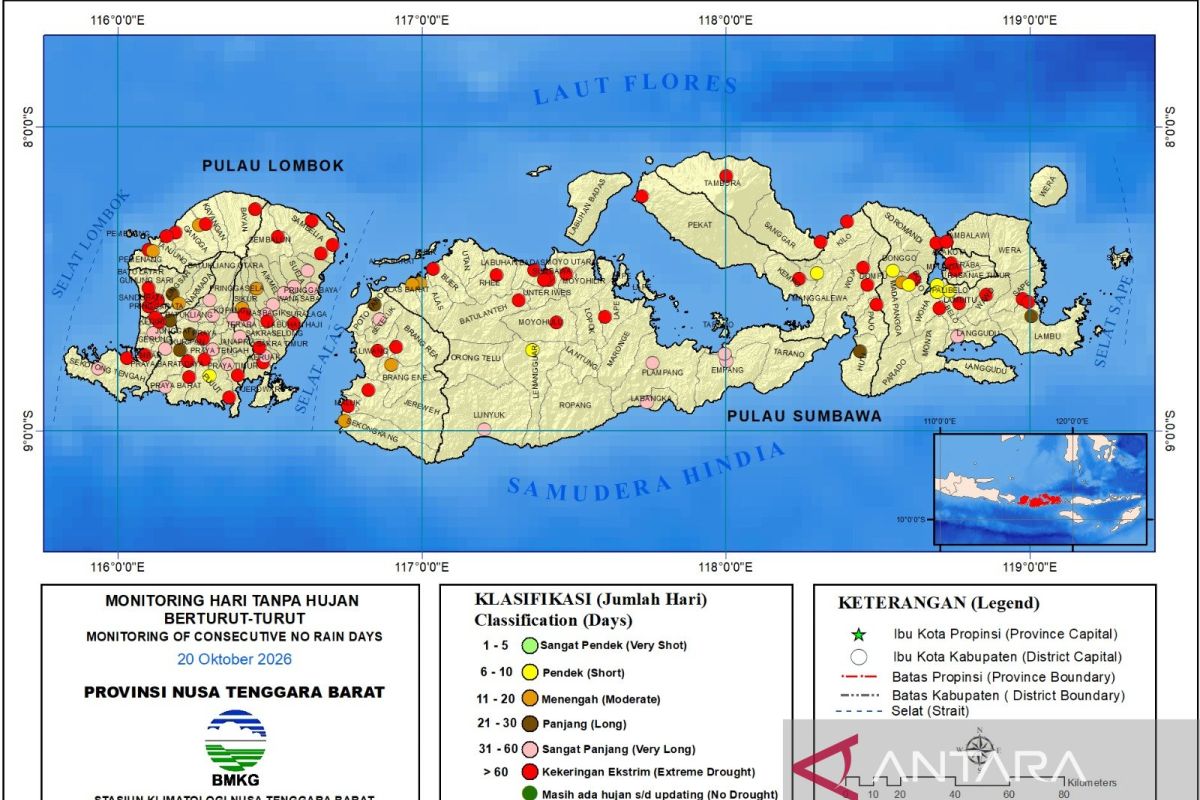
According to the second ten-day period of October 2026 update from the NTB Climatology Station, Bolo District recorded the longest period without rain, at 155 days since 18 May 2026.
Bima (ANTARA) - The Meteorology, Climatology and Geophysics Agency (BMKG) recorded 155 consecutive days without rain in Bolo District, Bima Regency, West Nusa Tenggara (NTB), while rainfall has begun in eight districts across Bima and Dompu.
The head of Sultan Muhammad Salahuddin Bima Meteorological Station, Moch. Syaiful Annas, said the situation showed that rain had started in several areas, although the prolonged drought remained a concern.
“According to the second ten-day period of October 2026 update from the NTB Climatology Station, Bolo District recorded the longest period without rain, at 155 days since 18 May 2026,” he told ANTARA in Bima on Tuesday.
He explained that the extended period without rain reflected meteorological drought conditions that should be monitored, as they could affect water availability and make vegetation more vulnerable to fires.
“The eight districts are Langgudu, Monta, Donggo, Madapangga and Lambitu in Bima Regency, and Pekat, Pajo and Woja in Dompu Regency,” he said.
Annas said the start of rainfall in several areas was a weather development that needed continued monitoring after a prolonged dry spell. However, rain in some districts was not enough to conclude that drought conditions had ended across the region.
This is because rainfall distribution can vary from place to place in intensity, duration and coverage.
As well as potentially helping to reduce the impact of drought, rain may also help reduce atmospheric particles that cause hazy conditions in Bima and Dompu.
Despite the rainfall, BMKG urged the public to remain alert to the risk of forest and land fires, particularly in areas where vegetation had dried out during the long dry spell.
Dry vegetation combined with strong winds can accelerate the spread of fire if one breaks out. Residents were therefore advised to avoid open burning, including burning rubbish, scrub or land, and other activities that could produce sparks.
BMKG also urged residents to use water wisely in preparation for the risk of shortages of clean water while drought conditions persisted.
Local governments and residents were also encouraged to keep monitoring weather updates as part of their preparedness for changing atmospheric conditions.