
BMKG: Beware of Extreme Weather in the Coming Week
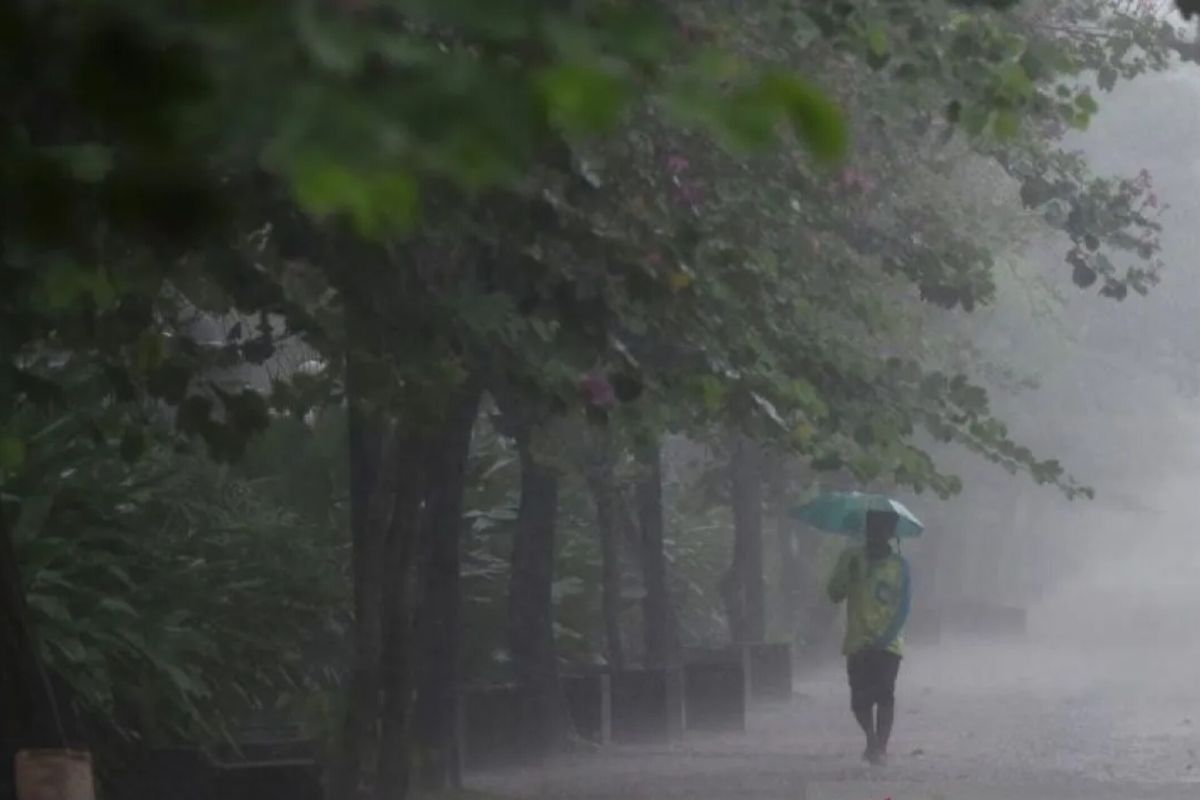
The Indonesian Meteorological, Climatological, and Geophysical Agency (BMKG) has reminded the public to stay alert for potential extreme weather in the coming week, even as Indonesia begins transitioning to the dry season. In its weather forecast outlook for the period 31 March to 6 April 2026, rain with moderate to heavy intensity is still likely to occur in various regions.
BMKG stated that Indonesia is currently in the transition phase from the dominance of the Asian monsoon to the Australian monsoon. This transition is generally marked by a gradual decrease in rainfall. However, under current atmospheric conditions, several factors continue to support the formation of significant rainfall.
“The strengthening of the Australian monsoon is indeed beginning to occur, bringing relatively drier air masses. However, other atmospheric dynamics such as the activity of the Madden Julian Oscillation (MJO), Equatorial Rossby waves, and Kelvin waves remain quite active and contribute to the formation of rain clouds,” BMKG wrote.
In addition, unstable atmospheric conditions in several regions also enhance the potential for rain, particularly from afternoon to evening. Cyclonic circulations observed in some Indonesian waters further form convergence areas that support the growth of convective clouds.
For the period 31 March to 2 April 2026, light to moderate rain is forecast to dominate most of Indonesia. However, the public should be wary of increased moderate to heavy rain in several areas, including Sumatra, Java, Kalimantan, Sulawesi, and Papua.
BMKG has even set an alert status for potential heavy to very heavy rain in some regions, namely Bengkulu, West Java, Central Java, DI Yogyakarta, and West Sulawesi. Meanwhile, the potential for strong winds is forecast in East Nusa Tenggara.
Entering the period 3 to 6 April 2026, weather conditions are relatively unchanged. Light to moderate rain will still dominate, with potential moderate to heavy rain continuing in various regions. Heavy rain alert status is recorded in the Bangka Belitung Islands and East Java.
BMKG emphasises that this still dynamic weather condition requires serious attention, especially amid increasing public mobility following Eid al-Fitr. Heavy rain accompanied by lightning and strong winds could disrupt land, sea, and air travel.
Additionally, the public is urged to be aware of the potential for hydrometeorological disasters such as floods, landslides, as well as other impacts like falling trees and collapsing billboards. BMKG reminds people to avoid sheltering under trees or fragile structures during heavy rain with strong winds.
“Weather can change at any time, so it is important for the public to continue monitoring official information from BMKG and take anticipatory steps,” BMKG wrote.
BMKG has noted cyclonic circulations in the waters north of West Kalimantan and the northern Pacific Ocean off Papua. This condition forms wind convergence areas in several regions.
BMKG’s monitoring results show that tropical atmospheric waves are in a neutral phase, thus not contributing to the formation of rain clouds in Indonesian regions.
Current atmospheric dynamics are influenced by the formation of three cyclonic circulation points scattered from north to east of the archipelago, triggering the growth of rain clouds.
Tornadoes due to extreme weather have struck two villages in Bekasi Regency, West Java, causing damage to 27 residents’ houses in Cikarang Central and Cikarang South Districts.
Based on data from the West Bandung Regency Disaster Mitigation Agency (BPBD), at least 10 houses in two districts have been damaged by strong winds.
This phenomenon, which routinely occurs in March and September, causes solar radiation intensity in Kalimantan to reach its maximum point.
The Head of the Kediri City BPBD, Joko Arianto, in Kediri on Sunday, stated that BPBD is massively providing information related to weather forecasts.
BMKG also notes the potential for heavy rain to occur locally, such as in Pulosari, Pemalang Regency, as well as Bumijawa and Bojong in Tegal Regency.