
BMKG assists post-disaster rehabilitation and reconstruction projects in Aceh, North Sumatra, and West Sumatra
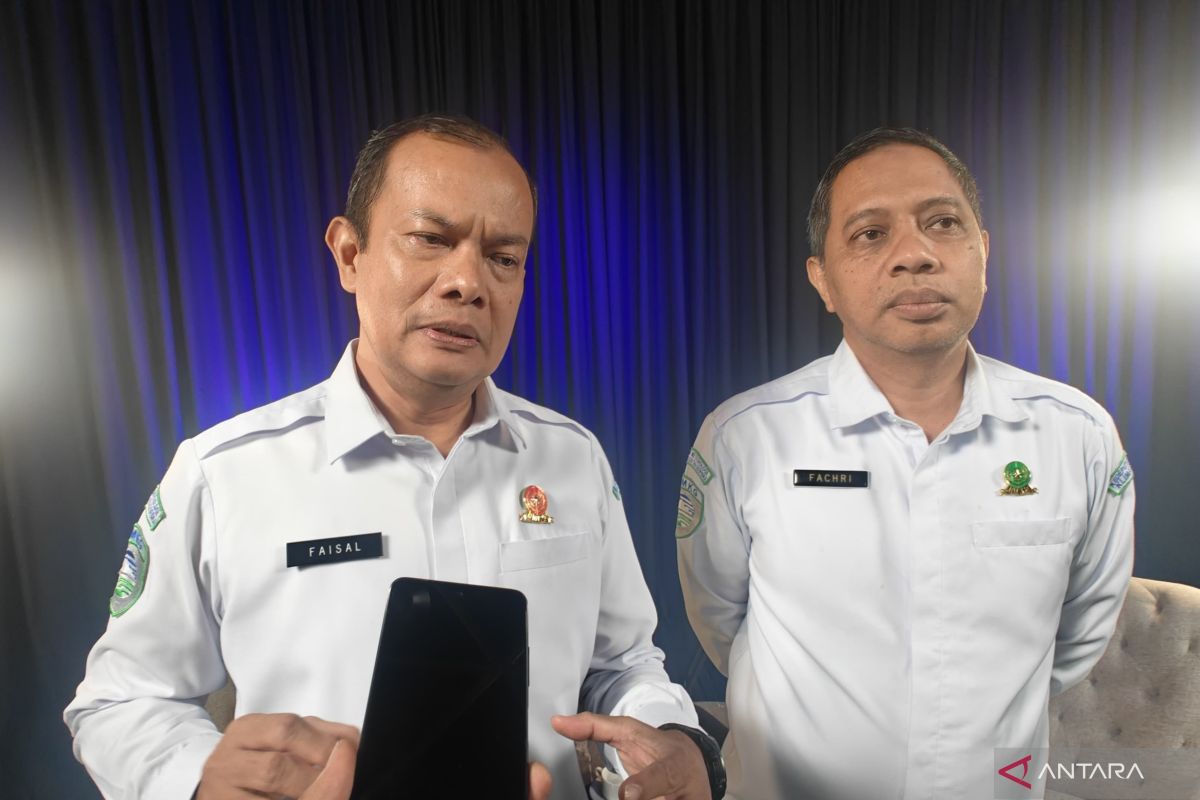
Jakarta (ANTARA) - The Indonesian Agency for Meteorology, Claptology, and Geophysics (BMKG) is providing direct assistance in the rehabilitation and reconstruction (rehab-rekon) projects following disasters in several affected areas of Aceh, North Sumatra, and West Sumatra.
BMKG Head Teuku Faisal Fathani, speaking at the ANTARA Heritage Center in Jakarta on Thursday, stated that this intervention aims to support infrastructure resilience and ensure the safety of construction sites from potential future disaster risks. “BMKG, under the coordination of the Minister of Home Affairs, is also directly supporting the implementation of rehab-rekon construction in Aceh, North Sumatra, and West Sumatra,” he said.
Fathani explained that a primary focus of this assistance is formulated through the establishment of a special post within the Ministry of Home Affairs to oversee the geographical feasibility blueprint for permanent housing (huntap) for survivors. This tactical step was taken to ensure that areas targeted for permanent housing or new settlement relocation are free from hydrometeorological risks, such as flash floods and landslides.
In addition to disaster mitigation, the BMKG integrated post is also tasked with conducting regular weather monitoring and climate analysis to ensure that the mobilisation of materials and construction work on the ground encounter no obstacles. BMKG’s involvement also extends to the community’s economic recovery sector by providing climate databases for the opening of new agricultural land for relocated residents.
According to Fathani, this secondary intervention is intended to map crop varieties that are most suitable to local climate characteristics, ensuring that the relocation of homes and the restoration of livelihoods for affected citizens can proceed in tandem.
The flash floods and landslides that struck Aceh, North Sumatra, and West Sumatra in late November 2025 were recorded as some of the deadliest hydrometeorological disasters in recent years. Data indicates that the emergency response phase has transitioned into long-term rehabilitation and reconstruction, with the government’s primary focus currently on completing permanent housing, restoring basic services, and recovering the economies of the affected communities in the three provinces.
According to the latest data from the Post-Disaster Rehabilitation and Reconstruction Acceleration Task Force (Satgas PRR) for Sumatra up to mid-May 2026, the recovery process following the floods and landslides is showing continuous progress, particularly in the provision of housing for survivors. For temporary housing (huntara), the Task Force noted that 19,312 units have been completed out of a target of 20,338, or approximately 95 per cent. Previously, in March 2026, the achievement for temporary housing construction stood at 15,346 units, or 81 per cent of the target. Most of these temporary units are intended for survivors whose homes were severely damaged and who are still awaiting the construction of permanent housing.
Regarding permanent housing, progress is still in the early stages. Out of the commitment to build 39,335 permanent units involving BNPB, the Ministry of Housing and Residential Areas, the National Police, Baznas, Danantara, the business sector, and various other institutions, 357 units have been completed and 996 units are currently under construction. Meanwhile, more than 37,000 other units are still in the planning and land preparation stages.
The PRR Task Force also reported that the number of displaced persons has decreased significantly. At the onset of the disaster, the number of affected and displaced residents reached over two million people. However, as of May 2026, no one remains in displacement camps, as most have returned to safe homes, moved into temporary housing, or been relocated to sites prepared by the government.