
BMKG: 1,624 Aftershocks Recorded Following M7.7 Flores Earthquake in NTT
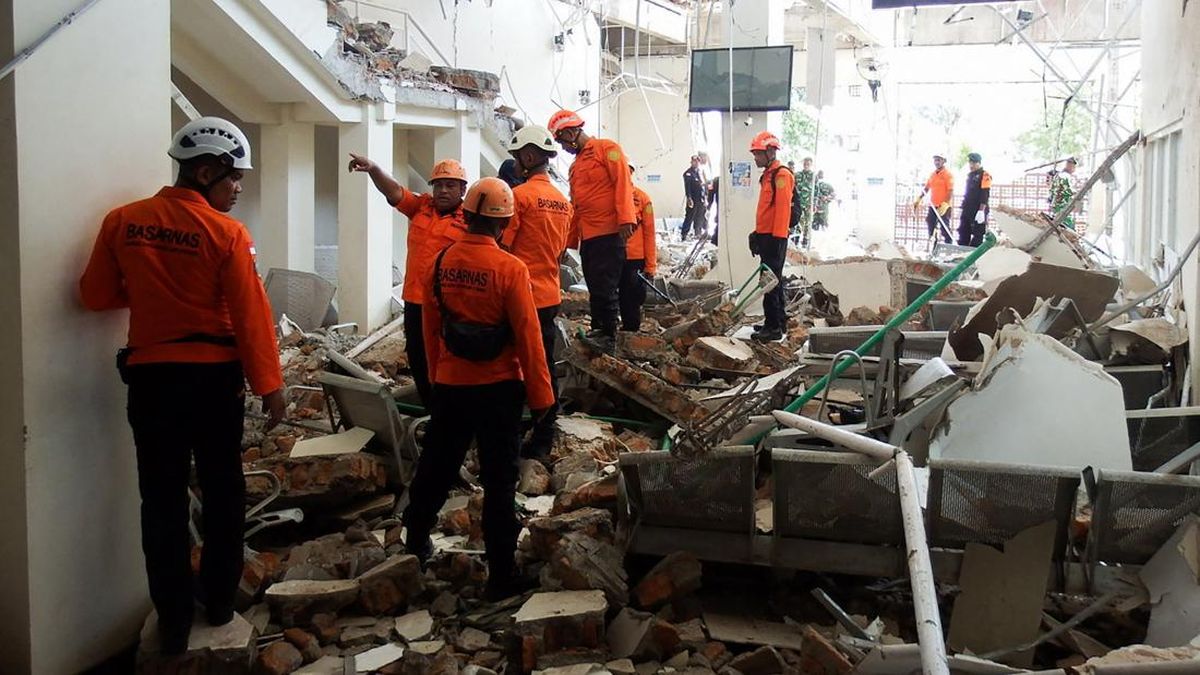
The Meteorology, Climatology and Geophysics Agency (BMKG) has recorded 1,624 aftershocks with magnitudes ranging from 1.3 to 6.2 following the magnitude 7.7 earthquake in Flores, East Nusa Tenggara. Among the thousands of aftershocks, 23 events exceeded magnitude 5 and 59 were felt by residents.
Director of Earthquakes and Tsunamis at BMKG, Wijayanto, explained that the initial earthquake occurred in the Flores region on Saturday (15/8) at 04.58 WIB with updated parameters of M7.7, triggering a tsunami in surrounding areas. The shallow earthquake was caused by tectonic activity in the Flores Back-Arc with a thrust fault mechanism.
BMKG issued an Early Warning 1 at 2 minutes 16 seconds after the earthquake, with threat status of SIAGA (0.5–3 metres) and Waspada (below 0.5 metres). Affected areas included North Manggarai, North Ngada, Ende, East Flores and Jeneponto under Siaga status, while East Flores, Bima, Dompu and Wajo were under Waspada status. The tsunami early warning was lifted at 07.30 WIB, 2 hours 31 minutes 37 seconds after the earthquake.
Tide gauge observations showed the earthquake triggered a tsunami at 16 locations across four provinces: East Nusa Tenggara, West Nusa Tenggara, South Sulawesi and Southeast Sulawesi. The highest tsunami was recorded at Pota, East Manggarai, NTT at 05.03 WIB (1.605 metres), while the lowest was at Bakalang, Alor, NTT at 05.41 WIB (0.14 metres).
Preliminary monitoring and field reports indicate the M7.7 Flores earthquake caused 53 fatalities and 137 injuries, with damage across several areas, particularly West Manggarai, Manggarai, East Manggarai and Sikka, Maumere, with varying degrees of damage from light to severe.
BMKG has deployed a joint team from its headquarters and regional units to conduct a damaging earthquake survey, including macroseismic surveys, microtremor and MASW measurements to determine soil characteristics and response to shaking, aftershock monitoring, and field verification of tsunami impacts. The survey aims to support post-disaster recovery and reconstruction while serving as a basis for post-earthquake microzonation mapping, evaluation of affected areas, and formulation of safer mitigation and reconstruction recommendations. Priority areas focus on regions with moderate to severe damage, compared with locations that experienced relatively little damage.
BMKG is also conducting public outreach and education for affected communities to provide accurate understanding and help reassure residents in dealing with post-earthquake conditions. The public is advised to avoid cracked or damaged buildings caused by the earthquake and to remain alert for ongoing aftershocks.
BMKG will continue to monitor aftershock activity and provide regular information updates to stakeholders and the public. Residents are urged to obtain official BMKG information through verified communication channels such as @infoBMKG social media, www.bmkg.go.id or inatews.bmkg.go.id, and the infobmkg or wrs-bmkg mobile apps.
Source: jawawa.id (https://jawawa.id/newsitem/bmkg-1-624-aftershocks-recorded-following-m7-7-flores-earthquake-in-ntt-1786953183)
Originally published by CNN Indonesia (https://www.cnnindonesia.com/nasional/20260817141545-20-1393252/bmkg-1624-gempa-susulan-terjadi-usai-gempa-m77-flores-ntt), translated from Indonesian