
BM PAN Says Zulhas' Palm Oil Narrative Was Misunderstood
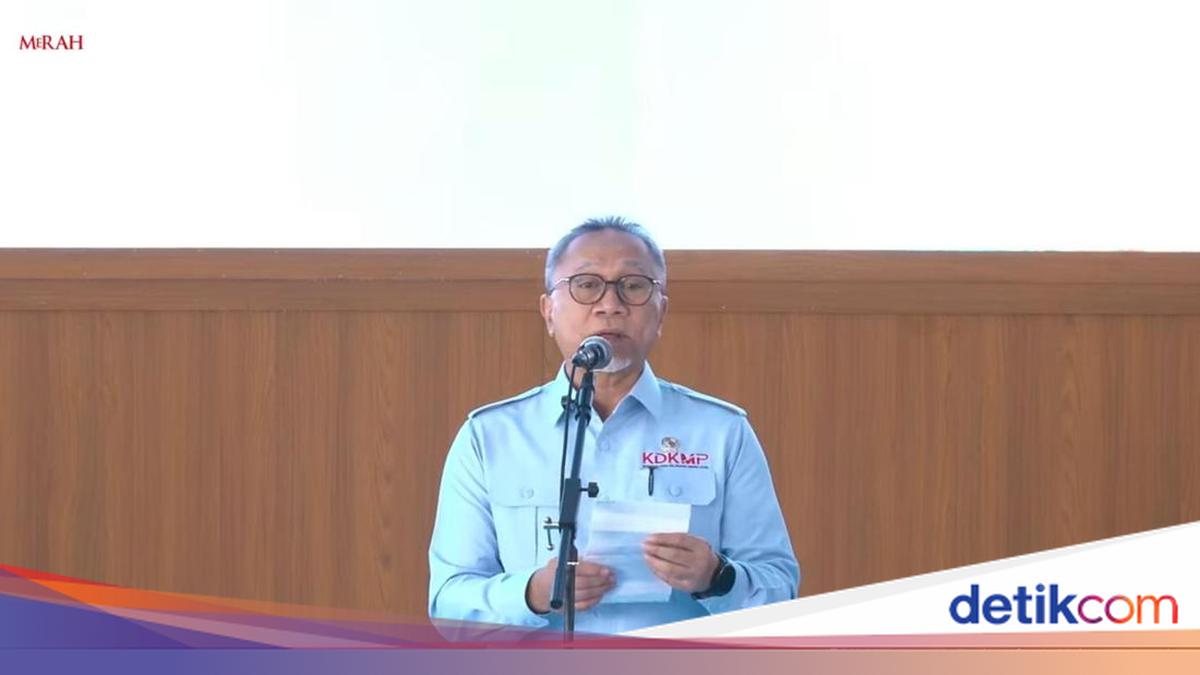
A video clip recently circulated on social media showing Coordinating Minister for Food Zulkifli Hasan (Zulhas) saying, “If planting rice is not profitable, then plant oil palm.” The clip gave rise to the perception that the government was encouraging farmers to abandon rice cultivation.
Responding to this, the chairman of the Barisan Muda Penegak Amanat Nasional (BM PAN), Slamet Ariyadi, said the narrative was not presented in full and therefore had the potential to mislead the public.
He explained that the excerpt was delivered by Zulhas during a speech at the National Seminar on Merah Putih Village/Sub-district Cooperatives (KDKMP) in South Sulawesi on Tuesday (4/8).
In the speech, Zulhas was not inviting farmers to convert rice fields into oil palm plantations, but rather criticising the free-market economic mindset adopted in the post-reform era.
“The statement cannot be interpreted as an invitation to abandon rice cultivation or reduce the commitment to food self-sufficiency. In fact, it explains part of the government’s commitment to strengthening national food production, improving farmers’ welfare, and safeguarding food security,” Slamet said in a statement on Thursday (6/8/2026).
Slamet said Zulhas used the oil palm example to illustrate the old logic. Under that logic, if rice production was deemed unprofitable, food needs could be met through imports using profits from other commodities.
“According to him, the free-market mechanism made previous governments often think that the most important thing was to have money. If there was no rice, it could simply be bought using profits from other commodities such as oil palm,” he explained.
“Zulhas is not telling farmers to flock to clear their rice fields or replace paddy land with oil palm. He used that example to explain why Indonesia once experienced high dependence on rice imports,” he added.
Slamet stressed that Zulhas, in his speech, actually affirmed the government’s commitment under President Prabowo Subianto to strengthen food self-sufficiency. The government considers food self-sufficiency a matter of national honour and sovereignty, and therefore it must not be left entirely to the profit-and-loss mechanisms of the market.
“For President Prabowo, food self-sufficiency is a matter of national honour and a manifestation of state sovereignty that cannot be compromised. Therefore, all stakeholders are expected to work together to increase domestic production so that Indonesia can meet its food needs independently and sustainably,” he asserted.
He added that Indonesia still imported around 2.5 million tonnes of rice in 2024 to meet domestic needs. However, under President Prabowo Subianto’s administration, the direction of food policy has been firmly set towards achieving food self-sufficiency as a national priority.
“The government’s principle is very clear: to reduce dependence on imports and strengthen domestic food production through increased agricultural productivity, agricultural infrastructure development, and improved farmer welfare. Food self-sufficiency is not merely a target, but part of efforts to build Indonesia’s food resilience and sovereignty,” he stressed.
Slamet also urged the public not to readily believe video clips or quotes circulating on social media without viewing the full context.