
Blue Whale vs African Elephant: Which Is the World’s Heaviest Animal?
Jakarta, CNBC Indonesia – From African elephants to blue whales, some animals have extraordinarily large body weights. How great is the difference between the largest animal on land and the giant inhabitants of the ocean?
This visualisation compares the maximum reported weights of the heaviest animals on land and at sea, drawing on data from Fact Animal and World Atlas. The figures are estimates of reported maximum weights, not average adult weights. Marine animal weights originally given in metric tonnes have been converted into pounds and rounded to the nearest 10,000 pounds.
The 10 heaviest land animals
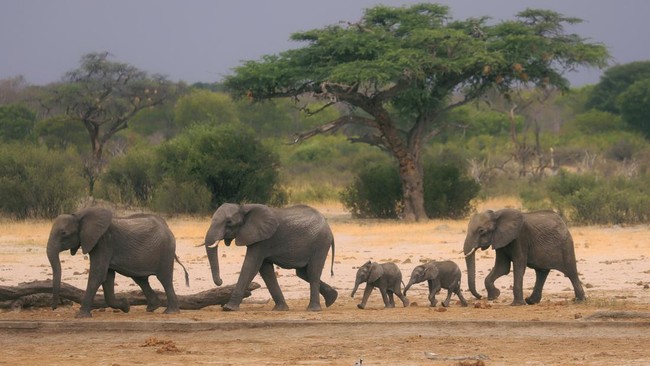
According to Fact Animal, the African bush elephant ranks as the world’s heaviest land animal. Its maximum weight reaches 23,000 pounds, or about 10,400 kilograms (10.4 tonnes). That is more than twice the maximum weight of the Asian elephant and African forest elephant, each listed at around 8,800 pounds, or four tonnes.
Rhinoceroses also feature prominently, taking four of the top 10 places. The list is completed by the bison, with a maximum weight of around 1,984 pounds, or 0.9 tonnes.
Despite their enormous size, land animals must support their entire body weight against gravity. Their size also affects how they move and travel, including the ability of some species to cover very long distances during migration.
The 10 heaviest marine animals
In the ocean, animals can be far larger than their land-based counterparts. According to World Atlas, the blue whale is the heaviest animal in the world, with a reported maximum weight of 420,000 pounds, or about 190 tonnes.
The North Pacific right whale, fin whale and bowhead whale rank next. Each has a reported maximum weight of around 260,000 pounds, or 118 tonnes.
Why, then, can whales grow so much heavier than land animals? One key factor is the buoyancy of water. Water supports much of a marine animal’s body weight, allowing it to reach a size that would be difficult to sustain on land.
A large body also helps animals retain heat in water. However, research from Stanford indicates that the energy required to maintain such a huge body also limits how large marine mammals can grow.
The maximum weights should be treated as estimates. Weighing giant whales is far more difficult than weighing land animals, so some figures are based on exceptionally large specimens or indirect measurements.
How did whales evolve into giants?
Although they now live entirely in the sea, whales descended from mammalian ancestors that once walked on land. Over millions of years, their ancestors adapted to aquatic life, developing more streamlined bodies, powerful tails and other characteristics that help them move through water.
This evolutionary process eventually gave rise to the blue whale, known as the heaviest animal ever to have lived on Earth.
The contrast with modern land mammals is striking. The elephant remains the heavyweight champion on land, but conditions in the ocean allow whales to grow to a very different scale.
Source: jawawa.id (https://jawawa.id/newsitem/blue-whale-vs-african-elephant-which-is-the-worlds-heaviest-animal-1791719459)
Originally published by CNBC Indonesia (https://www.cnbcindonesia.com/research/20261011100234-128-775052/paus-biru-vs-gajah-afrika-mana-hewan-terberat-di-dunia), translated from Indonesian