
Blora Regent Conducts Inspection at Pasar Pon Ahead of Eid al-Adha
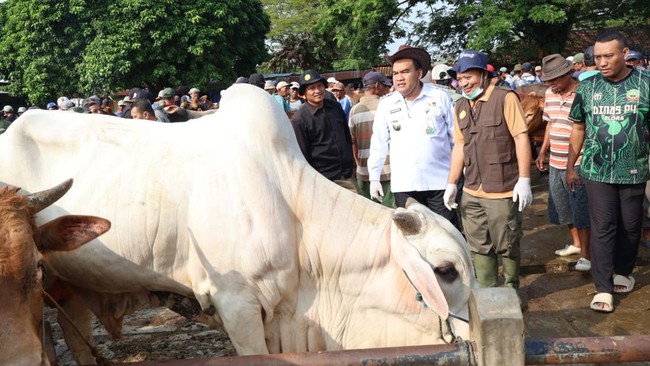
To ensure that sacrificial animals are healthy and fit for sale ahead of Eid al-Adha, the Regent of Blora, Dr H. Arief Rohman, conducted a sudden inspection at Pasar Pon Blora on Saturday. The inspection was carried out alongside the Secretary of the Blora Regency Food, Agriculture, Livestock, and Fisheries Department (DP4), Lilik Setyawan, the Head of Animal Health, drh. Rasmiyleana, and the animal health team.
As the 1447 Hijri Eid al-Adha approaches, trading activities for sacrificial animals at Pasar Pon Blora have increased sharply. In a single day, transactions for cattle in the largest livestock market in Blora Regency are estimated to reach tens of billions of rupiah, serving as a major driver for the local economy. “Today we are conducting a review regarding readiness for Eid al-Adha. Today, transactions reached nearly 600 head of cattle. With an average price of Rp 15 million per head, there is an economic turnover of almost 9 to 12 billion rupiah here. Some even sold for up to Rp 25 million,” stated Regent Arief Rohman during the inspection.
According to the Regent, the high level of livestock trading provides a positive impact on the Blora economy. Traders arrive not only from Blora but also from various regions including Pati, Solo, and Boyolali. The most common breeds traded at Pasar Pon include Limousin, Simmental, and Peranakan Ongole (PO), with most being males weighing between 400 to 600 kilograms.
During the visit, Regent Arief also received feedback regarding the management of Pasar Pon, particularly the condition of the market floor, which requires improvement to ensure safety for the livestock. There were suggestions to pave the area to prevent cattle from slipping.
In addition to monitoring trade, the Regent and animal health officers supervised the health inspection process for incoming livestock. Every cow entering the market undergoes disinfectant spraying and health checks, including pregnancy inspections. Officers examine physical conditions such as the eyes, mouth, and skin, as well as the completeness of animal health documents, to prevent the spread of infectious diseases such as Foot and Mouth Disease (FMD) and Lumpy Skin Disease (LSD).
Regent Arief urged the public to purchase sacrificial animals from official sources and to ensure that the livestock possesses a health certificate from authorised officers. “With these inspections, we hope the community can obtain safe, healthy, and suitable animals for sacrifice,” he said.
The Head of Animal Health at DP4 Blora, Rasmiyana, explained that routine inspections are being intensified due to the rising volume of trade. Animals declared healthy are marked with special identifiers for easy recognition by buyers. Traders welcomed the inspection, noting that health checks increase public confidence in the quality of the animals sold at the market.