
Blackchin Tilapia Causes Major Disaster, Situation Reaches Emergency Levels Near Indonesia
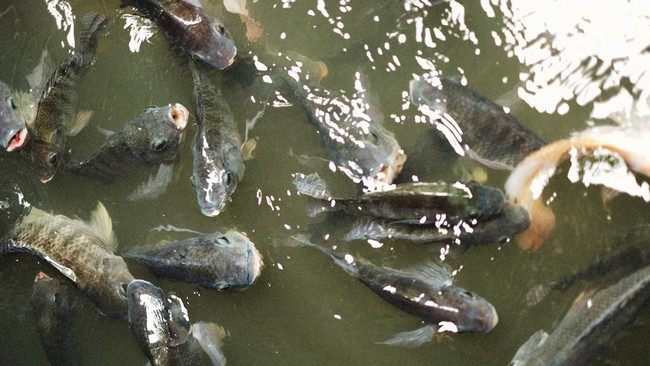
The population of blackchin tilapia has exploded massively across various regions of Thailand. This invasive species, originating from West Africa, is known to prey on shrimp, crabs, and various native fish species, triggering severe damage to aquatic ecosystems and destroying the livelihoods of local fishermen.
According to historical records, this fish was first reported spreading in the Land of the White Elephant in 2011, specifically in Samut Songkhram Province. Over time, its spread has become uncontrollable, extending to at least 19 provinces, including the canal networks in the capital, Bangkok, and the coastal waters of the tourist hub, Pattaya.
The most tangible impact of this population explosion is felt directly by shrimp farmers. Wallop Khunjaen, a local fisherman, was forced to abandon his occupation and halt his farming business after the blackchin tilapia devoured almost all of his 1 million shrimp seeds within just about two months.
“They eat everything. They eat shrimp, and they even eat crabs,” said Wallop, as quoted by The Guardian.
The presence of this voracious predator has also caused local biodiversity to plummet. Wallop admitted he is finding it extremely difficult to find native fish species, and he no longer sees fiddler crabs in their natural habitats.
Eradication Efforts Deemed Too Late
The Thai government has not remained idle and has deployed various mitigation strategies. These include releasing barramundi as natural predators, breeding sterile blackchin tilapia, and organising bounty programmes by paying the public to catch them. As a result, thousands of tonnes of fish have been removed from the waters.
Nevertheless, experts are pessimistic that these steps can reverse the situation. Thotsapol Chaianunporn, an environmental science lecturer from Khon Kaen University, believes eradication efforts are already too late because the blackchin tilapia has a very rapid reproduction rate and a high survival rate for its offspring.
“We have passed the point of no return,” Thotsapol asserted.
The wide adaptability of this fish, which can survive in both freshwater and brackish water, allows their population to recover quickly even after being culled. According to Thotsapol, a more realistic solution currently is to transform this threat into an economic opportunity, such as processing them into livestock feed or food products.
However, this idea of utilisation has hit a deadlock. Fishermen complain that the sheer volume of the fish surge has made processing costs uneconomical.
On the other hand, scientists warn that the long-term ecological impacts of this invasion have not yet been fully mapped. In addition to disrupting the food chain by preying on zooplankton, these fish often disturb the seabed, which increases water turbidity in the ecosystem.
Legal Disputes and Transboundary Threats
To date, the origins of how blackchin tilapia entered Thailand remain a complex legal dispute. Fishermen have filed lawsuits against the agribusiness giant Charoen Pokphand Foods Plc (CPF), accusing the company of being the party that introduced the alien species into local waters.
The company does not deny having imported 2,000 blackchin tilapia for breeding research purposes in 2010. However, they firmly deny being the source of the invasion and claim that all fish samples from that period were destroyed.
Currently, Thailand’s greatest concern is no longer just economic loss and domestic ecosystem damage, but the potential migration of this invasive fish to neighbouring countries in the regional area.
“This is a silent threat,” said Thanandon, a local resident. “You do not realise it until the fish is already there.”
Source: jawawa.id (https://jawawa.id/newsitem/blackchin-tilapia-causes-major-disaster-situation-reaches-emergency-levels-near-indonesia-1790495568)
Originally published by CNBC Indonesia (https://www.cnbcindonesia.com/tech/20260927105501-37-771206/ikan-nila-bawa-petaka-besar-kondisinya-sudah-darurat-di-dekat-ri), translated from Indonesian