
Black Stone Said to Have Fallen from Heaven: Researchers Reveal Its Possible Origin
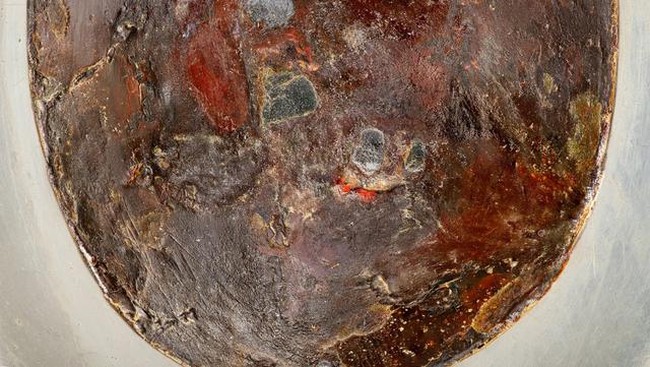
The story of the black stone set into one corner of the Kaaba is among the best-known in the Islamic world. Known as the Black Stone, it is said to have been there since the time of the Prophet Ibrahim and to have come from heaven.
It was initially white and could emit light, according to the account. Its colour later changed to black; traditional Islamic sources say this happened because it absorbed the sins of humanity on Earth.
Stories of this kind have prompted scientists to seek a scientific explanation for the stone’s mysteries. Did its colour really change? Could it emit light? And if the account is true, what type of rock is the Black Stone?
Scientists have long proposed theories about the stone’s composition. Some have likened it to an agate, while others have suggested that it is a meteorite.
Experts consider the meteorite theory the closest fit with the story that the Black Stone came from heaven. Historical evidence has also pointed to traces of meteorites near the Kaaba, where the stone is located.
In his 1980 study, “New Light on the Origin of the Holy Black Stone of the Ka’ba”, E. Thomsen recounts that in 1932 a researcher named Philby found a meteor impact crater at Al-Hadidah, later called Wabar. The crater was measured at more than 100 metres across. Several meteorite fragments were also found around the crater and in the desert.
Broadly speaking, the fragments formed from melted sand and silica mixed with nickel. Over time, Thomsen wrote, the mixture developed a white layer inside, while its exterior was covered by a black crust. The black colour was produced by nickel, which the article says came from nickel and iron explosions in space.
Based on these observations, Thomsen said the characteristics of the meteorite fragments matched descriptions of the Black Stone.
“For example, the white colour [emitted by the Black Stone] may have come from exposure of the interior of the core formed by that chemical mixture,” he said.
He argued that the white layer was very fragile and did not last long. It was therefore enclosed within the black outer layer. In other words, the white rock would not remain intact and could disappear over time, leaving only the black rock.
The account of the Black Stone changing colour could therefore have a scientific explanation, the article says, rather than being caused by the absorption of human sins. The white specks visible in the Black Stone today are remnants of glass and sandstone.
“The meteorite is possibly the same stone as the Black Stone,” Thomsen wrote.
Other empirical evidence concerns the stone’s age. Another study suggests that it dates to a period within the range of observation of ancient Arabs. The rock may have been brought to Mecca along a route from Oman.
However, the theory that the Black Stone came from a meteorite also has weaknesses. The researcher noted that meteorites cannot float or break into small pieces easily, and are difficult to resist erosion.
Even so, the meteorite theory remains the closest proposed explanation for the Black Stone, Thomsen said, adding that “it would be more appropriate to study material originating from a meteorite.”
Source: jawawa.id (https://jawawa.id/newsitem/black-stone-said-to-have-fallen-from-heaven-researchers-reveal-its-possible-origin-1791615031)
Originally published by CNBC Indonesia (https://www.cnbcindonesia.com/tech/20261010104923-37-774922/hajar-aswad-disebut-jatuh-dari-surga-peneliti-singkap-asal-usulnya), translated from Indonesian