
BKSDA deploys team to manage Sumatran tiger sightings in residential areas
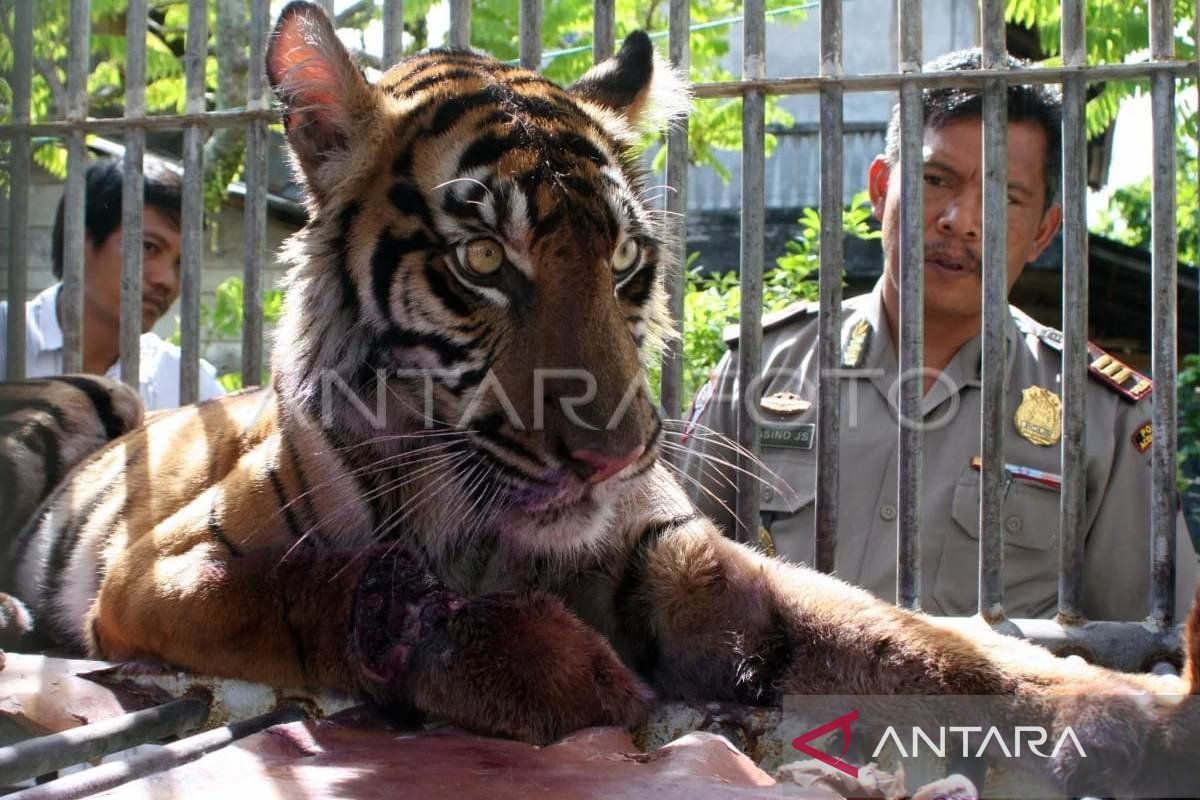
Banda Aceh (ANTARA) - The Aceh Natural Resources Conservation Agency (BKSDA) has deployed a team to address the appearance of Sumatran tigers (Panthera tigris sumatrae) in several residential areas within the Gayo Lues Regency.
Ujang Wisnu Barata, Head of BKSDA Aceh, stated in Banda Aceh on Monday that the team was mobilised to prevent negative interactions between tigers and the community, and to drive the protected animals away from human settlements. “We have deployed a team alongside partners to handle the appearance of Sumatran tigers. The team has also inspected and is patrolling the areas where the tigers were sighted,” he said.
In addition to BKSDA Aceh officers, the team involves personnel from the Gunung Leuser National Park (BBTNGL), the Leuser Conservation Forum (FKL), WCS, MMP, and local residents. To monitor tiger movements, the team has installed camera traps in several locations to confirm the presence of the protected wildlife. In Singah Mulo Village, Putri Betung District, camera traps were specifically deployed due to the high frequency of tiger sightings in the area.
Authorities have urged residents to avoid entering plantations alone and to remain vigilant to prevent dangerous encounters. Reported sighting locations include Porang Ayu, Gantung Geluni, and Kute Bukit villages in the Blangpegayon District, as well as Singah Muju Village in the Putri Betung District.
Barata noted that the local government is coordinating closely with BKSDA to manage the situation, with public safety being the top priority. He advised that if residents spot a tiger, they should immediately report it to the nearest officer.
According to the International Union for the Conservation of Nature (IUCN), the Sumatran tiger is endemic to Sumatra and is classified as a critically endangered species at high risk of extinction in the wild. The public is encouraged to help preserve the species by protecting forest habitats and refraining from illegal activities such as hunting, trapping, or trading protected wildlife. Such illegal acts are subject to criminal sanctions under existing laws, as they exacerbate human-wildlife conflicts that lead to economic losses and loss of life for both humans and wildlife.