
BKPM: Targeting US$618.1 Billion in Investment, Green Downstreaming to Become New Growth Engine
JAKARTA — Indonesia has the opportunity to establish downstream processing and clean energy as new engines of growth through the development of value-added industries, the strengthening of domestic supply chains, and the creation of high-quality jobs. The Ministry of Investment and Downstreaming/BKPM has mapped 28 strategic commodities across eight main sectors with an investment potential of approximately US$618.1 billion until 2040, which is projected to open more than three million new jobs.
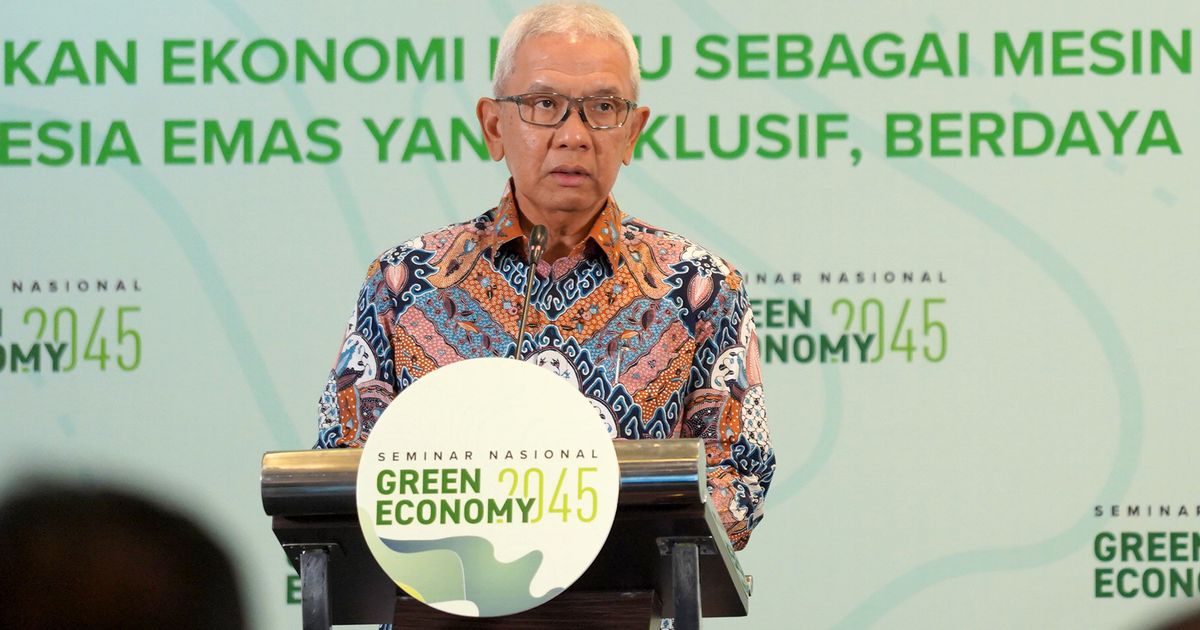
The Secretary of the Ministry of Investment and Downstreaming/BKPM, Mohammad Rudy Salahuddin, stated that this vast opportunity must be accompanied by a shift in the direction of downstreaming towards industries that are increasingly clean, efficient, and competitive. The processing of natural resources must evolve to produce the low-carbon materials, components, and products required by the global market.
“Indonesia does not want to stop at being a commodity supplier. We want to build a resilient, competitive green industrial supply chain that is increasingly integrated with the global market,” Rudy said during the 2045 Green Economy National Seminar at the Aryaduta Hotel, Jakarta, on Tuesday.
The seminar, organised by Investortrust, carried the theme “Making the Green Economy a New Growth Engine Towards an Inclusive, Competitive, and Sustainable Golden Indonesia”. Rudy attended representing the Minister of Investment and Downstreaming/Head of BKPM, who was unable to attend.
According to Rudy, Indonesia possesses three complementary assets to build a sustainable industry: abundant natural resources, significant clean energy potential, and extensive downstreaming opportunities. All three must be developed within a single ecosystem to generate greater economic benefits.
The domestic market provides the scale for industries to grow, while access to global markets provides room for expansion. The government, he noted, plays a role in ensuring policy certainty, service quality, and a conducive investment climate so that these advantages can be translated into realised business ventures.
Rudy explained that Indonesia’s green economy development opportunities are opening amidst rising global energy transition investments. Citing BloombergNEF, he noted that global investment in this field reached US$2.3 trillion in 2025, an 8% increase from the previous year. The largest drivers include electrified transport with US$893 billion in investment, renewable energy at US$690 billion, and power grids at US$483 billion.
According to Rudy, these developments show that the energy transition is increasingly linked to industrial location selection, supply chain formation, technology mastery, and job creation. Countries capable of providing clean energy while simultaneously building an industrial ecosystem will be more competitive in attracting investment.
“The development of the green economy in Indonesia is not just about the emission reduction agenda, but an opportunity to build a manufacturing ecosystem, domestic supply chains, innovation, and value-added jobs based on sustainability,” he said.
He emphasised that Indonesia already possesses investment momentum that can serve as a stepping stone. The next step is to direct such investment towards activities that are increasingly productive, green, and generate higher added value.
Regarding investment realisation and employment, Rudy reported that investment realisation in the first half of 2026 reached Rp1,010.6 trillion, growing 7.2% year-on-year. This figure is equivalent to 49.5% of the 2026 investment target of Rp2,041.3 trillion.
This investment realisation absorbed approximately 1.4 million Indonesian workers, a 15% increase compared to the same period the previous year. The composition, according to Rudy, was relatively balanced between Foreign Direct Investment (FDI) and Domestic Direct Investment (DDI). The even distribution of investment locations is also becoming evident, with investment outside Java reaching Rp507.8 trillion, or 50.2% of the total first-semester realisation.
During the same period, downstream investment reached Rp300.1 trillion, or 29.7% of the total investment realisation. Notably, 75.7% of this downstream investment was located outside Java. Rudy emphasised that the scale of realisation must be accompanied by an increase in investment quality. Downstreaming must move further from raw material processing towards the production of materials, components, and low-carbon goods that possess global competitiveness.
In the downstream roadmap, Rudy explained the need for phased industrial development, starting from the processing and refining of natural resources, continuing to materials and components, and finally to high-value-added end products.
The value chains that need to be deepened include solar panel components, biofuels, sustainable aviation fuel (SAF), hydrogen, electric vehicles, batteries, and battery energy storage systems (BESS).
The market opportunity for these products continues to expand. Referring to UN Comtrade trade data for environmental goods, Rudy noted that trade in electric vehicles and batteries increased from approximately US$90 billion in 2019 to nearly US$450 billion in 2025.
Meanwhile, trade in renewable energy technology increased from approximately US$210 billion to over US$350 billion during the same period.
Rudy stated that Indonesia has a strong resource base to penetrate deeper into these markets. Strengthening the domestic industry is necessary so that Indonesia can benefit from rising global demand while increasing the domestic value-added content.
Source: jawawa.id (https://jawawa.id/newsitem/bkpm-targeting-us-618-1-billion-in-investment-green-downstreaming-to-become-new-growth-engine-1790722260)
Originally published by investortrust.id (https://investortrust.id/macro/117840/bkpm-membidik-investasi-us618-1-miliar-hilirisasi-hijau-jadi-mesin-pertumbuhan-baru), translated from Indonesian