
BKPM Says Indonesia Has Potential to Develop Its Food and Drink Industry
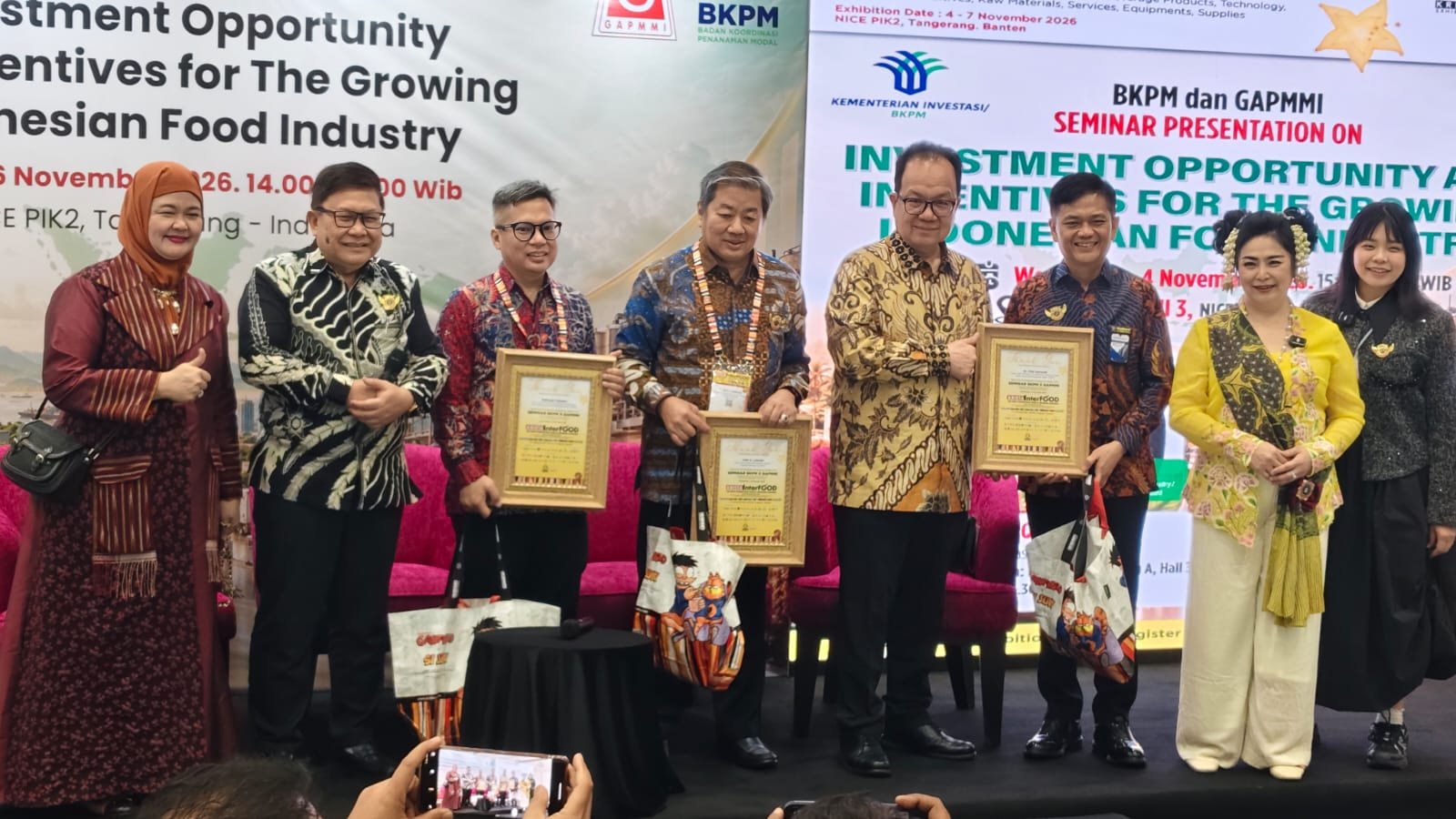
TANGERANG — Indonesia has significant potential to develop its food and drink industry, including through its wealth of recipes and local food products, BKPM said. GAPMMI, meanwhile, said the industry plays an important role in driving the national economy.
The comments were made by Rakhmat Yulianto, BKPM’s Director of Promotion Development, and Adi S. Lukman, chairman of GAPMMI, at the Krista InterFood 2026 exhibition. BKPM and GAPMMI held a seminar entitled “Investment Opportunity and Incentives for the Growing Indonesian Food Industry” on Wednesday (4 November) at the BM Room, Hall 3, NICE PIK 2, Tangerang, Banten.
Rakhmat said that over the past five years Indonesia’s potential to develop the food and drink industry had become clear, particularly in its diverse recipes and local food products. That potential is spread across the country, although production remains concentrated largely on Java, especially East Java. Other areas, including North Sumatra, also have potential that needs further development.
Community involvement is needed to strengthen the supply of raw materials and local food sources, he said. These opportunities should be supported by product development, promotion and advertising to improve competitiveness.
“Indonesia is also working to strengthen its position in the global food market. But we still have work to do to catch up with countries that became food exporters earlier,” he said.
Developing the food sector cannot focus solely on food and drink manufacturing, he added. Fisheries, plantations and agriculture also require attention because they are closely linked to the food industry’s supply chain.
Indonesia has considerable potential to become a major player in the global food industry. The opportunities must be used effectively, alongside the right strategies, to improve the country’s competitiveness and strengthen its position in international markets.
GAPMMI chairman Adi S. Lukman emphasised the food and drink industry’s strategic role in the national economy. As well as being a growing sector, it contributes to job creation and increased economic activity in communities.
Several indicators point to a positive turn in industrial performance. One is the increase in activity ahead of major religious and national holidays, including Christmas, New Year, Chinese New Year and Eid al-Fitr. Demand for food and drink products tends to rise during these periods, prompting companies to increase production and prepare for market needs.
In October, the Industrial Confidence Index (IKI) stood at 53.77. This is a positive signal for manufacturing, including the food and drink industry, supported by increased production and market demand.
The industry contributes around 7.02 per cent of gross domestic product (GDP) and employs about 41.5 million people. These figures underline its strategic importance in supporting economic growth and providing jobs.
Investment in the food and drink industry has also shown an interesting trend. Overall, investment rose between 2023 and 2025, despite a slight decline in one period, indicating that the sector remains attractive to investors.
Businesses from a range of sectors are beginning to look to, and enter, the food and drink industry. This reflects the enduring need for food. As the population grows and per capita income rises, demand is also expected to increase for quality, nutritious products and a wider range of choices.
Indonesia also has room to strengthen the industry’s position in international markets. Countries such as South Korea are important trading partners. However, Indonesia continues to import certain raw materials and products from countries including Thailand, China and Malaysia.
Strengthening domestic industry, particularly by ensuring the availability of raw materials, is therefore essential. The availability and sustainability of supplies remain challenges that industry players, associations and the government need to address together.
At the close of the seminar, both speakers expressed optimism about the Indonesian food and drink industry’s prospects. With government policy support, stronger supply chains and cooperation among stakeholders, the sector is expected to grow further and make a greater contribution to the national economy.
Source: jawawa.id (https://jawawa.id/newsitem/bkpm-says-indonesia-has-potential-to-develop-its-food-and-drink-industry-1793811018)
Originally published by radarjakarta.id (https://radarjakarta.id/bkpm-nilai-indonesia-punya-potensi-kembangkan-industri-makanan-dan-minuman/), translated from Indonesian